90 Days of Daily Posts: What Sri Lankan Brand Owners Ask
Buyer’s snapshot
- Ninety editorial slots ran from 14 May 2026 to today, one local-market post a day; 72 are live in the archive this morning.
- Sri Lanka’s food and beverage export line grew 24.23% to US$ 583.89 million in 2025, with processed food exports up 40.4% (Sri Lanka Export Development Board, 2026).
- Inbound arrivals ran 1.84% below the prior year across the first half of 2026 (Sri Lanka Tourism Development Authority, 2026), so hotel-side private label is the cautious half of the order book.
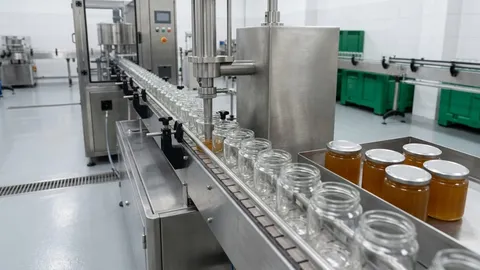
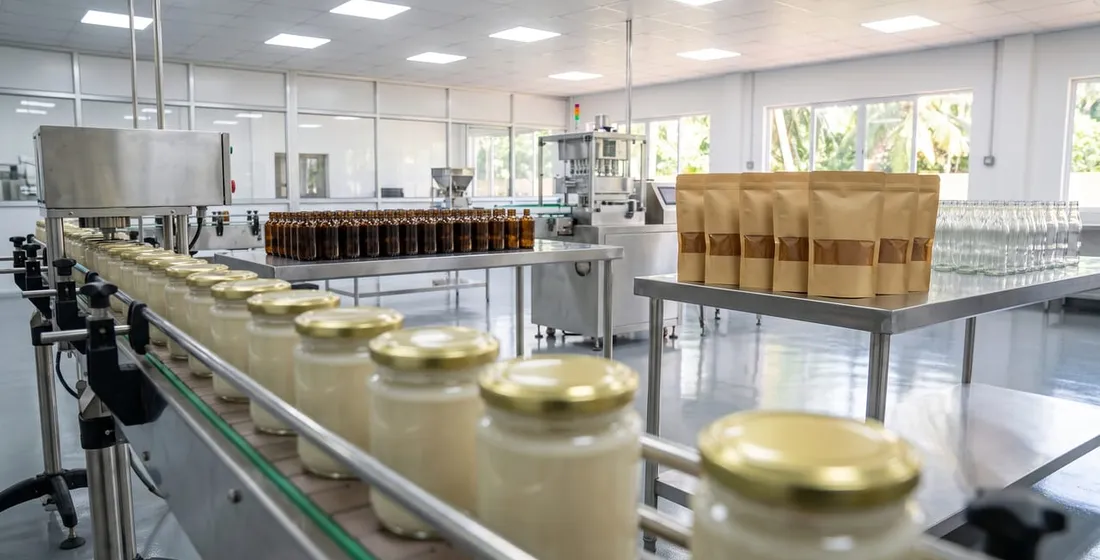
- Silk Foods Ceylon (SFC) runs first-run MOQs of 1,500 jars, 1,250 bottles, and 180 capsule bottles from Matale, with 2 to 3 weeks from purchase order to dispatch on a locked recipe.
On 14 May 2026 the SFC team committed to publishing one blog post a day for ninety days, written for Sri Lankan brand owners rather than export buyers. This is post ninety. Seventy-two of them are live on the site this morning; the first fortnight sits in the archive from before the publishing pipeline existed. We did not start this to build a content library. We started it because the same handful of questions kept arriving in the inbox, worded slightly differently each time, and answering them one email at a time had stopped scaling.
What follows is the honest version: what the ninety days actually surfaced, the assumption we got wrong, and what changes from tomorrow. The team’s earlier operator piece covered why the factory went to Matale and not Colombo. This one is about the reader, not the building.
The questions that actually arrived
The ninety-day plan weighted its slots by buyer type before a single post was written: 30% to mid-tier local FMCG brands, 30% to hotel and restaurant groups, 20% to first-time founders, and 20% to distributors and importers. Category weighting ran plant-based and functional foods at roughly 18%, spices and herbs at 13%, coconut products at 12%, and capsules at 12%. That was a forecast made in May, not a measurement.
The forecast held on category and slipped on shape. Buyers did not mostly ask what a thing costs. They asked what happens in what order, and how many weeks each step eats. Does the standards submission go in before or after the label artwork is signed off. Can a recipe iteration run in parallel with packaging sourcing, or does one block the other. How many weeks sit between an approved sample and a pallet on a loading dock.
Sequencing questions outnumbered price questions by a wide margin, which is why the two posts that get referenced back to the team most often are the step-by-step standards submission walkthrough and the R&D iteration budgeting piece. Neither one quotes a price. Both of them are calendars.
Why is the export side scaling while the hotel side waits?
Sri Lanka’s food and beverage export line grew 24.23% to US$ 583.89 million in 2025, with processed food exports up 40.4% over the year (Sri Lanka Export Development Board, 2026). Over the same window inbound tourist arrivals reached a record 2,362,521 (Sri Lanka Tourism Development Authority, 2026). Then the second number stopped climbing. The first half of 2026 closed at 1,146,573 arrivals, 1.84% below the first half of 2025.
Those two lines pull the order book in opposite directions. Brand owners with an export-facing plan are adding SKUs and asking about second and third lines on the same audit. Hotel-side programmes are reordering in smaller lots and committing later in the season. April 2026 arrivals came in 22.3% below April 2025, and April is the month a festive gifting range is supposed to be already sitting in the gift shop.
That is not a reason to stop quoting hotel groups. It is a reason to move the whole conversation earlier in the calendar, which is the argument in the festive range backward-planning post. Manufacturing conditions themselves are not the constraint: real GDP grew an estimated 5% in 2025 (Central Bank of Sri Lanka, 2026), and the manufacturing PMI read 53.0 in June 2026 with the production sub-index driven by food and beverages (EconomyNext, 2026).
The MOQ assumption we got wrong
The team went into the plan believing minimum order quantity was the wall. Ninety days of questions says otherwise. MOQ is the number a first-time founder worries about in week one and stops mentioning by week three, once they have done the arithmetic on a 1,500-jar run against their own shelf price. The number that actually decides whether a project happens is the calendar, and the calendar is set by the slowest approval in the chain, not by the line.
| Format | First-run MOQ | PO to dispatch on a locked recipe | What usually moves the date |
| Spread or jam, 300 g glass jar | 1,500 jars | 2 to 3 weeks | Label artwork sign-off |
| Beverage, 200 ml glass bottle | 1,250 bottles | 2 to 3 weeks | Closure and sleeve sourcing |
| Capsules, retail bottle | 180 bottles | 2 to 3 weeks | Traditional-claim registration where it applies |
| Frozen patty or nugget | 5,000 to 10,000 units | 2 to 3 weeks | Cold chain at the buyer’s end |
| Spice or herb powder, bulk | 50 kg per SKU | 2 to 3 weeks | Raw-material batch availability |
The SFC R&D lead put it more bluntly than the rest of the team would have. The recipe is almost never the problem. What arrives is a version that works in a home kitchen and has not been adjusted for retort headspace, or for holding the same viscosity across 1,500 jars filled in one shift. The team runs its sample iterations inside a fixed window, and the whole R&D stage is held to 3 to 4 weeks at most, from signed brief to approved formulation.
Do that arithmetic and an R&D-first project adds R&D of 3 to 4 weeks at most (signed brief to approved formulation) ahead of the 2 to 3 weeks a locked recipe takes to its first commercial batch. That extra stage is the whole reason the kitchen-recipe-to-retort post exists. The team spent the first month of this plan writing about units. We should have been writing about weeks.
Where does a first brief usually fail?
Labelling. The Food (Labelling and Advertising) Regulations 2022, made under the Food Act No. 26 of 1980, were gazetted in February 2023 and came fully into force on 1 January 2025 after a one-year extension (USDA Foreign Agricultural Service, 2024). They require the common name of the product in bold in all three languages, an ingredient list in descending order of weight with INS numbers, batch number, manufacture and expiry dates, and consumer warnings printed at not less than 1.5 millimetres. Prepacked items under 25 grams or 30 millilitres are exempt.
A two-language label that cleared a retail buyer in 2024 does not clear one now. This is the single most common thing a first brief has not budgeted for, because it is not a manufacturing cost, it is an artwork cost, and artwork sits with the brand owner rather than the factory. Add the standards layer on top: roughly 2,000 Sri Lanka Standards exist, of which only 32 are mandatory (U.S. International Trade Administration, 2026), and knowing which bucket your product sits in changes the submission timeline by weeks.
The certification stack that sits behind all of this is set out in the contract manufacturing certifications post. Silk Foods Ceylon is BRCGS- and FSSC 22000 V6-audited, with SLSI clearance and Sri Lanka Food Act compliance on every retail SKU sold locally, and Department of Ayurveda registration where a SKU carries a traditional claim.
What changes in the next ninety days
Three things, and they all come from the same finding: buyers are asking for calendars, not brochures.
| What ran in the first ninety days | What changes from tomorrow |
| One post per day, weighted by buyer type | Same cadence, weighted by decision stage instead |
| Product-led topics (a format, a category, a spec) | More sequencing posts: what blocks what, and by how many weeks |
| Hotel-side and export-side treated as one audience | Split explicitly, because their 2026 conditions are not the same |
| Numbers quoted inside prose | Downloadable spec and checklist briefs for the recurring questions |
The one thing that does not change is the position underneath all ninety posts, which the team set out in the broker-layer piece: a Sri Lankan brand owner should be able to get a straight answer about capacity, lead time, and certification from the people who actually run the line.
Here is the tension we have not resolved. The export half of the book is asking for scale and the hotel half is asking for patience, and a factory that says yes to both is a factory that schedules badly. Ninety more days of writing will not settle that. Ninety more purchase orders might. Which half would you have us plan around?
Frequently asked questions
Does Silk Foods Ceylon offer contract manufacturing for a first retail SKU?
Yes. Silk Foods Ceylon manufactures a buyer’s locked recipe at the Matale facility with first-run MOQs of 1,500 jars for 300 g spreads, 1,250 bottles for 200 ml beverages, and 180 bottles for capsules. Dispatch typically runs 2 to 3 weeks from purchase order when the formulation is already signed off.
How long does a new recipe take from brief to first commercial batch?
When R&D comes first, plan 3 to 4 weeks at most from signed brief to approved formulation. The in-house team at Matale runs its sample iterations inside that window before a formulation locks. Once the recipe is locked, the first commercial batch follows in 2 to 3 weeks from purchase order to dispatch.
Do Sri Lankan food labels need all three languages in 2026?
The common name of the product must appear in bold in English, Sinhala and Tamil under the Food (Labelling and Advertising) Regulations 2022, in force since 1 January 2025 (USDA Foreign Agricultural Service, 2024). Consumer warnings carry the same three-language requirement at not less than 1.5 millimetres. Items under 25 grams or 30 millilitres are exempt.
What certifications does the Matale facility hold?
The facility is BRCGS- and FSSC 22000 V6-audited, with USDA Organic and EU Organic on relevant SKUs, plus SLSI clearance and Sri Lanka Food Act compliance on every retail SKU sold locally. Department of Ayurveda registration is handled in parallel for SKUs carrying a traditional claim.
How Silk Foods Ceylon can help
Silk Foods Ceylon runs contract manufacturing, private labelling, co-packing, and in-house R&D from a roughly 10,000 sq ft cellular-manufacturing facility at Silk AgTech Park in Hapugasyaya, Matale. First-run MOQs are 1,500 jars for 300 g spreads, 1,250 bottles for 200 ml beverages, 180 bottles for capsules, and 5,000 to 10,000 units for frozen patties or nuggets, with 2 to 3 weeks from purchase order to dispatch on a locked recipe, preceded by R&D of 3 to 4 weeks at most (signed brief to approved formulation) when R&D runs first. The facility is BRCGS- and FSSC 22000 V6-audited, and SLSI submission support is included on every retail SKU sold locally.
To brief a project: brands@esilkroute.com.lk or +94 77 157 7294.
Sources
Sri Lanka Export Development Board (2026). Sri Lanka’s export performance exceeded US$ 17.2 billion in 2025. https://www.srilankabusiness.com/news/sri-lankas-export-performance-exceeded-us-17.2-billion-in-2025.html
Sri Lanka Tourism Development Authority (2026). Monthly Tourist Arrivals Report, June 2026. https://www.sltda.gov.lk/storage/common_media/MonthlyTouritsArrivalsReport-June-2026-Final-Updated_1.pdf
Sri Lanka Tourism Development Authority (2026). Year in Review 2025. https://www.sltda.gov.lk/storage/common_media/Year_in_Review_2025_Final_updated_Report_2026_04_02-1.pdf
USDA Foreign Agricultural Service (2023). Sri Lanka Enacts New Legislation for Food Labelling and Advertising, GAIN report CE2023-0011. https://apps.fas.usda.gov/newgainapi/api/Report/DownloadReportByFileName?fileName=Sri+Lanka+Enacts+New+Legislation+for+Food+Labeling+and+Advertising_Colombo_Sri+Lanka_CE2023-0011.pdf
USDA Foreign Agricultural Service (2024). Sri Lanka Extends Implementation of the Food Labelling and Advertising Regulations 2022 by One Additional Year, GAIN report CE2024-0001. https://apps.fas.usda.gov/newgainapi/api/Report/DownloadReportByFileName?fileName=Sri+Lanka+Extends+Implementation+of+the+Food+Labeling+and+Advertising+Regulations-2022+by+One+Additional+Year_Colombo_Sri+Lanka_CE2024-0001.pdf
Central Bank of Sri Lanka (2026). Annual Economic Review 2025. https://www.cbsl.gov.lk/en/news/cbsl-releases-aer-2025
EconomyNext (2026). Sri Lanka manufacturing expands at slower pace in June 2026: PMI. https://economynext.com/sri-lanka-manufacturing-expands-at-slower-pace-in-june-2026-pmi-278727/
U.S. International Trade Administration (2026). Sri Lanka Country Commercial Guide: Standards for Trade. https://www.trade.gov/country-commercial-guides/sri-lanka-standards-trade
All sources retrieved 11 August 2026.
Written by the Silk Foods Ceylon Team. Silk Foods Ceylon (Pvt) Ltd. is a BRCGS- and FSSC 22000 V6-audited contract manufacturer in Matale, Sri Lanka, offering contract manufacturing, private labelling, co-packing, and in-house R&D for local Sri Lankan brand owners, FMCG companies, hotel and restaurant groups, and distributors. To brief a project: brands@esilkroute.com.lk or +94 77 157 7294.