
Avurudu Private-Label Range Planning: Sri Lanka Backward Timeline
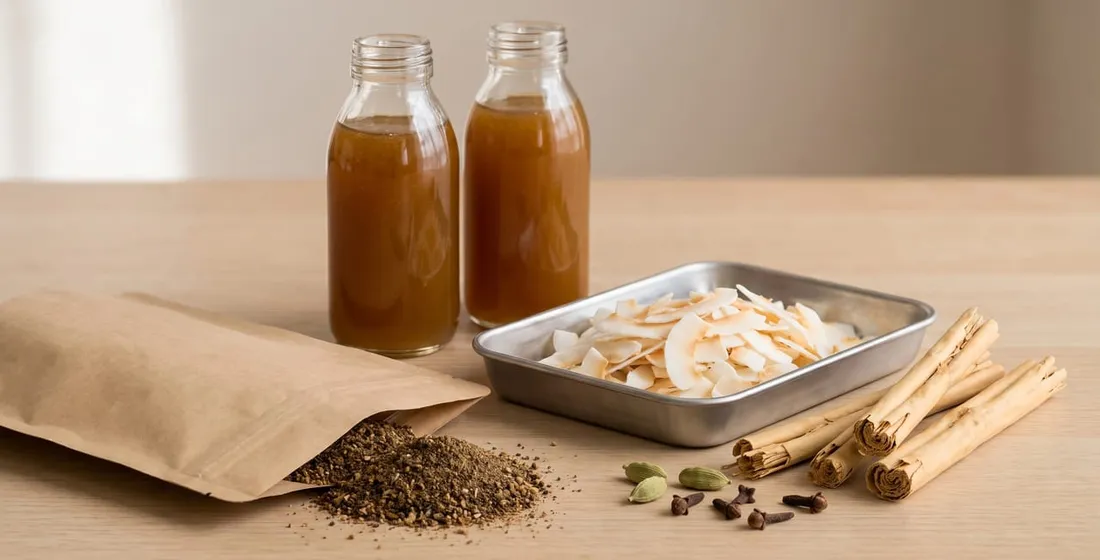
Buyer’s snapshot
- Commercial Bank’s 2026 Avurudu card promotion ran across 579 merchant partners and more than 4,000 retail outlets island-wide through 30 April 2026 (The Island, 2026), and that scale is the retail window a festive private-label range has to hit on time.
- A festive SKU that misses the mid-April sell-in date does not get a second chance until the following year, so the backward-planning calendar matters more than almost any other production variable.
- Silk Foods Ceylon (SFC) runs a BRCGS- and FSSC 22000 V6-audited facility in Matale with first-run MOQs from 1,500 jars, and SLSI submission support built into the engagement.
- The table below works backward from an early-April shelf date to show where each production and approval step needs to land on the calendar.
- This is written for a local FMCG brand owner building a seasonal range, not a founder still testing a recipe at home.
Avurudu festive private-label range planning - the backward timeline from April sell-in
Commercial Bank’s 2026 Avurudu promotion brought together 579 merchant partners representing more than 4,000 retail outlets, running from March through 30 April 2026 (The Island, 2026). That is the scale of the shopping window that opens for roughly three weeks around the Sinhala and Tamil New Year in mid-April, and it closes on a fixed date every year. For a local FMCG brand owner planning a festive-format coconut treacle, a spice blend for kiribath, or a gift-format capsule set, the sell-in date does not move. Everything else on the production calendar has to work backward from it.
That backward-planning discipline is where most first-time festive ranges lose weeks they did not know they had. A recipe that is ready in February but stuck behind a four-week SLSI queue in March arrives on shelf after the New Year. A label that needs a second printing round because the Sinhala and Tamil translation was rushed loses the same week twice. None of this is exotic. It is scheduling math, worked backward from a date on the calendar that a contract manufacturer cannot change.
How backward planning works from the Avurudu sell-in date
A festive SKU launch works backward from a fixed shelf date, not forward from a brief. The 2026 Colombo Shopping Festival Avurudu Fair ran from 8 to 12 April at the BMICH Exhibition Centre, its 41st edition, with more than 200 participating businesses (The Island, 2026). Retail buyers set shelf dates around that same mid-April window every year, so a contract manufacturer’s production slot, SLSI submission, and label approval all have to land before it, not after.
A forward-planned production schedule starts with the brief and moves toward a shelf date that shifts depending on how fast each step goes. A backward-planned one starts with the fixed date, Avurudu falls in mid-April every year, and counts weeks back from it. For a festive SKU, the fixed date approach is the only one that works, because a coconut treacle bottle or a festive spice blend has no commercial value on 20 April.
The practical difference shows up in how a brand owner briefs the contract manufacturer. Instead of asking how soon can you make this, the useful question is working back from an early-April shelf date, when does the production slot need to be booked. For a stable, catalogue-ready recipe, Silk Foods Ceylon’s standard lead time runs 2 to 3 weeks from purchase order to dispatch. For a new festive flavour that needs the in-house R&D team first, the window extends to 6 to 10 weeks, and that clock has to start well before the New Year season gets close.
The backward-planning timeline: from brief to Avurudu shelf
Working back from a target shelf date in the first week of April, a festive private-label SKU needs roughly 14 to 16 weeks of lead time when a new recipe is involved, or 6 to 8 weeks for an existing catalogue formulation. The table below lines up each milestone against the calendar week it needs to close by, from brief to retail dispatch.
The table assumes a shelf date in the first week of April, ahead of the Colombo Shopping Festival’s Avurudu Fair window and a leading local supermarket chain’s own in-store New Year activation, which ran across 12 selected outlets on five dates in early April 2026 (Daily Mirror, 2026).
| Milestone | Roughly weeks before shelf date | What happens |
| Brief and recipe decision | 14 to 16 weeks | Buyer confirms whether the SKU is an existing SFC catalogue formulation or needs R&D |
| R&D sample lock (new flavour only) | 10 to 14 weeks | 2 to 4 sample iterations before the recipe is signed off |
| Production slot booking | 8 to 10 weeks | Line time confirmed at the Matale facility; earlier for glass-jar tooling |
| SLSI submission | 6 to 10 weeks | Typical 4 to 8 week SLSI window, with a buffer for a stable formulation |
| Label artwork and trilingual approval | 5 to 7 weeks | Sinhala, Tamil, and English product name plus allergen disclosure signed off |
| First commercial production batch | 3 to 4 weeks | Retort and pack scheduling on the cellular-manufacturing line |
| QA release and dispatch | 1 to 2 weeks | Batch released to distribution ahead of retail stocking |
Two weeks look identical on the table but carry different risk. SLSI submission and label approval can run in parallel once the recipe is locked, which is the single biggest schedule saving available to a buyer planning a first festive range. Running them one after the other, submission first and label artwork only once SLSI clears, adds three to four weeks that a fixed mid-April date cannot absorb.
How one local FMCG brand booked its first Avurudu range without missing New Year
One local FMCG brand at Silk Foods Ceylon briefed a three-SKU festive coconut range, treacle, sweetened coconut chips, and a spice blend for kiribath, in November for an early-April shelf date. Running SLSI submission and label approval in parallel against a locked recipe kept the whole range inside a 10-week window and on shelf a full two weeks ahead of the New Year.
The brand’s original brief arrived with all three SKUs treated as one identical order, on one shared production date. Two of the three, the coconut treacle and the spice blend, were close variants of SFC’s existing catalogue formulations and moved straight into a production booking. The sweetened coconut chip flavour was new, so it queued through the in-house R&D team on its own three-week timeline while the other two SKUs proceeded through SLSI submission and label approval in parallel.
By the time the chip flavour’s sample locked on its second iteration, the treacle and spice blend already had SLSI clearance and trilingual label artwork signed off. All three SKUs entered production in the same block once the chip formulation caught up, and the finished range reached major supermarket shelves and a gift-focused online marketplace’s listings two weeks before the New Year. The lesson from that run was not that a three-SKU festive range is complicated. It is that splitting a launch by catalogue status, rather than treating every SKU as an identical order, is what keeps most of a range on the fast track while the genuinely new flavour gets the development time it needs.
Which SKUs suit an Avurudu private-label range?
Coconut treacle, kithul treacle, sweetened or spiced coconut chips, and spice blends for kiribath and curry are the SFC catalogue formulations that book directly into a festive production run. A first-run MOQ of 1,500 jars for a semi-liquid SKU or 500 kg for a bulk spice blend keeps a three or four-SKU festive range inside a single production block at the Matale facility.
The Avurudu table centres on a handful of recognisable categories: coconut treacle and kithul treacle for sweets, coconut milk and coconut chips for kevum and other festive preparations, and curry and rice-and-curry spice blends for the New Year table itself. All of these sit inside SFC’s existing coconut and spice catalogue, which means a festive SKU order for any of them is a production booking, not an R&D project.
Pricing sits in a familiar range for a first commercial run. A 1,500-jar semi-liquid batch, coconut treacle at 300 g glass being the typical format, runs roughly LKR 500,000 to LKR 2 million for the full production block, in line with SFC’s standard first-run pricing tier for a stable recipe. A gift-format range aimed at the diaspora-gifting audience on a gift-focused online marketplace or a hotel gift shop adds packaging cost but not manufacturing complexity, since the underlying SKU is unchanged.
For a brand owner weighing whether a fourth, more experimental SKU belongs in the first festive range, contract manufacturing at the Matale facility is the operational equivalent of adding one more line to an order that is already moving, not starting a new production relationship. The recipe stays the buyer’s; the line, the audit, and the SLSI submission move under the same engagement as the rest of the range.
What certifications and label approvals does a festive SKU need?
Every packaged festive SKU sold through Sri Lanka’s major supermarket chains or online gift marketplaces needs SLSI clearance and Sri Lanka Food Act 1980 compliance on the label, including the Sinhala, Tamil, and English product name and the allergen line. Neither requirement changes because the SKU is seasonal; a festive spice blend or coconut treacle clears the same floor as a year-round SKU.
Silk Foods Ceylon’s Matale facility is BRCGS- and FSSC 22000 V6-audited, which reassures procurement teams at the major supermarket chains’ premium private-label tiers, ahead of the SLSI clearance and Sri Lanka Food Act 1980 compliance that sit lower in the listing because they are the local floor every packaged food needs. For a festive SKU carrying an Ayurvedic or herbal claim, such as a spiced digestive blend, Department of Ayurveda registration runs parallel to the SLSI submission.
The trilingual label requirement is worth planning for explicitly on a festive SKU, since a rushed Sinhala or Tamil translation is the most common reason a label artwork round has to repeat. Building the translation review into the 5 to 7 week label-approval window on the timeline table above, rather than treating it as a same-week task, is the difference between one approval round and two.
Frequently asked questions
When should a Sri Lankan brand brief a festive Avurudu SKU to a contract manufacturer?
For a new recipe, brief the manufacturer 14 to 16 weeks ahead of the target shelf date, typically by late November for an early-April launch. For an existing catalogue formulation, 6 to 8 weeks is usually enough, since it skips the R&D and sample-iteration stage entirely.
What products suit a private-label Avurudu range at Silk Foods Ceylon?
Coconut treacle, kithul treacle, sweetened or spiced coconut chips, and spice blends for kiribath and curry are existing SFC catalogue formulations. All four book directly into a production run, typically at a 1,500-jar or 500 kg first-run MOQ, without needing an R&D cycle first.
How long does SLSI clearance take for a festive-season SKU?
SLSI submission for a packaged food with a stable formulation typically runs 4 to 8 weeks. Running it in parallel with label artwork approval, rather than sequentially, is what keeps a festive SKU inside a 10-week window ahead of the mid-April shelf date.
Does Silk Foods Ceylon offer contract manufacturing for festive seasonal ranges?
Yes. SFC’s cellular-manufacturing line at Matale reconfigures between production runs, so a festive-only SKU can share the same BRCGS- and FSSC 22000 V6-audited line and SLSI submission process as a brand’s year-round catalogue, without a separate manufacturer relationship.
How Silk Foods Ceylon can help
For local FMCG brands building a festive Avurudu range, Silk Foods Ceylon (SFC) operates a cellular-manufacturing facility in Matale with the line flexibility to run coconut treacle, coconut chips, and spice blend SKUs on a single BRCGS- and FSSC 22000 V6-audited cert stack. First-run MOQs sit at 1,500 jars for semi-liquid SKUs and 500 kg for bulk spice formats, with lead times of 2 to 3 weeks on an existing recipe or 6 to 10 weeks when the in-house R&D team develops a new festive flavour first. SLSI submission support and Sri Lanka Food Act-compliant trilingual labelling are built into the standard engagement, and production slots can run in parallel with SLSI and label approval to protect a fixed mid-April shelf date.
To brief a festive SKU range, email b2b@esilkroute.com.lk or call +94 76 441 0389 / +94 76 918 5744.
Related reading: private-label coconut chip flavour variants, private-label coconut spread for hotel gift shops, contract manufacturing certifications in Sri Lanka, private-label coconut sugar programmes and GI claims, reformulating a kitchen recipe for retort and 1,500-jar consistency, and co-packing oats and dates for Sri Lankan health food retail.
Sources
- The Island (2026), “ComBank Cards offer up to 70% Avurudu discounts across the widest range of outlets island-wide”: 579 merchant partners and over 4,000 retail outlets in the 2026 Avurudu card promotion, running through 30 April 2026. https://island.lk/combank-cards-offer-up-to-70-avurudu-discounts-across-the-widest-range-of-outlets-island-wide/ (retrieved 2026-07-22).
- The Island (11 April 2026), “Colombo Shopping Festival 2026 declared open for 5 days of Avurudu Shopping”: 41st edition of the Colombo Shopping Festival Avurudu Fair, 8 to 12 April 2026 at the BMICH Exhibition Centre, with over 200 participating MSMEs. https://island.lk/colombo-shopping-festival-2026-declared-open-for-5-days-of-avurudu-shopping/ (retrieved 2026-07-22).
- Daily Mirror (2026), “Cargills Food City celebrates Sinhala and Tamil New Year with ‘Aluth Irai Avuruddai’ festival”: in-store Avurudu activation held across 12 selected Cargills Food City outlets on five dates in early April. https://www.dailymirror.lk/business-news/Cargills-Food-City-celebrates-Sinhala-and-Tamil-New-Year-with-Aluth-Irai-Avuruddai-festival/273-306538 (retrieved 2026-07-22).
- Cargills (Ceylon) PLC, Integrated Annual Report 2024/25 (June 2025): outlet footprint and private-label brand portfolio for Cargills Food City. https://www.cargillsceylon.com/wp-content/uploads/2025/06/Cargills-Ceylon-PLC-Annual-Report-2024-25.pdf (retrieved 2026-07-22).
- Sri Lanka Standards Institution (SLSI), certification and packaged-food standards framework. https://www.slsi.lk (retrieved 2026-07-22).
- Sri Lanka Food Act No. 26 of 1980 (and amendments), Ministry of Health, Sri Lanka: statutory labelling framework for packaged retail food, including trilingual product naming and allergen disclosure. https://www.health.gov.lk (retrieved 2026-07-22).
Written by the Silk Foods Ceylon Team. Silk Foods Ceylon (Pvt) Ltd. is a BRCGS- and FSSC 22000 V6-audited contract manufacturer in Matale, Sri Lanka, offering contract manufacturing, private labelling, co-packing, and in-house R&D for local Sri Lankan brand owners, FMCG companies, hotel and restaurant groups, and distributors. To brief a project: b2b@esilkroute.com.lk, +94 76 441 0389, or +94 76 918 5744.