Co-packing imported apricots, raisins, and cranberries into Sri Lankan retail-ready pouches
Buyer's snapshot Sri Lanka imported about 2,185 tonnes of raisins (US$2.57M) in 2023, per World Bank WITS drawing on UN COMTRADE data. Most arrives as bulk. Bulk to shelf needs three things: a retail pouch, a label that meets the Food (Labeling and Advertising) Regulations 2022, and SLSI clearance on the finished SKU. Silk Foods Ceylon co-packs buyer-supplied dried fruit into 50 g to 1 kg kraft and barrier pouches, on a BRCGS- and FSSC 22000 V6-audited line. Multiple imported SKUs consolidate into one production block. First commercial runs typically sit at LKR 500K to 2M. See the mandatory-label table and the pouch format ladder below. |
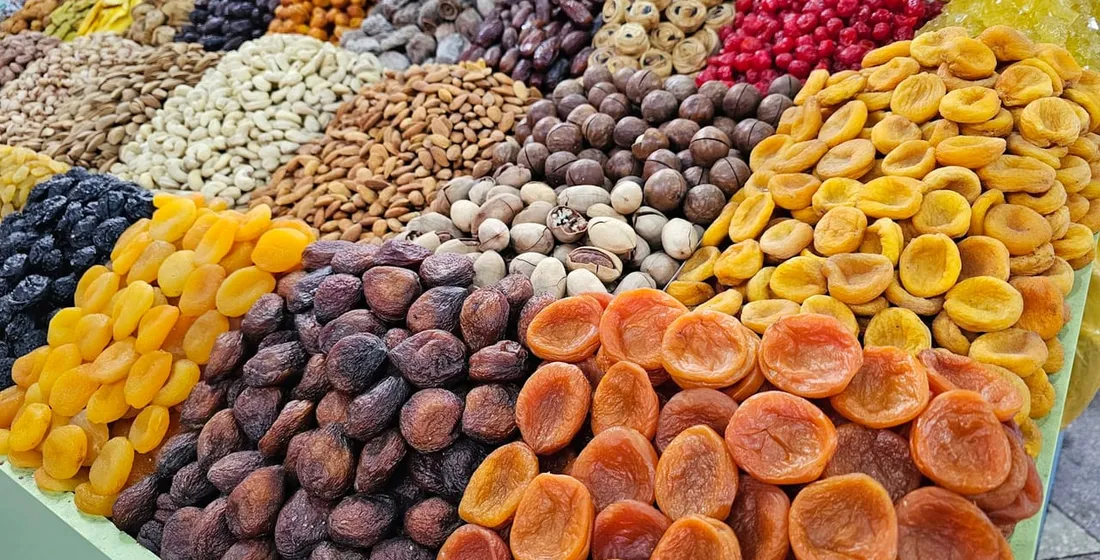
Sri Lanka imported roughly 2,185 tonnes of dried grapes, worth about US$2.57M, in 2023 (World Bank WITS, drawing on UN COMTRADE). Apricots and cranberries land on top of that. Almost all of it arrives as bulk: 10 kg cartons, 12.5 kg sacks, food-service cases. None of it is shelf-ready. The distance between a pallet of imported bulk and a pouch a shopper lifts off a modern-trade shelf is three operations: repacking into a retail format, a label that satisfies Sri Lankan food law, and SLSI clearance on the finished SKU.
Silk Foods Ceylon (SFC), a BRCGS- and FSSC 22000 V6-audited contract manufacturer at Silk AgTech Park in Matale, runs that job as a dedicated co-packing service. The distributor keeps ownership of the imported fruit; SFC supplies the line, the audit chain, and the SLSI submission. For a distributor, co-packing is the cheapest route from a container to a compliant SKU, because it skips the formulation and manufacturing steps entirely.
What co-packing imported dried fruit actually involves
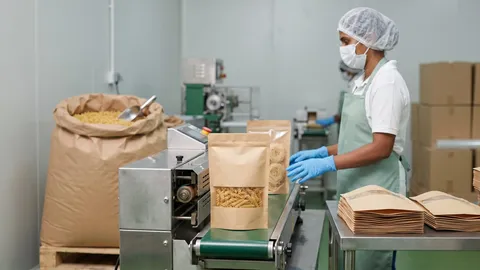
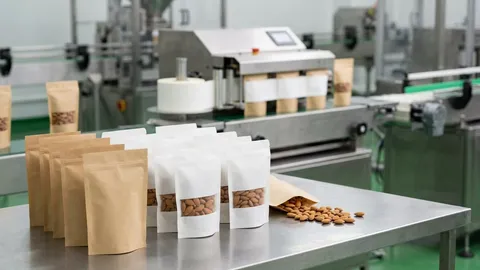
Co-packing dried fruit means the distributor supplies the imported bulk and the co-packer repacks, seals, and labels it into retail formats. At Silk Foods Ceylon, the buyer ships bulk apricots, raisins, or cranberries to the Matale facility, and the SFC team handles incoming checks, weighing, pouch filling, sealing, labelling, and SLSI submission support. No recipe development happens, which is what separates co-packing from contract manufacturing.
The service scope is deliberately narrow. Co-packing (the SFC brochure lists it as “you provide finished goods and we pack: packing, labelling”) sits at the back end of the production chain. The buyer has already sourced and imported the fruit. SFC does not reformulate, add ingredients, or change the product; it converts a bulk format into a retail one under a certified roof. Where a distributor also wants a house blend, a trail mix, or an added-value SKU, that crosses into contract manufacturing and R&D, which is a separate conversation.
Service snapshot: co-packing at Silk Foods Ceylon Service: buyer supplies imported finished goods; SFC packs, seals, and labels into retail formats Formats: kraft pouches (brown, white, or window) at 50 g, 100 g, 250 g, 500 g, and 1 kg; glass jars on request Lead time: 2 to 3 weeks from goods-in to dispatch on a straightforward run; add 4 to 8 weeks if SLSI clearance is new Consolidation: multiple imported SKUs run through one packing block, not separate minimum orders per SKU Cert coverage: BRCGS- and FSSC 22000 V6-audited, with SLSI clearance and Sri Lanka Food Act compliance on every retail SKU |
What does Sri Lankan law require on a repacked dried-fruit label?
A repacked imported dried-fruit pouch sold in Sri Lanka must carry the label elements set by the Food (Labeling and Advertising) Regulations 2022, which were gazetted in February 2023 and enforced from 1 January 2024 under the Food Act No. 26 of 1980. For imported bulk that is repacked locally, the regulations add two elements distributors routinely miss: the country of origin and the date of repackaging. The table below lists the mandatory set.
| Label element | What it means for a repacked dried-fruit pouch |
| Common name | The fruit name (for example “Dried Apricots”) in Sinhala, Tamil, and English, common name in bold |
| Country of origin | Where the fruit was grown or dried (Turkiye, Iran, USA, and so on), mandatory for imports |
| Importer name and address | The Sri Lankan importer or distributor of record on the pack |
| Net weight | Declared in SI units (g or kg), the pouch fill weight excluding packaging |
| Date of manufacture and date of repackaging | For repacked bulk, both the original and the repacking date are required |
| Ingredient and additive declaration | Any preservative such as sulphur dioxide on sulphured apricots, plus added sugar or oil |
The repackaging-date rule is the practical catch. A distributor who prints only the original packing date, or treats a bulk carton date as the retail date, is non-compliant the moment the fruit moves into a new pouch. SFC applies the repacking date at fill and builds the three-language common name into the label artwork before SLSI submission, which is where a certified co-packer removes a re-listing risk that an informal repacker leaves on the table. For the full retail-SKU picture, see the certification stack a Sri Lankan retail launch needs.
What quality specs matter for apricots, raisins, and cranberries?
Dried-fruit quality is governed internationally by the Codex General Standard for Dried Fruits (CXS 360-2020), adopted in 2020, which sets moisture ceilings and preservative rules per fruit. The two numbers that most affect a Sri Lankan retail pack are moisture content, which drives shelf stability, and sulphur dioxide on sulphured apricots, which is capped at 2,000 mg/kg under the widely applied EU limit. The table summarises the incoming checks that matter at goods-in.
| Fruit | Typical moisture ceiling | Incoming-check note |
| Dried apricots (sulphured) | Up to about 25% (Codex CXS 360-2020) | Verify SO2 declaration; EU limit 2,000 mg/kg; bright orange colour indicates sulphuring |
| Dried apricots (unsulphured) | Up to about 20% | Darker brown colour is normal; no SO2 declaration needed |
| Raisins | Around 13% to 18% | Check for added oil coating and cap stems; screen for foreign matter |
| Dried cranberries | Around 12% to 18% | Usually sweetened and often oil-coated; declare added sugar and oil |
Incoming QC is where a co-packing relationship earns its keep. The SFC team screens each imported lot for moisture drift, foreign matter, and the preservative declaration before a single pouch is filled. A lot that reads over its moisture ceiling risks clumping and mould inside a sealed retail pouch, and that failure surfaces on the shelf, not at goods-in, unless someone checks first. Sulphured apricots and sweetened cranberries also carry declaration obligations that flow straight onto the label.
How the pouch format decides shelf life and cost
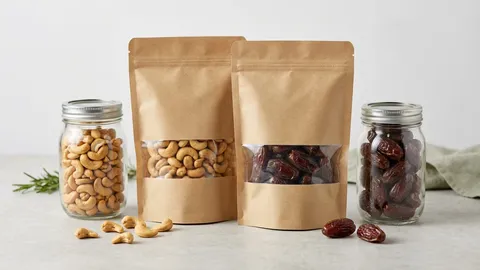
For dried fruit, the pouch is not just packaging; it sets the shelf life. High-barrier laminate structures (for example PET, aluminium, and PE layers) block oxygen and moisture, and nitrogen flushing drives residual oxygen inside the pack below 1 to 2%, which slows oxidation and stops fragile pieces from crushing. Resealable stand-up pouches have become the growth format for dried fruit through 2024 and 2025 because they display upright and reseal after opening. The format ladder below is the one most Sri Lankan retail runs choose between.
| Pouch size | Typical retail role | Notes |
| 50 g and 100 g | Impulse and checkout single-serve | Lowest price point; highest labelling cost per kg |
| 250 g | Standard shelf SKU | The most common modern-trade dried-fruit format |
| 500 g | Value and pantry SKU | Better cost per kg; suits value-led ranges |
| 1 kg | Bulk retail and food-service | Lowest packing cost per kg; resealable closure matters most here |
One distributor working with Silk Foods Ceylon in 2025 imported a single bulk lot of raisins and split it across three pouch sizes in one production block: a 100 g checkout pack, a 250 g shelf pack, and a 500 g value pack. The unlock was not a lower per-pouch price. It was that one goods-in inspection, one SLSI submission, and one label-artwork approval covered all three SKUs, because they ran under a single co-packing engagement rather than three separate ones. The same logic extends to co-packing imported almonds and to co-packing oats and dates for health-food retail, where a distributor consolidates several formats on one line.
What is the MOQ, lead time, and cost of a co-packing run?
A co-packing run at Silk Foods Ceylon is structured around a production block, not a fixed per-SKU minimum. The unit that matters is a day of line time, which a distributor can fill with one SKU or consolidate across several. A first commercial co-pack run typically sits in the LKR 500K to 2M range depending on volume and format mix, and lead time runs 2 to 3 weeks from goods-in to dispatch on a straightforward job, with a 4 to 8 week SLSI window layered on when clearance for the SKU is new. Plan a 6 to 10 week buffer overall for a first launch.
The comparison a distributor usually reaches for is the lowest quote from an informal repacker. Compared on what basis, though? Most informal repackers operate without a current FSSC 22000 or BRCGS audit, and sometimes without SLSI clearance for a new SKU. The per-pouch difference tends to disappear once the cost of an SLSI delay, a retail re-listing, or a mid-launch switch is added back. Consolidation cuts the invoice a second way, by letting several imported SKUs share one goods-in, one submission, and one artwork cycle.
Co-packing at a certified manufacturer versus an informal repacker
The choice for a distributor is rarely between SFC and nothing; it is between a certified co-packer, an informal repacker, and setting up an in-house packing line. The dimensions that decide it are the audit chain, SLSI handling, consolidation, and the hidden switching risk.
| Dimension | Informal repacker | In-house packing line | SFC co-packing |
| Food-safety audit | Usually none current | Buyer must build and maintain it | BRCGS and FSSC 22000 V6 in place |
| SLSI submission | Buyer left to manage alone | Buyer manages alone | Submission support included |
| Multi-SKU consolidation | Limited | Fixed to owned line capacity | Several SKUs in one block |
| Label compliance | Often incomplete on repack date | Buyer’s responsibility | Repack date and 3-language name applied at fill |
| Switching or re-listing risk | High | Capital tied up | Low; audit chain travels with the SKU |
Read the table as a total-cost view rather than an invoice-line one. An informal repacker wins on the quote and loses on audit risk. An in-house line makes sense only at a volume that justifies the capital and the standing food-safety overhead. Co-packing at a certified manufacturer is the middle path most distributors take, because it buys the audit chain and the SLSI rigour without the capital, and it scales across formats through consolidation. Distributors preparing for the diaspora gifting channel often start here, using 250 g kraft pouches as the entry format.
Frequently asked questions
What does the co-packing service at Silk Foods Ceylon include for imported dried fruit?
The buyer supplies imported bulk apricots, raisins, or cranberries, and Silk Foods Ceylon handles incoming QC, weighing, pouch filling, sealing, labelling, and SLSI submission support. Formats run from 50 g to 1 kg kraft pouches on a BRCGS- and FSSC 22000 V6-audited line. No recipe development is involved.
Do imported dried-fruit pouches need SLSI clearance for a Sri Lankan supermarket shelf?
Yes. SLSI clearance is the gating step for any packaged food entering a modern-trade supermarket shelf in Sri Lanka, and the submission window typically runs 4 to 8 weeks. Silk Foods Ceylon builds SLSI submission support into the co-packing engagement so the finished SKU clears under a current audit.
What label details are mandatory on repacked imported dried fruit in Sri Lanka?
Under the Food (Labeling and Advertising) Regulations 2022, enforced from January 2024, a repacked pouch must show the common name in Sinhala, Tamil, and English, the country of origin, the importer name and address, net weight in SI units, the date of manufacture and the date of repackaging, and any preservative such as sulphur dioxide.
What is the moisture and sulphur-dioxide limit for dried apricots?
Under the Codex General Standard for Dried Fruits (CXS 360-2020), moisture for sulphured apricots runs up to about 25%, and up to about 20% for unsulphured. Sulphur dioxide on sulphured apricots is capped at 2,000 mg/kg under the widely applied EU limit, and it must be declared on the label.
How Silk Foods Ceylon can help
For distributors converting imported bulk (apricots, raisins, cranberries, and other dried fruit) into Sri Lankan retail-ready SKUs, Silk Foods Ceylon (SFC) operates a dedicated co-packing capability at the Matale facility. The buyer supplies the finished goods; the SFC team handles packing, labelling, and SLSI submission support under the Food Act labelling framework. Packaging options span 50 g to 1 kg kraft pouches, with glass jars on request. First commercial runs typically sit at LKR 500K to 2M, and multiple imported SKUs consolidate into one production block. The BRCGS and FSSC 22000 V6 cert stack on the repacker side reassures modern-trade procurement on the audit chain.
To brief a co-packing or consolidation plan, email b2b@esilkroute.com.lk or call +94 76 441 0389 / +94 76 918 5744.
Related reading: co-packing bulk imports into retail-ready formats, dehydrated fruit snack SKUs, cashews and dates for e-commerce listings, and the certification stack for a retail launch.
Sources
- World Bank WITS / UN COMTRADE (2023), “Sri Lanka dried grapes (HS 080620) imports”, https://wits.worldbank.org/trade/comtrade/en/country/LKA/year/2023/tradeflow/Imports/partner/WLD/product/080620 (retrieved 2026-07-15).
- Ministry of Health, Sri Lanka (2023), “Food (Labeling and Advertising) Regulations 2022”, Gazette 2337/19, enforced 1 January 2024, https://eohfs.health.gov.lk/food/ (retrieved 2026-07-15).
- trade.gov (2024), “Sri Lanka Labeling and Marking Requirements”, https://www.trade.gov/country-commercial-guides/sri-lanka-labeling-marking-requirements (retrieved 2026-07-15).
- FAO/WHO Codex Alimentarius (2020), “General Standard for Dried Fruits, CXS 360-2020”, https://www.fao.org/fao-who-codexalimentarius/ (retrieved 2026-07-15).
- Sri Lanka Standards Institution, “Standards search (SLS 427 labelling of pre-packaged food)”, https://www.slsi.lk/ (retrieved 2026-07-15).
Written by the Silk Foods Ceylon Team. Silk Foods Ceylon (Pvt) Ltd. is a BRCGS- and FSSC 22000 V6-audited contract manufacturer in Matale, Sri Lanka, offering contract manufacturing, private labelling, co-packing, and in-house R&D for local Sri Lankan brand owners, FMCG companies, hotel and restaurant groups, and distributors. To brief a project: b2b@esilkroute.com.lk, +94 76 441 0389, or +94 76 918 5744.