Co-packing for Sri Lankan online grocery and marketplace fulfilment
Buyer’s snapshot
- Sri Lanka’s business-to-consumer e-commerce market reached about USD 2.65 billion in 2025, with roughly 8 million active online shoppers (US International Trade Administration, 2025).
- For a distributor, the gap between imported bulk and a listing on one of Sri Lanka’s major online marketplaces is usually the pack format and the label, not the product itself.
- Silk Foods Ceylon (SFC) runs a BRCGS- and FSSC 22000 V6-audited co-packing line in Matale: buyer-supplied finished goods are packed, sealed, and labelled in 1 to 2 weeks once stock arrives.
- The pack-format fit table below maps kraft pouches, glass jars, and capsule bottles to each online channel.
Sri Lanka’s business-to-consumer e-commerce market reached roughly USD 2.65 billion in 2025, and around 8 million people now shop online (US International Trade Administration, 2025). About 85% of them have bought something on the country’s largest online marketplace (e-commerce index data reported by Daily FT). For a distributor sitting on a container of imported almonds, oats, or dates, that online demand looks like the easy part. The bottleneck is rarely the product. It is whether the pack format survives last-mile handling and whether the label clears the Sri Lanka Food Act rules that a marketplace listing has to display.
What does fulfilment readiness mean for an online grocery SKU?
Fulfilment readiness is the point at which a packaged food SKU can be listed, stored, picked, and delivered through an online grocery or marketplace channel without a compliance or damage problem. In Sri Lanka that means four things at once: a pack format that survives courier handling, a label that meets the Food (Labeling and Advertising) Regulations 2022, a shelf-life buffer for warehouse-held stock, and scannable product data on the listing.
The failure mode online is rarely weak demand. It is a listing rejected for a non-compliant label, or a jar that arrives cracked after a cash-on-delivery courier run and comes straight back as a return. Both problems are set at the packing stage, weeks before the first order.
The largest online marketplace runs its own fulfilment and last-mile arm, and some of the major supermarket chains fill online grocery orders through a dedicated online-grocery arm off the same stock that sits in their physical stores (a leading local chain had surpassed 500 outlets nationally by 2022, per The Island). A SKU that is listed but not physically ready to pick, hold, and ship is not yet a fulfilment-ready SKU. This is the operational layer that a working home recipe or a container of imported bulk does not solve on its own. For the retail-shelf version of the same problem, see SFC’s note on kraft-pouch co-packing for distribution.
How co-packing turns imported bulk into a marketplace-ready SKU
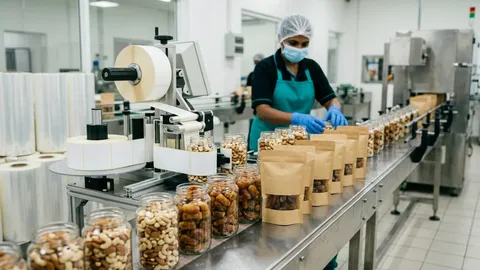
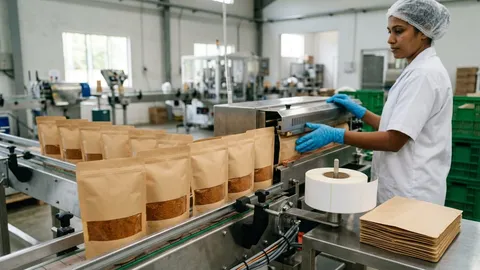
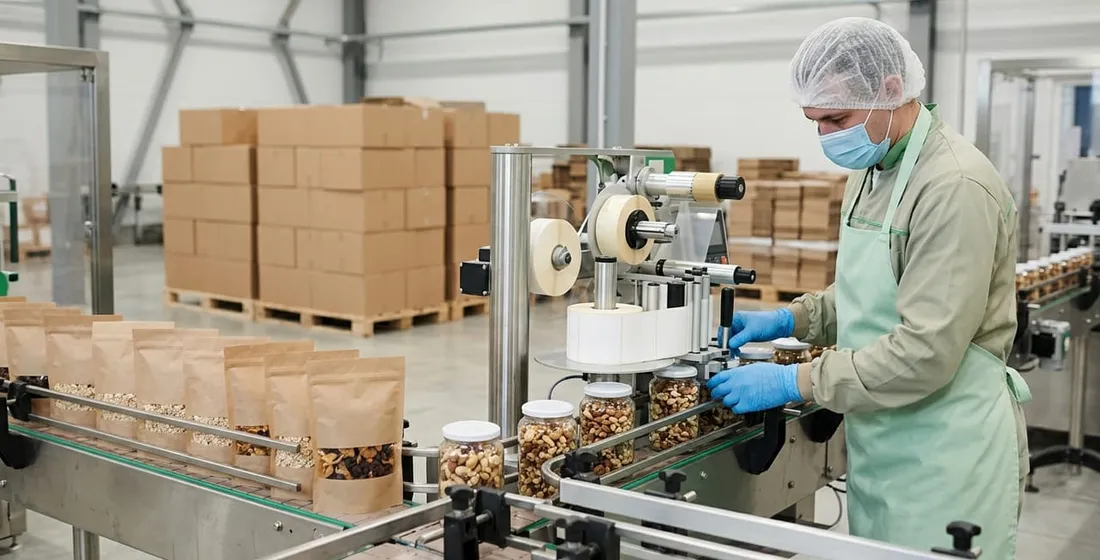
Co-packing (you provide Finished Goods and we pack, per the SFC brochure) is the service that converts imported bulk into a retail-ready SKU. The buyer supplies the finished goods; the Silk Foods Ceylon team packs, seals, and labels them into Sri Lankan retail formats. A single co-packing run at the Matale facility typically takes 1 to 2 weeks once the finished goods arrive, and several SKUs can share one production block.
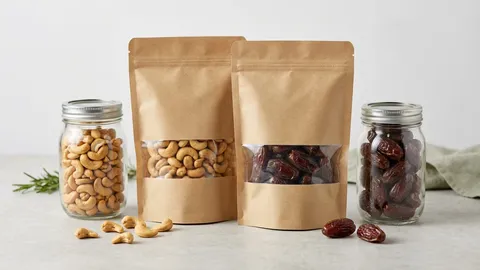
The format options cover most online grocery categories: kraft pouches from 50 g to 1 kg, glass jars from 50 ml to 1 L, round tin cans at 400 ml, and 60-count capsule bottles for supplement lines. A distributor landing bulk almonds, cashews, oats, or dates chooses the pack size against the price point the marketplace listing needs, then the same line seals and labels the run.
Co-packing at SFC sits at the back end of the production chain. The buyer supplies finished goods, and the team packs, seals, and labels into retail-ready formats, which is the reason a distributor can consolidate a mixed container into several listings without owning a packing line. SFC has published worked examples for co-packing imported almonds, for oats and dates for health-food retail, and for imported cashews and dates aimed at e-commerce.
Service snapshot: Co-Packing at Silk Foods Ceylon
- Service: the buyer supplies finished goods; SFC packs, seals, and labels into Sri Lankan retail formats.
- Formats: kraft pouches 50 g to 1 kg; glass jars 50 ml to 1 L; round tin cans 400 ml; 60-count capsule bottles.
- Lead time: typically 1 to 2 weeks once finished goods arrive at the Matale facility.
- Consolidation: multiple imported SKUs can run through one packing block, often on a single production day.
- Cert coverage: BRCGS- and FSSC 22000 V6-audited, with SLSI clearance and Sri Lanka Food Act compliance on every retail SKU.
What labelling does an online food listing need in Sri Lanka?
Every packaged food listed on Sri Lanka’s major online marketplaces has to carry a compliant label under the Sri Lanka Food Act and the Food (Labeling and Advertising) Regulations 2022. As of 2025, that means the label appears in Sinhala, Tamil, and English; imported products show the country of origin and the importer’s name and address; and where bulk is imported and repackaged locally, both the date of manufacture and the date of repackaging are declared (Ministry of Health; USDA Foreign Agricultural Service, 2024).
The repackaging-date rule is the one distributors most often miss. Taking a sack of imported oats and filling it into 500 g retail pouches is a repackaging event, and the label has to state the repackaging date alongside the original manufacture date. A marketplace listing that shows only one date, or no country of origin, is the kind of gap a marketplace compliance check flags before the SKU goes live.
Two more clauses shape the calendar. Imported food must hold at least 60% of its unexpired shelf life at the point of entry into Sri Lanka, which caps how long a distributor can sit on bulk before repacking it. And the Ministry of Health extended the phase-in of the 2022 regulations through an amendment published in December 2024, so the current labels are the ones buyers should be printing now. SLSI clearance remains the floor for any packaged food going onto a retail or marketplace shelf. SFC has mapped that process in the SLSI packaged-food submission, step by step, and shown the timeline in a worked SLSI clearance example.
Which pack format fits which online channel
Pack format is a fulfilment decision before it is a shelf decision. The dimensions that matter online are last-mile durability under courier and cash-on-delivery handling, the channel the format suits best, and the specific fulfilment risk to plan around. The table below maps the four formats a distributor uses most.
| Pack format | Last-mile durability (courier + COD) | Best-fit online channel type | Fulfilment watch-out |
|---|---|---|---|
| Resealable kraft pouch (250 to 500 g) | High: light, flexible, absorbs handling | General marketplaces, dry-staples category | Seal integrity on repeated handling |
| Clear glass jar (220 to 500 ml) | Medium: needs protective fill in transit | Premium and gift-focused marketplace channels | Breakage returns on COD routes |
| Capsule bottle (60-count) | High: rigid, tamper-evident | General marketplaces, supplements category | Ayurvedic-claim SKUs need registration |
| Round tin can (400 ml) | High: rigid, stackable | Supermarket-linked online grocery | Weight adds to last-mile cost |
For a dry-goods distributor, the resealable kraft pouch does most of the work: it is light, it survives a courier run, and its weight keeps last-mile cost down. Glass earns its place where the price point and the gift or diaspora channel justify it, and where the packing run adds enough protective fill to survive transit. The point is to pick the format against the channel and the courier, not against the shelf photo.
The working-capital and shelf-life math behind an online listing
Cash on delivery is still the dominant payment method in Sri Lankan e-commerce, and the Western Province accounts for around half of all online orders (US International Trade Administration, 2025). Both facts shape how a distributor should plan a co-packing run. COD stretches the working-capital cycle, because the cash arrives after delivery rather than at checkout, and warehouse-held marketplace stock needs a shelf-life buffer so a slow-moving SKU does not expire in a fulfilment centre.
Consolidation is where co-packing pays for itself online. Running several imported SKUs through one packing block at Matale means one label-compliance pass and one production window cover the whole range, instead of a separate repacker and a separate submission per SKU. For a distributor listing under a single marketplace seller account, that keeps the launch on one calendar.
One Sri Lankan distributor at Silk Foods Ceylon brought in bulk imported oats and mixed nuts in 2024 and ran them as five retail SKUs through a single co-packing block. The unlock was not the per-pouch price. It was that one label-compliance pass and one production day covered all five listings across two of the major online marketplaces, so the range went live together rather than trickling out SKU by SKU over a quarter.
The 60% unexpired-shelf-life rule at the point of entry reinforces the same discipline: import bulk against a repacking plan and a listing date, not ahead of one. The distributor who treats co-packing as a scheduled step, sitting between the container and the marketplace, is the one whose working capital is not tied up in bulk that ages in a warehouse.
Frequently asked questions
Does Silk Foods Ceylon offer co-packing for imported bulk sold online?
Yes. The buyer supplies finished goods such as imported almonds, cashews, oats, or dates, and the Silk Foods Ceylon team packs, seals, and labels them into retail formats. A run typically takes 1 to 2 weeks once stock arrives, on a BRCGS- and FSSC 22000 V6-audited line in Matale.
What labelling does a food product need to sell on an online marketplace in Sri Lanka?
Under the Food (Labeling and Advertising) Regulations 2022, the label must appear in Sinhala, Tamil, and English, show the country of origin and importer details for imported goods, and carry batch and expiry dates. SLSI clearance is the floor for any packaged food on a marketplace listing.
Do I need to show a repackaging date when I repack imported bulk?
Yes. When food is imported in bulk and repackaged locally, the Sri Lanka Food Act regulations require both the date of manufacture and the date of repackaging on the label (Ministry of Health, 2024). A single-date label on a repacked SKU is a common reason an online listing is flagged.
Which pack format is best for online grocery delivery in Sri Lanka?
For dry staples, a resealable kraft pouch of 250 to 500 g is usually the best fit: it is light, it survives courier handling, and its weight keeps last-mile cost down. Glass jars suit premium and gift-focused marketplace channels, provided the packing run adds protective fill for cash-on-delivery routes.
How Silk Foods Ceylon can help
For distributors converting imported bulk such as almonds, cashews, dates, oats, and spices into Sri Lankan retail-ready SKUs, Silk Foods Ceylon (SFC) operates a dedicated co-packing capability at the Matale facility. The buyer supplies finished goods; the SFC team handles packing, labelling, and SLSI submission support under the Sri Lanka Food Act labelling framework, including the trilingual and repackaging-date requirements a marketplace listing has to meet. Packaging options span 50 g to 1 kg kraft pouches, glass jars from 50 ml to 1 L, and 60-count capsule bottles, and multiple imported SKUs can run through one packing block. The BRCGS and FSSC 22000 V6 cert stack on the repacker side reassures major supermarket-chain procurement teams on the audit chain.
To brief a co-packing or consolidation plan, email brands@esilkroute.com.lk or call +94 77 157 7294.
Sources
- US International Trade Administration (2025), “Sri Lanka - eCommerce”, trade.gov, https://www.trade.gov/country-commercial-guides/sri-lanka-ecommerce (retrieved 2026-07-02).
- Daily FT (2024), “Trends and growth of Sri Lanka’s e-commerce industry: an overview of Daraz e-commerce Index”, ft.lk, https://www.ft.lk/Business/Trends-and-growth-of-Sri-Lanka-s-e-commerce-industry-An-overview-of-Daraz-e-commerce-Index/34-703498 (retrieved 2026-07-02).
- USDA Foreign Agricultural Service (2024), “Sri Lanka Extends Implementation of the Food Labeling and Advertising Regulations 2022”, fas.usda.gov, https://www.fas.usda.gov/data (retrieved 2026-07-02).
- Ministry of Health, Food Control Administration Unit (2025), “Current Regulations (Food Act)”, eohfs.health.gov.lk, https://eohfs.health.gov.lk/food/ (retrieved 2026-07-02).
- The Island (2022), “Cargills Food City opens its 500th outlet”, island.lk, https://island.lk/cargills-food-city-opens-its-500th-outlet-affirms-its-commitment-to-revitalise-local-economy/ (retrieved 2026-07-02).
Written by the Silk Foods Ceylon Team. Silk Foods Ceylon (Pvt) Ltd. is a BRCGS- and FSSC 22000 V6-audited contract manufacturer in Matale, Sri Lanka, offering contract manufacturing, private labelling, co-packing, and in-house R&D for local Sri Lankan brand owners, FMCG companies, hotel and restaurant groups, and distributors. To brief a project: brands@esilkroute.com.lk or +94 77 157 7294.