Coconut Oil Grades for Private-Label Retail SKUs in Sri Lanka

Buyer's snapshot • Sri Lanka's coconut and coconut-product export earnings reached US$1,136.92 million in the first eleven months of 2025, up 44.13% on 2024, with coconut oil exports alone up 81.41% (Sri Lanka Export Development Board, 2025). • Coconut oil sells in three grades a private-label brief actually chooses between: virgin, RBD (refined, bleached, deodorised), and the marketing word "extra virgin", which carries no measurable standard. • All three are cleared in Sri Lanka against Sri Lanka Standard SLS 32 through the SLSI, which sets the moisture, free fatty acid, and peroxide limits that separate one grade from another. • Silk Foods Ceylon (SFC) private-labels both virgin and RBD coconut oil from a first-run minimum of about 1,250 bottles on a BRCGS- and FSSC 22000 V6-audited line in Matale. • See the grade ladder and the certification matrix below before briefing a SKU. |
Coconut oil is the rare Sri Lankan product where the export shelf and the local shelf want different things from the same bottle. Export earnings from coconut oil rose 81.41% in the first eleven months of 2025, as buyers paid for value-added virgin oil rather than bulk copra (Sri Lanka Export Development Board, 2025). On a local supermarket shelf, the same category runs from a neutral cooking oil at the bottom to a premium wellness oil at the top. For a founder putting a brand on a coconut oil SKU, the first decision is not the label. It is which grade goes in the bottle, because the grade sets the price, the shelf, and the buyer.
The three coconut oil grades a private-label SKU chooses between
A private-label coconut oil SKU in Sri Lanka chooses between two real grades and one marketing word. Virgin coconut oil is pressed from fresh kernel with no chemical refining. RBD coconut oil is refined, bleached, and deodorised from copra. Extra virgin is not a separate grade: it carries no SLS 32, Codex, or Asia Pacific Coconut Community definition.
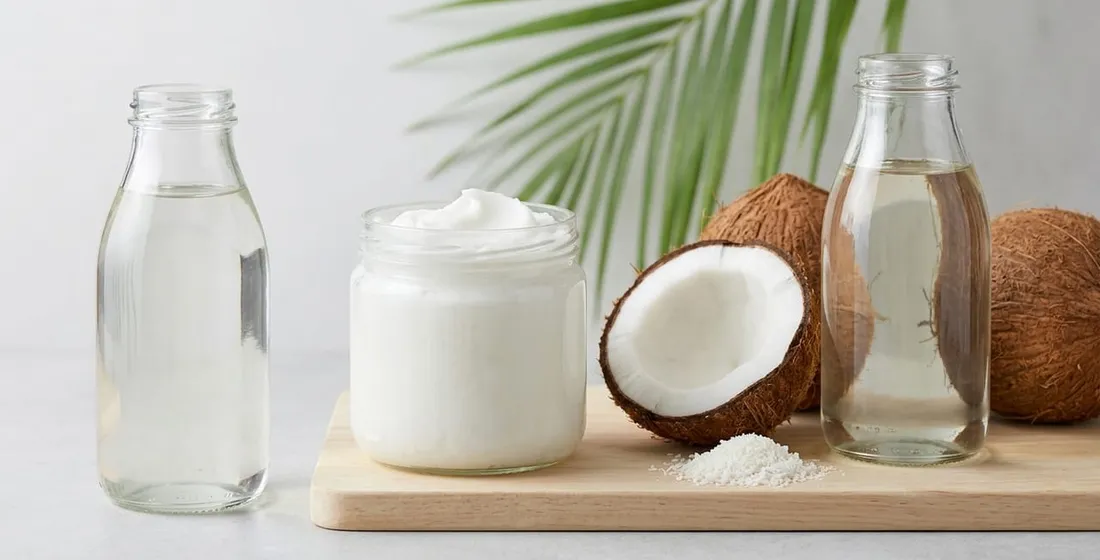
Virgin coconut oil, sometimes labelled VCO, is made from fresh mature kernel by mechanical or natural means, with no chemical refining, bleaching, or deodorising (Asia Pacific Coconut Community). It keeps the coconut aroma and a clean taste, sets snow-white below about 24 degrees C, and commands the premium price. This is the grade pulling the export numbers.
RBD coconut oil, also sold as white coconut oil, is made from dried copra and then refined, bleached, and deodorised so the oil is neutral in colour, smell, and taste. It is the everyday cooking grade and the cheaper one. A value cooking-oil SKU lives here, competing mostly on price against established mills.
Extra virgin is where briefs go wrong. There is no SLS 32, Codex, or Asia Pacific Coconut Community grade for extra virgin coconut oil. The term is borrowed from olive oil, and on a coconut bottle it usually describes the same product as virgin. A brief that specifies extra virgin is specifying a word, not a spec. Write virgin or RBD on the technical sheet, and keep “extra virgin”, if it is used at all, as a front-of-pack claim only.
What does SLS 32 actually specify for coconut oil?
Sri Lanka Standard SLS 32 is the specification the SLSI uses to clear any packaged coconut oil for a local retail shelf. It covers virgin coconut oil, white coconut oil, refined bleached deodorised oil, and paring oil, and it sets limits for moisture and volatile matter, free fatty acid, and peroxide value, among other quality factors (Sri Lanka Standards Institution).
SLS 32 is the gating document, so it is worth knowing the two numbers that matter most. Moisture and volatile matter keeps the oil from clouding and turning rancid on the shelf. Free fatty acid and peroxide value are the freshness and rancidity markers that separate a clean virgin oil from a tired one. A coconut oil COA cleared against SLS 32 is what the SLSI reads first, and what a modern-trade buyer’s quality desk reads after them.
Coconut oil grade ladder for a private-label SKU
| Grade | How it is made | Look and smell | Shelf position | Relative price |
|---|---|---|---|---|
| Virgin coconut oil (VCO) | Pressed from fresh kernel, no chemical refining (APCC) | Clear liquid, snow-white when set; distinct coconut aroma | Premium wellness, health-food, diaspora gifting | Highest |
| RBD / white coconut oil | Refined, bleached, deodorised from dried copra | Clear and neutral; no smell or taste | Everyday cooking oil, value tier | Lowest |
| ”Extra virgin” (label term) | Same process as virgin; no separate grade exists | Same as virgin coconut oil | A front-of-pack premium claim only | Same as virgin |
Which grade fits which shelf and channel?
Grade choice follows the channel. A virgin coconut oil suits a premium wellness shelf, a health-food range, or the diaspora gifting channel, where the coconut aroma and the unrefined story carry the price. An RBD oil suits a value cooking-oil position on the mass supermarket shelf, where neutral taste and a lower price decide the sale.
For a startup founder, the honest reading is that virgin is usually where a small brand can earn a margin. The value-added export pull, coconut oil up 81.41% in 2025 (Sri Lanka Export Development Board, 2025), is drawing premium oil out of the country, which leaves the local premium shelf under-served. An RBD cooking SKU is a volume play against mills that have been pricing this category for decades, which is a hard first SKU for a new brand. Most first-time briefs at the coconut-product manufacturing stage land on a virgin SKU for exactly that reason.
How a private-label coconut oil SKU gets specified and made
Specifying a private-label coconut oil SKU runs from grade selection to a shelf-ready bottle in roughly 2 to 4 weeks once the grade and pack are locked. Silk Foods Ceylon handles bottling, labelling, and the SLSI submission against SLS 32 inside a standard private labelling engagement, so a founder makes the grade and pack decisions rather than the production ones.
1. Choose the grade, virgin or RBD, and write it on the technical brief. Keep any “extra virgin” wording for front-of-pack only.
2. Lock the SLS 32 parameters on the COA: moisture and volatile matter, free fatty acid, and peroxide value for the chosen grade.
3. Pick the pack: a clear glass bottle from 200 ml to 500 ml for a premium virgin SKU, or a larger format for an RBD cooking SKU.
4. Approve label artwork carrying the brand plus the mandatory Sri Lanka Food Act 1980 elements: tri-lingual name, the grade name, net volume, and manufacturer details.
5. Clear SLS 32 through the SLSI, the same clearance step a private-label coconut SKU goes through, and run the first production block.
One founder briefing a first SKU at the Matale facility in 2025 arrived asking for “extra virgin” because a competitor’s bottle said so. The R&D conversation took ten minutes. The measurable choice was virgin or RBD, the competitor’s oil was a standard virgin, and the brand launched a virgin SKU at a 1,250-bottle first run with “cold-pressed virgin” on the front and the SLS 32 virgin spec on the COA. The label word and the technical word were finally the same thing.
Service snapshot Silk Foods Ceylon private-labels virgin and RBD coconut oil from its catalogue. First-run minimum about 1,250 bottles per SKU; lead time 2 to 4 weeks once grade and pack are locked; BRCGS- and FSSC 22000 V6-audited, with SLS 32 clearance through the SLSI on every SKU. |
What certifications does a coconut oil retail SKU need?
A packaged coconut oil on a Sri Lankan shelf needs SLS 32 clearance through the SLSI and Sri Lanka Food Act 1980 label compliance at the floor. A BRCGS- and FSSC 22000 V6-audited manufacturer clears retail and export-curious procurement faster, and USDA Organic or EU Organic on the SKU opens the value-added export channel that drove coconut oil exports up 81.41% in 2025.
The order a brand owner should read the stack in runs from the international standards down to the local floor. BRCGS is the higher international food-safety standard and the strongest procurement reassurance, including for any export step later. FSSC 22000 V6 is the GFSI-recognised audit most retail and distributor buyers ask for on the manufacturer. USDA Organic and EU Organic are per-SKU certifications that differentiate a premium virgin oil. SLS 32 clearance through the SLSI and Sri Lanka Food Act 1980 compliance are the local requirements every retail SKU needs. The full supermarket-shelf cert chain reads the same way.
Certification matrix for a private-label coconut oil SKU
| Certification | What it covers | Who gates on it |
|---|---|---|
| BRCGS | Higher international food-safety standard; premium procurement reassurance | Premium retail; any later export step |
| FSSC 22000 V6 | GFSI-recognised food-safety audit on the manufacturer | Retail and distributor procurement |
| USDA Organic / EU Organic | Per-SKU organic certification on the oil | Export-curious brands; premium-shelf differentiation |
| SLSI / SLS 32 | Grade clearance for the local retail shelf | Every Sri Lankan packaged coconut oil |
| Sri Lanka Food Act 1980 | Tri-lingual label, net volume, manufacturer details | Statutory; every retail SKU |
Frequently asked questions
What is the difference between virgin and RBD coconut oil for a retail SKU?
Virgin coconut oil is pressed from fresh kernel with no chemical refining, so it keeps a coconut aroma and a higher price. RBD coconut oil is refined, bleached, and deodorised from copra, so it is neutral and cheaper. Both are graded under Sri Lanka Standard SLS 32; the choice is a positioning decision.
Is there an official standard for extra virgin coconut oil?
No. There is no SLS 32, Codex, or Asia Pacific Coconut Community grade called extra virgin coconut oil. It is a marketing word borrowed from olive oil, and it usually describes the same product as virgin coconut oil. A buyer should specify the measurable grade, virgin or RBD, on the technical brief.
What is the MOQ for a private-label coconut oil SKU at Silk Foods Ceylon?
The first-run minimum is about 1,250 bottles per SKU on a glass-bottle format, and lead time runs 2 to 4 weeks once the grade and pack are locked. Silk Foods Ceylon private-labels both virgin and RBD coconut oil from its catalogue on a BRCGS- and FSSC 22000 V6-audited line in Matale.
Does a coconut oil SKU need SLSI clearance to sell in Sri Lanka?
Yes. Any packaged coconut oil on a Sri Lankan retail shelf is cleared against Sri Lanka Standard SLS 32 through the Sri Lanka Standards Institution, plus Sri Lanka Food Act 1980 label compliance. SLS 32 sets the moisture, free fatty acid, and peroxide limits that separate one grade from another.
Can a startup brand launch a single coconut oil SKU through private labelling?
Yes. Through Private Labelling, Silk Foods Ceylon applies a brand to an existing virgin or RBD coconut oil formulation from its catalogue, so there is no recipe development to fund. A founder supplies the brand and label artwork; SFC supplies the oil, the bottle, the SLSI submission, and the cert chain.
How Silk Foods Ceylon can help
For founders launching a first coconut oil SKU, Silk Foods Ceylon (SFC) private-labels both virgin and RBD coconut oil from its catalogue, so there is no recipe development to fund. A founder supplies the brand and the label artwork; SFC supplies the oil, the bottle, the SLS 32 submission, and the certification chain. First-run minimums sit at about 1,250 bottles per SKU on a glass-bottle format, and lead times typically run 2 to 4 weeks once the grade and pack are locked. The Matale facility is BRCGS- and FSSC 22000 V6-audited, with SLS 32 clearance through the SLSI on every retail SKU, and USDA Organic or EU Organic available on the SKU for an export-curious brand.
To brief a project, email b2b@esilkroute.com.lk or call +94 76 441 0389 / +94 76 918 5744.
Sources
• Sri Lanka Standards Institution (2017), ‘Specification for Coconut Oil (SLS 32)’, https://www.slsi.lk/ (retrieved 2026-06-07).
• Sri Lanka Export Development Board (2025), ‘Export Performance: Coconut and Coconut-based Products’, https://www.srilankabusiness.com/coconut/about/export-performance.html (retrieved 2026-06-07).
• Asia Pacific Coconut Community (APCC), ‘APCC Standards for Virgin Coconut Oil’, https://apccsec.org/ (retrieved 2026-06-07).
• Codex Alimentarius (CXS 210), ‘Standard for Named Vegetable Oils’, https://www.fao.org/fao-who-codexalimentarius/ (retrieved 2026-06-07).
• Xinhua (2026), ‘Sri Lanka logs record coconut export earnings in 2025’, https://english.news.cn/20260103/06d852be58644064bb004969bdbb94c3/c.html (retrieved 2026-06-07).
• Further reading: Coconut Development Authority of Sri Lanka, coconut-product standards and industry data, https://cda.gov.lk/ (retrieved 2026-06-07).
Written by the Silk Foods Ceylon Team. Silk Foods Ceylon (Pvt) Ltd. is a BRCGS- and FSSC 22000 V6-audited contract manufacturer in Matale, Sri Lanka, offering contract manufacturing, private labelling, co-packing, and in-house R&D for local Sri Lankan brand owners, FMCG companies, hotel and restaurant groups, and distributors. To brief a project: b2b@esilkroute.com.lk, +94 76 441 0389, or +94 76 918 5744.