Contract Manufacturing Certifications in Sri Lanka: BRCGS, FSSC, SLSI
Buyer’s snapshot
- The SLS mark is compulsory for 46 product categories under the Consumer Affairs Authority, which makes SLSI certification the legal gate to most Sri Lankan retail shelves (SLSI, 2025).
- BRCGS and FSSC 22000 V6 are not legally required for a local shelf, but they increasingly decide the premium private-label tier and any export step.
- Silk Foods Ceylon (SFC) carries BRCGS, FSSC 22000 V6, and SLSI on one audited scope covering 50+ ready-to-go SKUs.
- The cert matrix below maps what each layer unlocks for a local FMCG brand.
A local FMCG brand with a recipe that sells well at a market stall or a small kitchen run rarely stalls on the recipe. It stalls on the audit chain that has to travel with the product onto a supermarket shelf. Three certifications carry most of that weight in Sri Lanka: BRCGS, FSSC 22000 V6, and SLSI. Each one opens a different door. Knowing which door a brand actually needs open, and when, is the difference between a clean launch and a stalled one.
The contract manufacturing cert stack, and what each layer unlocks
Contract manufacturing certifications in Sri Lanka fall into two tiers: the local floor and the international overlay. SLSI certification and Sri Lanka Food Act 1980 compliance are the legal floor for any packaged food on a retail shelf. BRCGS and FSSC 22000 V6 are the international food-safety standards that gate premium private-label programmes and an export step. The four lines below answer four different procurement questions.
For a local brand, the useful question is not “are you certified” but “which certificate does this specific shelf, programme, or buyer actually ask for”. The matrix maps each layer to the door it opens.
| Certification | What it is | What it unlocks for a local FMCG brand | Who asks for it |
|---|---|---|---|
| BRCGS | Retailer-driven international food-safety standard, the first scheme to be GFSI-benchmarked | Premium private-label tiers locally, and near-universal UK and EU retail acceptance for an export step | Premium private-label programmes, export buyers |
| FSSC 22000 V6 | GFSI-recognised scheme built on ISO 22000; all audits run against Version 6 since April 2024 | A current GFSI-recognised audit on the manufacturer, the common procurement gate for modern-trade private label | Modern-trade and HORECA procurement, export gate |
| SLSI (SLS mark) | Sri Lanka Standards Institution product certification under the Sri Lanka Standards Act | Legal eligibility for retail shelves and most marketplace listings | Supermarket chains, e-commerce marketplaces, regulators |
| Sri Lanka Food Act 1980 | The statutory labelling and food-safety law, enforced through the Food (Labelling and Advertising) Regulations | A compliant tri-lingual label the product can legally carry | Every retail SKU sold locally |
SLSI clearance and Sri Lanka Food Act compliance are non-negotiable for a local shelf; every packaged food needs them. BRCGS and FSSC 22000 V6 are optional for the floor but decisive higher up. A brand that understands the split stops paying for a certificate it does not yet need, and stops missing the one a buyer is about to ask for.
What does SLSI certification unlock for a packaged food in Sri Lanka?
SLSI certification is the gating step for most packaged foods entering a Sri Lankan retail shelf. The SLS mark is compulsory for 46 product categories under the Consumer Affairs Authority, and the scheme operates under the Sri Lanka Standards Act (SLSI, 2025). For a local FMCG brand, SLSI clearance plus Sri Lanka Food Act labelling compliance is the legal floor every retail SKU stands on.
The Sri Lanka Standards Institution (SLSI) runs the SLS mark product certification scheme as the national standards body. For the 46 compulsory categories the SLS mark is a legal requirement, not a marketing nicety. Surveillance audits run twice a year, with samples drawn from the line or the open market to confirm the product still conforms.
The label itself is governed by the Sri Lanka Food Act 1980 and its current Food (Labelling and Advertising) Regulations 2022, which replaced the 2005 rules and phase in fully by 1 January 2026 (USDA Foreign Agricultural Service, 2025). The Act sets the tri-lingual product name in English, Sinhala, and Tamil, plus allergen disclosure, net weight, country of origin, and the manufacturer’s details. SLSI certifies the product; the Food Act governs what the label must say.
The hard part is rarely the paperwork. It is the calendar. An SLSI submission for a packaged food with a stable formulation typically clears in four to eight weeks, so most brands plan a six to ten-week buffer between manufacturer-side QA sign-off and a target shelf date. The step-by-step SLSI submission for a packaged food follows a predictable sequence once the formulation is locked.
What do BRCGS and FSSC 22000 V6 add on top of SLSI?
BRCGS and FSSC 22000 V6 are international food-safety standards that sit above the local floor. Both are GFSI-recognised; BRCGS was the first standard to be GFSI-benchmarked and is now used across 22,000-plus sites in more than 130 countries (BRCGS, 2024). For a local FMCG brand, neither is legally required for a Sri Lankan shelf, but both increasingly decide the premium private-label tier and any export step.
BRCGS is the retailer-driven standard, built for the way large retail and food-service buyers vet suppliers. It introduced food-safety culture and food-fraud requirements, and its GFSI benchmark is what makes a UK or EU retail buyer accept the audit at the import gate. FSSC 22000 V6 is the ISO 22000-based scheme; since April 2024 every FSSC audit runs against Version 6 (Foundation FSSC, 2023). Both certify the manufacturer, not the individual SKU.
The “do I need this for the local market” question has a clean answer. Strictly, no: SLSI clearance and Sri Lanka Food Act compliance are the legal requirements for a local shelf. But the premium private-label tier at the major supermarket chains increasingly asks whether the manufacturer holds a current GFSI-recognised audit, and an international-facing hotel group will often list audited suppliers first. For a brand expecting to step into an export market within a year or two, the audit cost is already moving in the right direction. The full local-plus-international picture is mapped in the certification stack for a Sri Lankan FMCG launch.
Why one audit across 50-plus SKUs changes the cert maths
The cost of a cert stack is rarely the audit fee. It is the time and disruption of re-auditing a manufacturer every time a brand adds a SKU. Silk Foods Ceylon runs a cellular-manufacturing facility in Matale where a single BRCGS- and FSSC 22000 V6-audited scope covers 50-plus ready-to-go SKUs. A second or third SKU launches inside the same audited scope, not a fresh one.
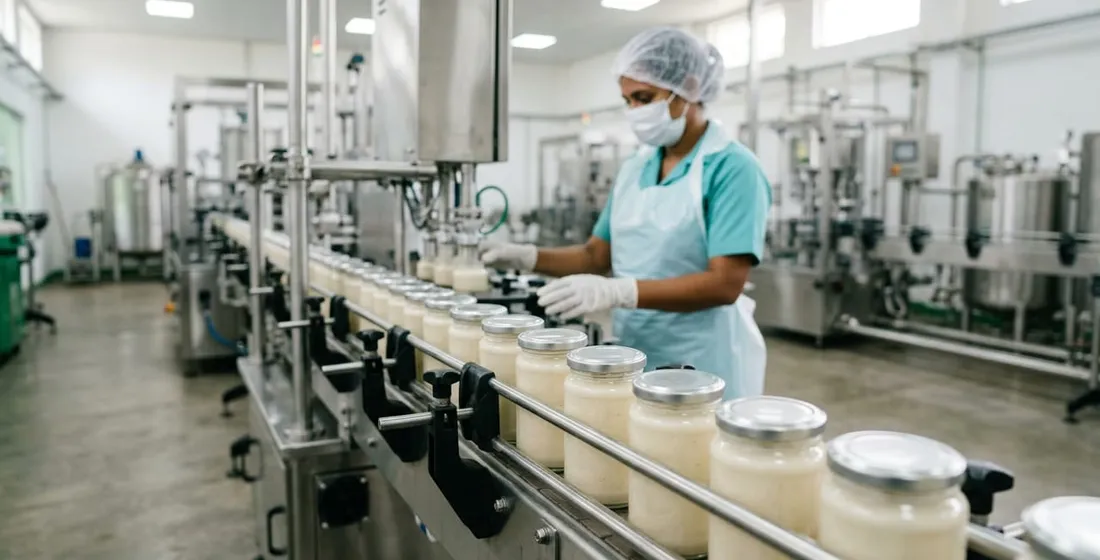
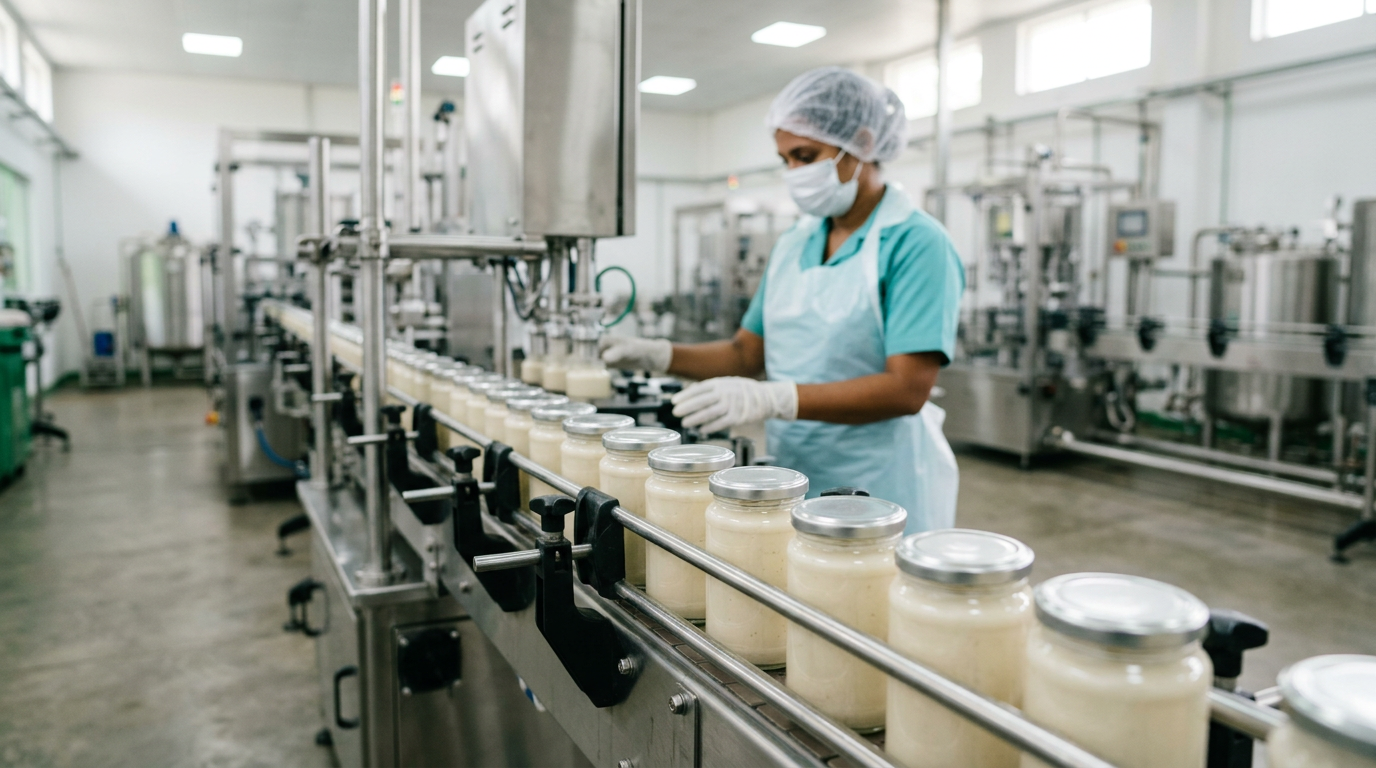
Cellular manufacturing is the architectural reason. Rather than one fixed line locked to one product, the Matale facility moves equipment between configurations: the capsule line, the spray-drier, the semi-liquid filler, the patty former, the retort. Capacity runs to 3,000 jars per day on semi-liquids, 200,000 capsules per day, and 30,000 nuggets per day. The audit covers the facility and its food-safety system, so a brand expanding from one SKU to four does not re-open the manufacturer’s certification each time.
One local wellness brand at Silk Foods Ceylon scaled from a 180-bottle pilot run of an ashwagandha capsule in 2024 to a multi-SKU monthly programme by the first quarter of 2026. The unlock was not price. It was that the same cert stack covered the next three SKUs without re-auditing the manufacturer, which took weeks out of each subsequent launch. The same audited scope extends to Ayurvedic-claim SKUs, where Department of Ayurveda registration runs parallel to SLSI.
Certification snapshot
- BRCGS-audited line at the Matale facility
- FSSC 22000 V6, covering capsules, plant-based formats, retort lines, and spray-dried powders
- USDA Organic and EU Organic available per SKU
- SLSI clearance on every retail SKU
- Sri Lanka Food Act 1980 labelling compliance built into the engagement
- Department of Ayurveda registration on relevant capsule and kashaya SKUs
This is the practical advantage of choosing a manufacturer by audited scope rather than by a single SKU quote: the certification compounds across the portfolio instead of resetting with each launch.
When does a local FMCG brand actually need the international certs?
A local FMCG brand needs SLSI and Sri Lanka Food Act compliance from day one, and BRCGS or FSSC 22000 V6 the moment a buyer or a market asks for them. That moment tends to arrive earlier than brands expect. Sri Lanka’s food and beverage exports grew strongly through 2025, with processed food among the fastest-rising categories (Sri Lanka EDB, 2025), and the premium local tier is moving the same way.
The honest sequence is floor first, overlay when the trajectory calls for it. A first-time brand selling into independent stores and a marketplace listing needs SLSI and a compliant label, nothing more. A brand pitching the premium private-label tier, a HORECA gift-shop programme, or an export buyer needs the GFSI-recognised audit on its manufacturer, and needs it before the conversation, not after.
The trajectory is what makes the timing matter. In several months of 2025, Sri Lanka’s food and beverage export earnings rose more than 50% year on year, with processed food among the strongest categories (Sri Lanka Export Development Board, 2025). For a local brand with any export ambition inside two years, choosing a manufacturer that already holds BRCGS and FSSC 22000 V6 means the certification is not a future project; it is already in place. That decision sits inside the larger one covered in contract manufacturing at Silk Foods Ceylon and the local retail and HORECA landscape for brand owners.
Frequently asked questions
Does a food product need SLSI certification to sell in Sri Lankan supermarkets?
For most packaged foods, yes. The SLS mark is compulsory for 46 product categories under the Consumer Affairs Authority, and supermarket and marketplace buyers treat SLSI clearance as the baseline (SLSI, 2025). A submission with a stable formulation typically clears in four to eight weeks, so plan a six to ten-week buffer before the shelf date.
Is BRCGS or FSSC 22000 required for the Sri Lankan local market?
Not legally. SLSI clearance and Sri Lanka Food Act 1980 compliance are the local-shelf requirements. BRCGS and FSSC 22000 V6 become decisive for the premium private-label tier, for international-facing HORECA programmes, and for any export step. For a brand planning to export within two years, the audit is worth carrying from the start.
What is the difference between BRCGS and FSSC 22000 V6?
Both are GFSI-recognised food-safety standards. BRCGS is the retailer-driven standard, the first to be GFSI-benchmarked, now used across 22,000-plus sites in 130-plus countries (BRCGS, 2024). FSSC 22000 V6 is built on ISO 22000, and since April 2024 all FSSC audits run against Version 6 (Foundation FSSC, 2023). Most retail buyers accept either.
Is the Silk Foods Ceylon facility BRCGS and FSSC 22000 audited?
Yes. The Matale facility is BRCGS- and FSSC 22000 V6-audited, with SLSI clearance on every retail SKU and Sri Lanka Food Act compliance built into each engagement. One audited scope covers 50-plus ready-to-go SKUs, so a multi-SKU brand does not re-audit the manufacturer for each new product.
How Silk Foods Ceylon can help
For local FMCG brands weighing which certifications a launch actually needs, Silk Foods Ceylon (SFC) runs a cellular-manufacturing facility in Matale that carries 50+ ready-to-go SKUs on a single BRCGS- and FSSC 22000 V6-audited cert stack, with SLSI clearance and Sri Lanka Food Act compliance on every retail SKU. Capacity spans 3,000 jars per day on semi-liquids, 200,000 capsules per day, and 30,000 nuggets per day, and SLSI submission support sits inside the standard engagement. The international audits are already in place, which means the premium-tier and export gates are open from the first run rather than a project for later.
To brief a project, email b2b@esilkroute.com.lk or call +94 76 441 0389 / +94 76 918 5744.
Sources
- Sri Lanka Standards Institution (2025), “SLS Mark Product Certification Scheme”, https://slsi.lk/en/services/sls-mark-product-certification/ (retrieved 2026-06-20).
- Foundation FSSC (2023), “FSSC 22000 Scheme Version 6 documents”, https://www.fssc.com/fssc-22000/documents/version-6-documents/ (retrieved 2026-06-20).
- BRCGS (2024), “BRCGS Global Standard Food Safety”, https://www.brcgs.com/our-standards/food-safety/ (retrieved 2026-06-20).
- Sri Lanka Export Development Board (2025), “Sri Lanka export performance”, https://www.srilankabusiness.com/ (retrieved 2026-06-20).
- USDA Foreign Agricultural Service (2025), “Sri Lanka Extends Implementation of the Food Labeling and Advertising Regulations-2022”, https://www.fas.usda.gov/data/sri-lanka-sri-lanka-extends-implementation-food-labeling-and-advertising-regulations-2022-one (retrieved 2026-06-20).
Written by the Silk Foods Ceylon Team. Silk Foods Ceylon (Pvt) Ltd. is a BRCGS- and FSSC 22000 V6-audited contract manufacturer in Matale, Sri Lanka, offering contract manufacturing, private labelling, co-packing, and in-house R&D for local Sri Lankan brand owners, FMCG companies, hotel and restaurant groups, and distributors. To brief a project: b2b@esilkroute.com.lk, +94 76 441 0389, or +94 76 918 5744.