Contract manufacturing for plant-based patties: the 5,000 to 10,000-unit first run
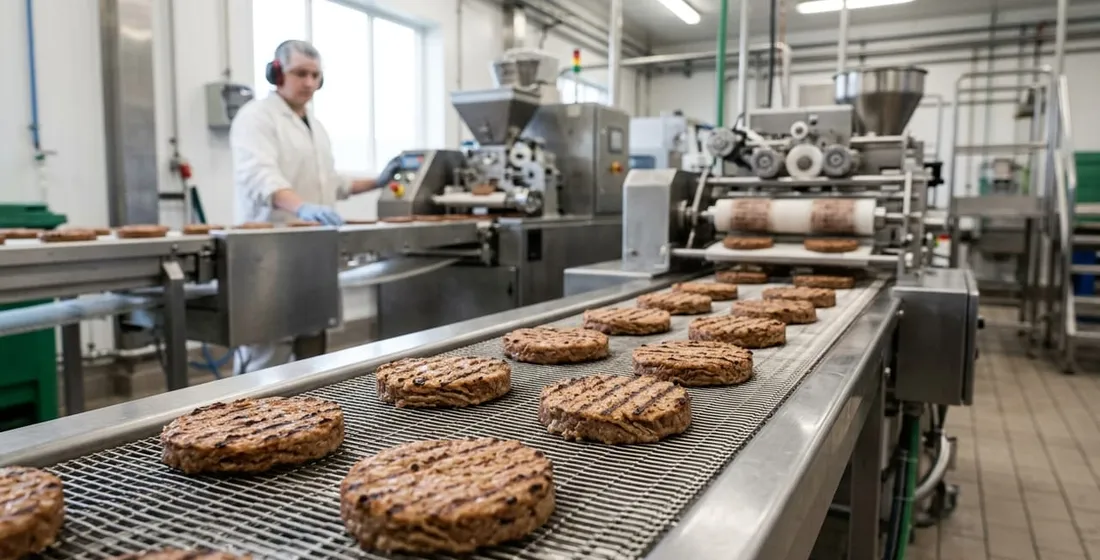
Buyer's snapshot Global plant-based meat revenues were around US$10.4 billion in 2025, with burger patties the single largest product format (Polaris Market Research, 2025). A first plant-based patty run at Silk Foods Ceylon (SFC) is structured at 5,000 to 10,000 units per SKU, sized for a real retail or food-service launch rather than a test batch. The forming line runs 15,000 vegan patties per day; the adjacent nugget line runs 30,000 per day, so a multi-format launch fits one audited facility. BRCGS- and FSSC 22000 V6-audited, with SLSI clearance and Sri Lanka Food Act compliance on every retail SKU. Frozen output ships through on-site reefer storage. |
A plant-based burger patty is one of the harder first products a local brand can launch, and one of the most rewarding when it works. It has to form, hold together through freezing and a fryer or griddle, survive a cold chain to the shelf, and taste like the sample that won the buyer over. Most founders can build a version in a kitchen. The gap is the first commercial run, where the patty has to be the same on unit five thousand as it was on unit five.
Silk Foods Ceylon (SFC) contract-manufactures plant-based patties at its Matale facility on a dedicated forming-and-freezing line. This post sets out why a first run is a 5,000 to 10,000-unit decision, what the line actually does to a patty, how long the path from recipe to first batch takes, and the cold-chain and certification questions a retail buyer will ask before the SKU lists.
Why the first plant-based patty run is a 5,000 to 10,000-unit decision
SFC structures a first plant-based patty run at 5,000 to 10,000 units per SKU. That is not an arbitrary floor. Below it, the setup cost of a forming run, the line changeover, the freeze cycle, and the QA batch testing, spreads across too few units to make economic sense for either side. At 5,000 to 10,000 units the per-unit cost settles into a range a retail or food-service price point can carry.
The number also matches what a real launch needs. A patty SKU going into a food-service account or a frozen retail shelf burns through a few thousand units in the first weeks if it sells at all. A 500-unit test batch answers a different question, whether the recipe works, and that question belongs in R&D, not on a commercial line. The 5,000 to 10,000-unit run is the first batch that behaves like a product, not a pilot.
Where SFC walks away A patty concept that has never been tasted outside the founder's kitchen: the better first step is an R&D / NPD engagement to lock the formulation, then the commercial run. A buyer who wants a sub-5,000-unit run to 'test the market': the setup cost makes the per-unit price misleading. Test the market with the real first run priced honestly, or test the recipe in R&D first. |
What the forming-and-freezing line actually does to a patty
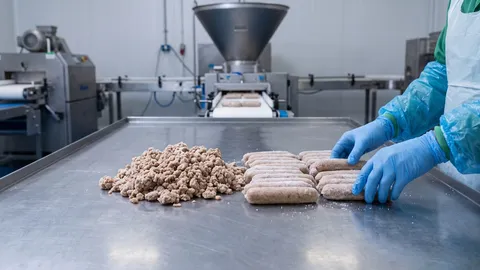
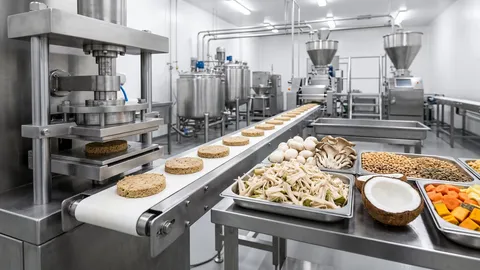
The plant-based line at the Matale facility is built around a burger-patty forming machine, with battering, breading, and frying machines alongside it and reefer storage for the freeze and hold. The forming machine sets weight and shape consistency, the freeze locks structure, and vacuum or frozen packing protects the patty to the shelf. The same hall runs a nugget line at 30,000 units per day, which is why a brand launching a patty and a nugget together does not need two suppliers.
Walk the line on a production day and the cellular-manufacturing logic is visible: the forming machine, the battering and breading stations, the fryer, and the reefer are arranged to move between configurations rather than sit in one. For a plant-based brand that means a patty run this month and a nugget or seitan run next month share the same audited facility, the same food-safety chain, and the same QA team. That is what 5,000 to 10,000-unit economics look like in practice: a real line, sized for a real first order.
| Plant-based format | First-run MOQ | Line capacity |
| Burger patty | 5,000 to 10,000 units per SKU | 15,000 per day |
| Nuggets | 5,000 to 10,000 units per SKU | 30,000 per day |
| Sausage / pre-minced mix | By project | Shared forming and mixing line |
| Seitan / whole-cut | By project | Shared prep and cook line |
How long from recipe to first commercial batch?
If the recipe is locked and the spec is signed off, SFC moves a plant-based patty from purchase order to dispatch in roughly two to three weeks. If the formulation still needs work, and most first-time patty briefs do, the R&D / NPD (Co-Development on the SFC brochure) step adds four to six weeks upfront, putting the full path to a first commercial batch in the six-to-ten-week range. Retail listing adds the SLSI clearance window on top, so the calendar, not the line, is usually the long pole.
- Lock the formulation: either bring a signed-off recipe or run an R&D / NPD engagement to adjust the kitchen version for the forming line and freeze cycle (2 to 4 sample iterations is typical).
- Approve a production sample from the actual line, not the test kitchen, so texture and bind are verified at scale.
- Schedule the 5,000 to 10,000-unit run and the freeze-and-pack format (vacuum or frozen retail pack).
- Run SLSI clearance and the tri-lingual label in parallel for a retail SKU; food-service-only SKUs follow a lighter path.
Is your kitchen recipe ready for the forming line?
The single most common gap in a first patty brief is not the flavour. It is that the home-kitchen version was shaped by hand and eaten fresh, and has never been asked to hold its structure through a forming machine, a blast freeze, and a reheat. Protein choice, binder ratio, moisture, and fat behaviour all shift at scale. The R&D team plans for two to four sample iterations precisely because this is where a good kitchen recipe becomes a manufacturable one.
This is where bringing R&D and contract manufacturing under one roof pays back. The reformulation happens on the same line that will run the commercial batch, with the adjoining Matale plantation supplying fresh raw material for trial runs. A brand owner can approve the corrected sample in person rather than couriering frozen patties back and forth, which is the difference between a two-week and a two-month feedback loop.
The certification and cold-chain questions before retail
A frozen plant-based patty meets two gates before a retail shelf: the manufacturer’s food-safety audit and the SKU’s SLSI clearance. SFC answers the first with a BRCGS- and FSSC 22000 V6-audited facility, with SLSI clearance and Sri Lanka Food Act compliance built into every retail SKU. For a brand planning an export step later, the BRCGS audit is the layer that opens UK and EU retail without re-auditing the manufacturer.
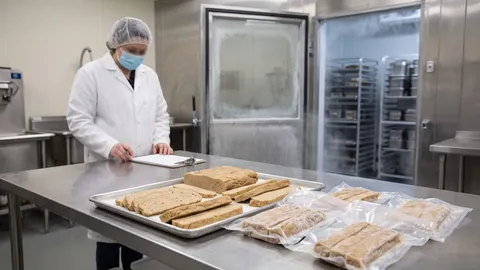
Cold chain is the second question, and it is specific to frozen product. The patty is frozen and held in on-site reefer storage, and the cold chain has to hold from the factory to the retail freezer. A brand launching frozen needs to plan reefer transport and a retail or food-service partner with freezer space, because a patty that thaws in transit becomes a food-safety failure, the most serious kind of launch problem. Specifying the freeze format and the cold-chain plan at the briefing stage avoids a launch that stalls at distribution.
Service snapshot: contract manufacturing at Silk Foods Ceylon Service: SFC manufactures the buyer's plant-based patty recipe at commercial scale at the Matale facility First-run MOQ: 5,000 to 10,000 units per SKU; patty line 15,000 per day, nugget line 30,000 per day Sample to first PO: 2 to 3 weeks for a locked recipe; 6 to 10 weeks if R&D / NPD is needed first Cert coverage: BRCGS- and FSSC 22000 V6-audited, plus SLSI clearance and Sri Lanka Food Act compliance on every retail SKU Cold chain: frozen output held in on-site reefer storage; freeze format specified at briefing |
Frequently asked questions
Does Silk Foods Ceylon contract-manufacture vegan burger patties?
Yes. SFC runs a dedicated plant-based forming-and-freezing line at its Matale facility, producing vegan burger patties at up to 15,000 units per day, with a 5,000 to 10,000-unit first-run MOQ per SKU.
What is the minimum order for a plant-based patty in Sri Lanka?
SFC structures a first plant-based patty run at 5,000 to 10,000 units per SKU. Below that, the line setup, freeze cycle, and QA testing spread across too few units to give an honest per-unit price.
How long does it take to launch a vegan patty?
For a locked recipe, purchase order to dispatch is about two to three weeks. If the formulation needs R&D first, allow six to ten weeks, plus the SLSI clearance window for a retail listing.
Can SFC develop the patty recipe as well as manufacture it?
Yes. The in-house R&D / NPD team reformulates a kitchen recipe for the forming line and freeze cycle, typically across two to four sample iterations, before the same line runs the first commercial batch.
How Silk Foods Ceylon can help
For a local FMCG brand launching a plant-based patty, the relevant service at Silk Foods Ceylon is contract manufacturing: SFC produces your recipe at commercial scale on a dedicated forming-and-freezing line, with a 5,000 to 10,000-unit first run sized for a real launch.
If the recipe still needs work, the in-house R&D / NPD team locks it first, usually across two to four sample iterations, with samples approvable in person at the Matale facility. The offer is credible because the line runs 15,000 patties per day, the facility is BRCGS- and FSSC 22000 V6-audited, and SLSI clearance and Sri Lanka Food Act compliance are built into every retail SKU.
To brief a plant-based patty launch, contact b2b@esilkroute.com.lk, +94 76 441 0389, or +94 76 918 5744.
Sources
- Polaris Market Research (2025), “Plant-Based Meat Market Research Report, Forecast to 2034”, https://www.polarismarketresearch.com/industry-analysis/plant-based-meat-market (retrieved 2026-06-04).
- Sri Lanka Standards Institution (2025), “Product Certification (SLS) Scheme”, https://slsi.lk/web/en/services/product-certification/ (retrieved 2026-06-04).
- Sri Lanka Export Development Board (2025), “Processed Food and Beverages”, https://www.srilankabusiness.com/ (retrieved 2026-06-04).
- Further reading: Silk Foods Ceylon, “Contract manufacturing at Silk Foods Ceylon: how local Sri Lankan brands launch new SKUs”, https://silkfoodsceylon.com/blog/contract-manufacturing-silk-foods-ceylon.
Written by the Silk Foods Ceylon Team. Silk Foods Ceylon (Pvt) Ltd. is a BRCGS- and FSSC 22000 V6-audited contract manufacturer in Matale, Sri Lanka, offering contract manufacturing, private labelling, co-packing, and in-house R&D for local Sri Lankan brand owners, FMCG companies, hotel and restaurant groups, and distributors. To brief a project: b2b@esilkroute.com.lk, +94 76 441 0389, or +94 76 918 5744.
Appendix A: JSON-LD schema (for implementer)
{
“@context”: “https://schema.org”,\
“@graph”: [
{
“@type”: “BlogPosting”,
“headline”: “Contract manufacturing for plant-based patties: the 5,000 to 10,000-unit first run”,
“description”: “What a first plant-based burger patty run costs in units, line capacity, lead time, and cold chain at a BRCGS- and FSSC 22000 V6-audited Sri Lankan contract manufacturer.”,
“datePublished”: “2026-05-31”,
“author”: {
“@type”: “Organization”,
“name”: “Silk Foods Ceylon”
},
“publisher”: {
“@type”: “Organization”,
“name”: “Silk Foods Ceylon (Pvt) Ltd.”
},
“mainEntityOfPage”: “https://silkfoodsceylon.com/blog/contract-manufacturing-plant-based-patty-first-run”\
},
{
“@type”: “Organization”,
“name”: “Silk Foods Ceylon (Pvt) Ltd.”,
“url”: “https://silkfoodsceylon.com”,\
“address”: {
“@type”: “PostalAddress”,
“addressLocality”: “Matale”,
“addressCountry”: “LK”
},
“hasCredential”: [
“BRCGS”,
“FSSC 22000 V6”,
“SLSI”,
“Sri Lanka Food Act 1980 compliance”
]
},
{
“@type”: “FAQPage”,
“mainEntity”: [
{
“@type”: “Question”,
“name”: “Does Silk Foods Ceylon contract-manufacture vegan burger patties?”,
“acceptedAnswer”: {
“@type”: “Answer”,
“text”: “Yes. SFC runs a dedicated plant-based forming-and-freezing line at its Matale facility, producing vegan burger patties at up to 15,000 units per day, with a 5,000 to 10,000-unit first-run MOQ per SKU.”
}
},
{
“@type”: “Question”,
“name”: “What is the minimum order for a plant-based patty in Sri Lanka?”,
“acceptedAnswer”: {
“@type”: “Answer”,
“text”: “SFC structures a first plant-based patty run at 5,000 to 10,000 units per SKU. Below that, the line setup, freeze cycle, and QA testing spread across too few units to give an honest per-unit price.”
}
},
{
“@type”: “Question”,
“name”: “How long does it take to launch a vegan patty?”,
“acceptedAnswer”: {
“@type”: “Answer”,
“text”: “For a locked recipe, purchase order to dispatch is about two to three weeks. If the formulation needs R&D first, allow six to ten weeks, plus the SLSI clearance window for a retail listing.”
}
},
{
“@type”: “Question”,
“name”: “Can SFC develop the patty recipe as well as manufacture it?”,
“acceptedAnswer”: {
“@type”: “Answer”,
“text”: “Yes. The in-house R&D / NPD team reformulates a kitchen recipe for the forming line and freeze cycle, typically across two to four sample iterations, before the same line runs the first commercial batch.”
}
}
]
}
]
}
Appendix B: Open Graph and Twitter Card meta
| Tag | Value |
| og:title | Contract manufacturing for plant-based patties: the 5,000 to 10,000-unit first run |
| og:description | What a first plant-based burger patty run costs in units, line capacity, lead time, and cold chain at a BRCGS- and FSSC 22000 V6-audited Sri Lankan contract manufacturer. |
| og:type | article |
| og:url | https://silkfoodsceylon.com/blog/contract-manufacturing-plant-based-patty-first-run |
| og:image | https://silkfoodsceylon.com/img/contract-manufacturing-plant-based-patty-first-run-hero.png |
| twitter:card | summary_large_image |
| twitter:title | Contract manufacturing for plant-based patties: the 5,000 to 10,000-unit first run |
| twitter:description | What a first plant-based burger patty run costs in units, line capacity, lead time, and cold chain at a BRCGS- and FSSC 22000 V6-audited Sri Lankan contract manufacturer. |
Appendix C: Internal linking map
| Anchor text | Target URL |
| Contract manufacturing at Silk Foods Ceylon | https://silkfoodsceylon.com/blog/contract-manufacturing-silk-foods-ceylon |
| Plant-based and vegan contract manufacturing in Sri Lanka | https://silkfoodsceylon.com/blog/plant-based-vegan-contract-manufacturing-sri-lanka |
| R&D and NPD at Silk Foods Ceylon | https://silkfoodsceylon.com/blog/rd-npd-silk-foods-ceylon |
| The certification stack for a Sri Lankan FMCG launch | https://silkfoodsceylon.com/blog/certification-stack-sri-lankan-fmcg-launch |
| The kitchen-to-co-manufacturing transition | https://silkfoodsceylon.com/blog/kitchen-to-contract-manufacturing-transition |
| Contract manufacturing frozen vegan nuggets | https://silkfoodsceylon.com/blog/contract-manufacturing-frozen-vegan-nuggets |
Appendix D: Editorial metadata
Day in 90-day plan: 18 (31 May 2026)
Cluster + spoke: P1 Contract Manufacturing - Plant-based patty first-run spoke
Persona target: B primary (Local FMCG mid-tier brand), A secondary
Template: contract-mfg-explainer
Image source: Higgsfield nano_banana_2 (job 90e7372c), QC attempt 1 pass, all seven checks; patty reads plant-based (layered, char-marked)
Humanizer scan: 0 em dashes, 0 forbidden phrases, 0 curly quotes, cert order BRCGS-before-FSSC verified
Internal links: 6 (P1 pillar, Plant-Based category pillar, P4 R&D, P5 cert, kitchen-transition spoke, nuggets spoke)
External citations: 3 (Global market: Polaris; Local Tier 1: SLSI, Sri Lanka EDB) + SFC first-party capacity/MOQ info-gain
Naming compliance: v1.1 honoured: no named retailers, food-service chains, or competitors