Contract manufacturing vegan plant milk: oat, soy, and rice on one glass-bottle line
Buyer’s snapshot
- Sri Lanka produces close to 40% of its liquid-milk demand locally and imports the rest, largely as milk powder, at an annual cost near USD 300 million (Daily FT, 2024). A shelf-stable plant milk made locally competes straight against that imported powder.
- The first production question for an oat, soy, and rice range is not flavour. It is how three bases share one glass-bottle line without an allergen clash or a scheduling jam.
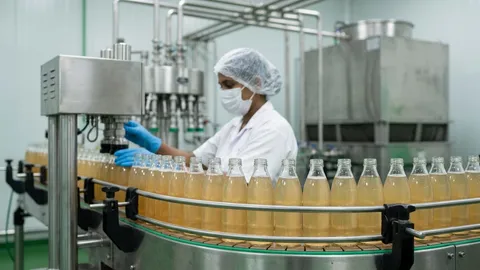
- Silk Foods Ceylon (SFC) runs a Non-Dairy Milk line in Matale that wet-grinds the base, homogenises, hot-fills glass bottles, and retorts the sealed bottle for a shelf-stable product.
- First-run MOQ is 1,250 bottles per variant on the 200 ml glass format, under a BRCGS- and FSSC 22000 V6-audited cert stack with SLSI clearance on every retail SKU.
Most local plant-milk inquiries arrive with the range already sketched. Three variants, oat, soy, and rice, a brand name, sometimes a working blend from a countertop blender. What the brand owner has usually not costed yet is the production side. Three different bases run through one glass-bottle line, each with its own grind, its own behaviour under heat, and its own allergen status. That sequencing sets the batch calendar, the first-run economics, and the shelf life long before a flavour is signed off.
The demand case for a local plant-milk range
Sri Lanka imports most of its dairy. Around 40% of national liquid-milk demand is met by local production, and the balance is imported, largely as milk powder, at a cost near USD 300 million a year (Daily FT, 2024). A shelf-stable plant milk produced locally competes directly against that imported powder, which is the commercial opening most local plant-milk brands are built on.
The category sits on a growing base. Global plant-based milk was worth about USD 20.84 billion in 2024 and is forecast to reach USD 32.35 billion by 2030, a compound growth rate near 7.4% (Grand View Research, 2025). Asia Pacific already accounts for close to 48% of that global market, and oat is the fastest-growing base within it. Lactose intolerance is widely documented among South Asian adults, which gives a plant-based drink a functional reason to exist beyond lifestyle positioning.
For a local FMCG brand, the opening is not whether the category exists. It is which format and which variants win the shelf space the brand is chasing. The powder-versus-liquid format decision is a separate question, covered in an earlier post on plant-milk R&D and the spray-dry versus UHT choice. This post assumes the decision is a shelf-stable liquid in glass, and looks at what it takes to produce three variants of it.
What does contract manufacturing vegan plant milk on a glass-bottle line involve?
Contract manufacturing a plant milk means the brand owner supplies the recipe and the manufacturer produces it at scale on their line. At Silk Foods Ceylon, the Non-Dairy Milk line wet-grinds the base grain or legume, blends and heats it in a jacketed kettle, homogenises it for a stable texture, hot-fills glass bottles, caps them, and retorts the sealed bottle for a shelf-stable product.
The heat step is where the glass-bottle route differs from the alternative. Retort sterilises the product inside the sealed bottle under pressure at around 121°C, a method long used for glass and cans. UHT, or aseptic processing, sterilises the product and the pack separately at 135°C to 150°C and fills in a sterile environment (Eurofins, 2025). SFC’s glass-bottle line uses in-container retort, which suits a glass format and a first commercial run without the capital cost of an aseptic line.
The trade-off is a fuller cooked note and slightly more colour movement than UHT, which the R&D team manages through stabiliser choice and the heat profile. Adjusting a countertop recipe for retort temperature and glass headspace is the same reformulation step that spreads and sauces go through, covered in the post on reformulating a kitchen recipe for retort and batch consistency.
Running oat, soy, and rice as three variants on one line
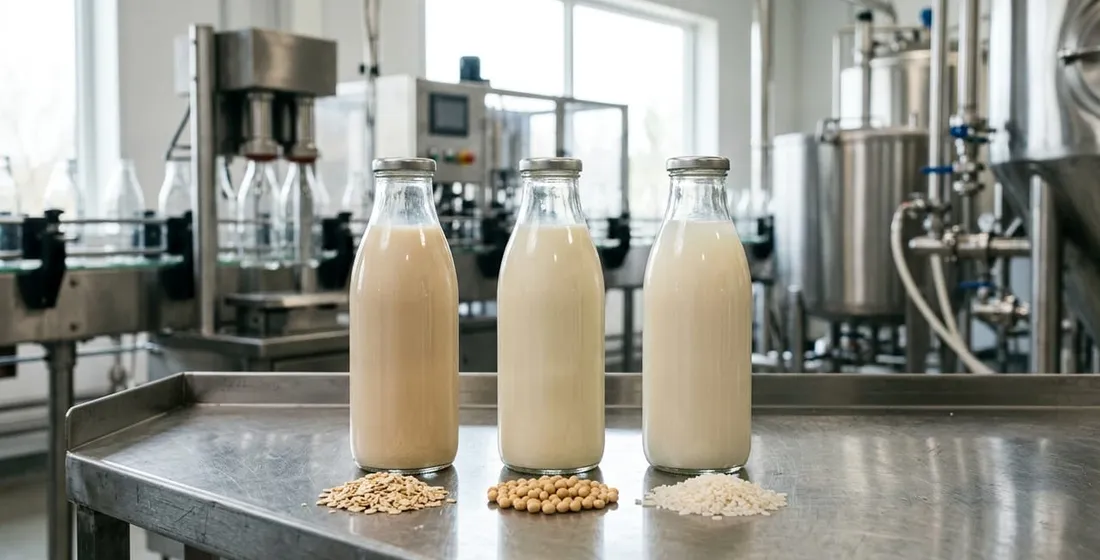
The three bases behave differently under the same process. Oat needs an enzyme step to manage its starch and give body without turning gummy. Soy carries its own protein and a beany note that the recipe has to mask. Rice runs thin and leans on stabiliser for mouthfeel. All three share the glass-bottle line at Silk Foods Ceylon, but each wants its own grind setting, its own heat profile, and a clean changeover between runs.
Allergen status decides the run order. Soy is a declarable allergen under Sri Lankan labelling rules. Oat and rice are not, though oat carries a gluten cross-contact question worth checking against the brand’s claim. The practical consequence is a fixed sequence: run the allergen-free variants first, run soy last, then a full clean-in-place before the next allergen-free block. That keeps each variant’s allergen statement honest on the label.
The R&D team sees most three-variant briefs spend their planning on flavour and skip the sequencing. A brand plans equal volumes of oat, soy, and rice, then finds that the soy run forces a full wash before the next oat batch. That single fact moves the day-rate maths more than any recipe tweak, and it is easier to plan for at the brief stage than to discover on the production floor.
The three variants line up like this on the glass-bottle line.
| Variant | Base input | Handling note | Allergen status | Run order |
|---|---|---|---|---|
| Rice | Uncooked white rice | Thin body; leans on stabiliser for mouthfeel | No declarable allergen | First |
| Oat | Rolled oats | Enzyme step for starch; check gluten cross-contact | No declarable allergen (gluten note) | Second |
| Soy | Dry soybeans | Own protein; beany note to mask | Declarable allergen (soy) | Last, before full clean-in-place |
Read down the run-order column and the batch calendar writes itself. Rice and oat share the allergen-free block, and soy closes the day before the wash. A brand that wants equal volumes of all three still runs them in one production block, as long as the order holds.
What is the MOQ and lead time for a plant-milk run at Silk Foods Ceylon?
First-run MOQ on the glass-bottle beverage format at Silk Foods Ceylon is 1,250 bottles per variant at 200 ml. For an oat, soy, and rice range, that is 3,750 bottles across the three, runnable in a single production block when the changeover order is planned. Lead time runs 2 to 3 weeks from purchase order to dispatch on a locked recipe. Where retort reformulation comes first, R&D takes 3 to 4 weeks maximum from signed brief to approved formulation.
The three variants share one line setup, one audit, and one SLSI submission. That is where the cellular-manufacturing layout earns its keep. A second and third variant do not re-audit the manufacturer or open a fresh compliance file, so the marginal cost of adding rice next to oat is a grind change and a wash, not a new engagement. First-run economics stay within reach for a local brand in LKR terms because the MOQ is set for a first commercial run, not for export volume.
Service snapshot: Contract Manufacturing at Silk Foods Ceylon
- Service: SFC manufactures the buyer’s plant-milk recipe on the Non-Dairy Milk line at the Matale facility.
- First-run MOQ: 1,250 bottles per variant (200 ml glass); 3,750 bottles across an oat, soy, and rice range.
- Sample to first PO: 2 to 3 weeks for a locked recipe; R&D/NPD, if retort reformulation is needed first, takes 3 to 4 weeks maximum from signed brief to approved formulation.
- Cert coverage: BRCGS- and FSSC 22000 V6-audited, with SLSI clearance and Sri Lanka Food Act compliance on every retail SKU.
- Line: wet-grind, jacketed kettle, homogeniser, glass-bottle fill and cap, in-container retort.
The same single-audit logic applies across the plant-based range, from frozen vegan nuggets to a first plant-based patty run.
What certifications does a plant-milk SKU need for a Sri Lankan shelf?
A packaged plant milk on a Sri Lankan retail shelf needs SLSI clearance and Sri Lanka Food Act 1980 label compliance, including a soy allergen declaration on the soy variant. For the manufacturer audit that retail buyers increasingly ask for, BRCGS and FSSC 22000 V6 are the two that matter: FSSC 22000 V6 is the baseline many buyers now expect, and BRCGS adds the premium and export-curious tier. Silk Foods Ceylon carries both, with SLSI clearance on every retail SKU.
The label wording matters for a plant-based product. A drink made from oat, soy, or rice is described under the Food Act framework for its category and allergen content, not with dairy terms. The soy variant carries the allergen declaration, and the oat variant carries the gluten note where the process cannot rule out cross-contact. Getting this right at artwork stage avoids a resubmission later.
SLSI does not publish a processing time, so confirm the current window with SLSI at submission and build a buffer between manufacturer QA sign-off and a retail shelf date. The full cert stack and how each layer compounds is covered in the post on the certification stack for a Sri Lankan FMCG launch, and the submission itself in the step-by-step SLSI guide.
Frequently asked questions
Does Silk Foods Ceylon offer contract manufacturing for oat, soy, and rice plant milk?
Yes. The Non-Dairy Milk line in Matale wet-grinds the base, homogenises, hot-fills glass bottles, and retorts the sealed bottle for a shelf-stable product. First-run MOQ is 1,250 bottles per variant at 200 ml, under a BRCGS- and FSSC 22000 V6-audited cert stack with SLSI clearance on every retail SKU.
Can oat, soy, and rice run on one production line?
Yes. The three variants share the same glass-bottle line but need separate grind and heat settings and a planned changeover. Soy is a declarable allergen, so it runs last, before a full clean-in-place, which keeps each variant’s allergen statement accurate on the label.
Retort or UHT for a glass-bottle plant milk?
Silk Foods Ceylon’s glass-bottle route uses in-container retort, sterilising the sealed bottle at around 121°C (Eurofins, 2025). It suits glass and a first commercial run without aseptic-line capital cost. UHT sterilises product and pack separately at 135°C to 150°C and usually fills cartons or PET.
How long does SLSI clearance take for a plant-milk SKU?
SLSI publishes no turnaround time and the window depends on audits, testing and any corrective actions, so confirm it with SLSI at filing. Plan a buffer between manufacturer QA sign-off and a retail shelf date, and account for the Sri Lanka Food Act allergen declaration on the soy variant.
How Silk Foods Ceylon can help
For local FMCG brands launching a plant-milk range, Silk Foods Ceylon (SFC) runs a Non-Dairy Milk line in Matale that takes oat, soy, and rice from wet-grind through homogenising, hot-fill, and in-container retort into shelf-stable glass bottles. First-run MOQ is 1,250 bottles per variant at 200 ml, and the cellular-manufacturing layout lets all three variants share one setup, one BRCGS- and FSSC 22000 V6 audit, and one SLSI submission. The in-house R&D team handles the retort reformulation and the changeover sequencing before the first commercial run, so the range launches as one project rather than three.
To brief a project, email brands@esilkroute.com.lk or call +94 77 157 7294.
Sources
- Daily FT (2024), “Achieving self-sufficiency in milk”, https://www.ft.lk/columns/Achieving-self-sufficiency-in-milk/4-714839 (retrieved 2026-07-09).
- Grand View Research (2025), “Plant-based Milk Market Size, Share and Growth Report, 2030”, https://www.grandviewresearch.com/industry-analysis/plant-based-milk-market-report (retrieved 2026-07-09).
- Eurofins (2025), “Processing Shelf-Stable Beverages: Best Practices for Safety and Quality”, https://www.eurofinsus.com/food-testing/resources/processing-shelf-stable-beverages/ (retrieved 2026-07-09).
- Sri Lanka Standards Institution, food certification and packaged-food submission framework, https://www.slsi.lk/ (retrieved 2026-07-09).
Written by the Silk Foods Ceylon Team. Silk Foods Ceylon (Pvt) Ltd. is a BRCGS- and FSSC 22000 V6-audited contract manufacturer in Matale, Sri Lanka, offering contract manufacturing, private labelling, co-packing, and in-house R&D for local Sri Lankan brand owners, FMCG companies, hotel and restaurant groups, and distributors. To brief a project: brands@esilkroute.com.lk or +94 77 157 7294.