Moving off an informal co-packer to a certified packing line

By the Silk Foods Ceylon Editorial Team
Buyer’s snapshot
- The Food (Labelling and Advertising) Regulations 2026, gazetted as Extraordinary No. 2494/47 on 26 June 2026 and in operation from 1 July 2026, require a batch number or decipherable code marking on a food label, along with the name and address of the manufacturer and of the distributor.
- Since 1 July 2026 the same regulations apply ten mandatory particulars to business-to-business packs as well, plus the statement Not for retail sale printed in bold at not less than three millimetres.
- Sri Lankan hygiene law requires procedures that enable the complete, rapid recall of any implicated lot, which is a records duty before it is a packing duty.
- The Sri Lanka Standards Institution publishes no processing timeline for an SLS mark permit, so the week count below is an operator plan rather than a regulator schedule.
- The comparison table sets out which records a certified line keeps against what an informal packer usually holds.
Sri Lankan food manufacturing is crowded at the small end. The Ministry of Industries Food and Beverages Sector Industry Data Book 2023 counts 4,087 establishments employing 210,382 people in 2020, of which 2,473 employ between five and twenty four people. That structure is why a distributor can nearly always find somebody to pack eight hundred pouches next week.
It is also why the same distributor goes quiet when a buyer asks which lot a complaint sample came from.
Moving off an informal packer is usually described as a compliance upgrade. On the floor it is a records upgrade, and the records change before the product does. The pack picks up an identity, the run picks up a paper trail, and the site picks up a defined scope. This post sets out what enters the file, what a certified run costs in scheduling terms, and how many weeks a first compliant batch realistically takes.
What changes on the floor when the packing moves
Three things change at once. Under the Food (Labelling and Advertising) Regulations 2026, in operation from 1 July 2026, the pack has to carry a batch number or code marking and the name and address of the manufacturer and the distributor. Under the Food (Hygiene) Regulations 2011, the operation has to be able to recall one implicated lot. Under the SLSI certification schemes, the site has to hold documented procedures for those claims.
None of those three is a machine upgrade. An informal packer can seal a pouch as neatly as a certified line can. What an informal packer usually cannot do is tell a buyer, four months after despatch, which incoming consignment went into the 340 packs sitting in one outlet, and what the moisture reading was on the day they ran.
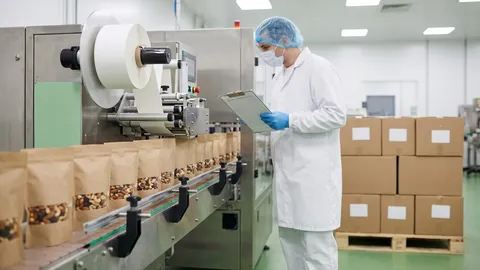
That gap is the whole switching cost, and it is why the change is worth sequencing rather than rushing. Silk Foods Ceylon (SFC) runs co-packing at the Matale facility as a service where the buyer supplies finished goods and the team packs, seals, labels and codes them. The packing is the visible half. The file behind it is the half a supermarket buyer actually audits.
Where co-packing sits against contract manufacturing and private labelling, if the route itself is still open, is set out in which co-manufacturing service fits a brief.
Which records does a certified line keep that an informal one does not?
The record set is smaller than most distributors expect and more specific than most informal packers hold. Eight items carry almost all of the weight, and each one traces to a published requirement rather than to a preference. The table below sets them out with the instrument that creates the duty.
| Record | Informal packer, typically | Certified line | Where the duty comes from |
| Incoming material record | A delivery note held by the distributor | Supplier, date of receipt and quantity logged against the lot before release to the floor | Codex CXC 1-1969, clause 13.2.8 |
| Lot definition | The day’s output, defined loosely | A definitive quantity produced under the same conditions | Codex CXS 1-1985, clause 2 |
| Code on the pack | Often a printed date, or nothing | A permanent code identifying the producing factory and the lot | Gazette 2494/47 reg. 5(2)(a)(iii); Codex CXS 1-1985 clause 4.6 |
| Addresses on the pack | One name at most | Manufacturer address and distributor address, plus the packer where there is one | Gazette 2494/47 reg. 5(2)(a)(ii) |
| Quality plan | Held verbally | Documented inspection and testing procedures from receipt of materials to final product | SLSI GL-CP-01, Issue 03 |
| Test and inspection records | Not kept | Maintained, readily retrievable, stored against damage | SLSI GL-CP-01, Issue 03 |
| Recall procedure | Recall means pulling everything | Procedures enabling complete, rapid recall of the implicated lot | Food (Hygiene) Regulations 2011, reg. 12(14) |
| Retention time | Undefined | Defined by the manufacturer, and longer than the shelf life of the product | SLSI GL-CP-01; Codex CXC 1-1969 clause 13.4 |
Read the last row against the second. A retention time cannot be set without a lot rule, because there is nothing to retain records about. A recall cannot be scoped without one either. Every other line in the table is downstream of the question of what counts as one batch, which is the single item most informal arrangements never write down.
The practical consequence is narrow and expensive. A distributor with no lot definition who receives one complaint has one honest answer available, which is that the affected stock is all of it. A distributor with a lot rule and a code that identifies the packing site can isolate a single production block, hold that stock, and leave the rest on shelf.
Who holds title to the stock while it sits at the packer, and what that means for the same records, is covered in warehousing, despatch and stock ownership at a co-packer.
Why does the handover pack itself need a label now?
This is the change most distributors have not costed yet. The Food (Labelling and Advertising) Regulations 2026 exempt business-to-business food products from most labelling requirements, then list ten that still apply: common name, date of manufacture, date of expiry, batch number, manufacturer name and address, distributor name and address, country of origin for imported foods, and a complete list of ingredients. The statement Not for retail sale has to be printed in bold at not less than three millimetres.
The bulk consignment moving from a packer to a distributor is therefore a labelled, batch-coded, regulated object in its own right. It is no longer a sack with a marker pen on it.
The regime took a long run-up. The 2022 labelling regulations were deferred by gazette in December 2023, again in December 2024, and again on 30 June 2025, which pushed the operative date to 1 January 2026. Six months later the 2026 regulations replaced them. For a distributor, that sequence has one practical meaning: label artwork approved against the older spec is now out of date, and the print file is the thing that has to move first, ahead of any production booking. Artwork is cheap to redraw and expensive to recall once twelve thousand pouches are printed.
For imported bulk the country of origin declaration is the item that catches people, because it has to survive the repacking step and be carried onto the retail pack as well as the inbound one.
The mechanics of handing an audit chain from one site to another, once the decision to switch is already made, are set out in switching co-packers and the audit chain handover.
What SLSI readiness asks of the site
SLS mark product certification runs on a published sequence: application, desktop evaluation of the documents, an on-site pre-assessment, product testing on samples drawn from manufacturing, a final comprehensive on-site assessment, then the permit committee. Surveillance follows twice yearly. The permit is granted to the brand owner and the manufacturer together, on a signed agreement.
The document behind that assessment is GL-CP-01, the SLSI quality management system requirements, which names twelve elements: management responsibility, quality system, purchasing, process control, inspection and testing, control of inspection and measuring and test equipment, inspection and test status, control of non-conforming product, handling and storage and packaging and delivery, control of quality records, internal quality audits, and training. Each test has to be detailed in a quality plan, and the records have to be kept retrievable, with a retention time that the manufacturer sets rather than one that SLSI prescribes.
One point deserves stating plainly, because it is often quoted wrongly. SLSI publishes no processing timeline for a permit. Any number a packer offers for how long clearance takes is that packer’s own estimate of their own readiness, not a regulator commitment. Under the separate SLSI good manufacturing practice scheme, a certificate applies only to the processes and products in its schedule, and a client with several locations receives a separate certificate for each one. A distributor cannot inherit a packer certificate for a different site or an out-of-scope product.
The research and development team at the Matale facility sees the same misreading land most quarters. A distributor arrives holding a packer certificate, a listing date about six weeks out, and a settled belief that the certificate covers the product because it covers the packer. It usually does not: it covers named processes at one address. Checking the schedule takes a phone call. Discovering it after a listing costs the listing.
The submission itself is walked through in the SLSI packaged food submission, step by step, and the question of which categories require the mark at all is covered in SLS certification for a Sri Lankan retail listing.
What does the minimum per run look like on a certified line?
Co-packing does not price like contract manufacturing, because the buyer already owns the goods. What is being bought is a scheduled block on a line, plus the file that comes with it. At Silk Foods Ceylon a co-packing engagement is usually booked as a production block rather than a unit minimum, with capsule bottling at 180 bottles per SKU, and typical lead times of 1 to 2 weeks once the finished goods are at the facility and the artwork is approved.
The costs that do not shrink with a small run are the ones worth planning around: line changeover, clean-down between products, coder setup for the new batch format, the first-article check, and the QA sampling the quality plan requires. Those are per-block costs. Running 600 pouches through a certified block carries most of the same overhead as running 6,000.
Which makes consolidation the actual lever. A distributor holding four imported lines, almonds in 250 g, cashews in 100 g, dates in 500 g and a spice blend in 50 g, is far better served booking them into one block than spreading four small runs across a quarter. The changeover count is what moves the cost, not the pack count.
Service snapshot: co-packing at Silk Foods Ceylon
|
A worked version of that consolidation, for imported nuts and dates going into an online grocery listing, is in co-packing imported cashews and dates for Sri Lankan e-commerce.
Counting the weeks to a first compliant batch
No regulator publishes this timeline, so treat what follows as an operator plan built backwards from a shelf date. The sequence assumes the product itself is already made and imported, which is the ordinary co-packing case, and that no new formulation work is needed.
- Week 1. Settle the lot rule and the code format in writing, and confirm which party is named as manufacturer and which as distributor on the pack. Nothing downstream is stable until these three are fixed.
- Week 1 to 2. Redraw artwork against the 2026 particulars, including both addresses, the batch field, dates of manufacture and expiry, the ingredient list and country of origin for imported goods. Send to print only after the packer has confirmed the code field fits the coder.
- Week 2. Move the finished goods to the packing site and log them in: supplier, date of receipt, quantity, against the lot reference the run will carry.
- Week 2 to 3. Agree the quality plan for the run, which tests happen at what frequency, and who signs them. Book the production block against the print delivery date rather than the goods arrival date, since print is the longer pole.
- Week 3 to 4. Run the block. Pull a first-article pack, read the code and the label against the artwork proof before the block finishes, and hold the retained records against the defined retention time.
- Week 4 onward. Where the category requires the SLS mark, the certification file runs on its own clock, with an on-site pre-assessment and product testing ahead of the final assessment. Plan the listing date around the assessment calendar, not the packing calendar.
Four weeks is achievable when the artwork is the only new thing. Six to eight is the honest number when the label has to be redrawn from an older spec and reprinted, because the print queue rather than the line is what sets the date.
Buyer's checklist: settle these before booking the block
|
Frequently asked questions
Does a Sri Lankan food pack legally need a batch code?
Yes. The Food (Labelling and Advertising) Regulations 2026, gazetted as Extraordinary No. 2494/47 on 26 June 2026 and in operation from 1 July 2026, require a batch number or code number or a decipherable code marking on the label, together with the date of manufacture and the name and address of the manufacturer and the distributor.
Do bulk packs moving from a co-packer to a distributor need a label?
Yes, since 1 July 2026. Business-to-business food products are exempted from most labelling requirements but must still carry ten particulars, including batch number, dates of manufacture and expiry, manufacturer and distributor addresses, country of origin for imported foods and a full ingredient list, plus Not for retail sale in bold at not less than three millimetres.
How long does SLSI take to issue an SLS mark permit?
The Sri Lanka Standards Institution publishes no processing timeline. The scheme sets out the sequence rather than the duration: application, desktop evaluation, on-site pre-assessment, product testing on manufacturing samples, a final comprehensive on-site assessment, then the permit committee, followed by twice-yearly surveillance. Any week count offered is an estimate of site readiness.
Can a distributor rely on the co-packer certificate for its own site?
No. Under the SLSI good manufacturing practice scheme rules, a certificate applies only to the processes and products named in its schedule, and separate certificates are issued for each location a client applies for. A certificate held by a packer covers that packer’s address and scope, not a distributor warehouse or an out-of-scope product.
What does a co-packing run at Silk Foods Ceylon involve?
The buyer supplies finished goods and the Matale team packs, seals, labels and codes them into retail formats: kraft pouches from 50 g to 1 kg, glass jars from 50 ml to 1 L, 400 ml tins and 60-count capsule bottles at 180 bottles per SKU. Lead times typically run 1 to 2 weeks once goods and approved artwork are in.
How Silk Foods Ceylon can help
For a distributor moving imported bulk off an informal packer and onto a certified line, Silk Foods Ceylon operates a dedicated co-packing capability at the Matale facility, where the buyer supplies the finished goods and the team handles packing, labelling, batch coding and SLSI submission support under the Sri Lanka Food Act labelling framework. Formats run from 50 g to 1 kg kraft pouches, glass jars from 50 ml to 1 L, 400 ml tins and 60-count capsule bottles, with capsule bottling at 180 bottles per SKU and typical lead times of 1 to 2 weeks once goods and artwork are approved. The BRCGS and FSSC 22000 V6 audited cert stack on the packing side is what national retail procurement teams ask about first, and consolidating several imported lines into one production block is usually the cheapest way to buy it.
To brief a co-packing or consolidation plan, email brands@esilkroute.com.lk or call +94 77 157 7294.
Sources
Ministry of Health and Mass Media, Sri Lanka, Food (Labelling and Advertising) Regulations 2026, Gazette Extraordinary No. 2494/47 of 26 June 2026, in operation from 1 July 2026, on the batch number or code number or decipherable code marking, the name and address of the manufacturer and distributor, and the business-to-business particulars including the statement Not for retail sale in bold at not less than 3 mm (retrieved 2026-09-06): Gazette Extraordinary No. 2494/47
Ministry of Health and Mass Media, Sri Lanka, amendment to the Food (Labelling and Advertising) Regulations 2022, Gazette Extraordinary No. 2443/06 of 30 June 2025, recording the earlier amendments of 27 December 2023 and 28 December 2024 and setting the operative date of 1 January 2026 (retrieved 2026-09-06): Gazette Extraordinary No. 2443/06
Ministry of Health, Sri Lanka, Food (Hygiene) Regulations 2011, Gazette Extraordinary No. 1742/26, in operation from 1 November 2012, regulation 12(14) on procedures to enable the complete, rapid recall of any implicated lot of the finished food from the market (retrieved 2026-09-06): Food (Hygiene) Regulations 2011
Sri Lanka Standards Institution, GL-CP-01 Quality Management System Requirements for SLS Mark certification, Issue 03 dated 20 April 2025, on documented inspection and testing procedures from receipt of materials to final product, the quality plan detailing each test, and quality records being retrievable with a retention time determined by the manufacturer (retrieved 2026-09-06): SLSI GL-CP-01
Sri Lanka Standards Institution, SLS Mark Product Certification, 2026, on the assessment sequence of application, desktop evaluation, pre-assessment, product testing, final on-site assessment and permit committee, the permit being granted on an agreement signed by the brand owner and manufacturer, and bi-annual surveillance, with no processing timeline published (retrieved 2026-09-06): SLSI SLS mark product certification
Sri Lanka Standards Institution, GMP Product Certification Scheme rules, Doc. GMP G 11.0 - 01, Issue 04 dated 1 August 2024, clauses 7.3 and 7.4 on the certificate applying only to the processes and products in its schedule and separate certificates being issued for each location (retrieved 2026-09-06): SLSI GMP scheme rules
FAO and WHO Codex Alimentarius, General Standard for the Labelling of Prepackaged Foods CXS 1-1985, clause 4.6 requiring each container to be permanently marked to identify the producing factory and the lot, and clause 2 defining a lot as a definitive quantity produced essentially under the same conditions (retrieved 2026-09-06): Codex CXS 1-1985
FAO and WHO Codex Alimentarius, General Principles of Food Hygiene CXC 1-1969, 2022 revision, clause 13.4 on records being retained for a period that exceeds the shelf life of the product and clause 13.2.8 on documenting supplier details, date of receipt and quantity for incoming materials (retrieved 2026-09-06): Codex CXC 1-1969
Ministry of Industries, Sri Lanka, Food and Beverages Sector Industry Data Book 2023, published 2024, Table 1.2 on 4,087 establishments and 210,382 persons engaged in 2020, of which 2,473 establishments employ 5 to 24 persons, sourced from the Department of Census and Statistics Annual Survey of Industries (retrieved 2026-09-06): Food and Beverages Sector Industry Data Book 2023
Written by the Silk Foods Ceylon Editorial Team. Silk Foods Ceylon (Pvt) Ltd. is a BRCGS and FSSC 22000 V6 audited contract manufacturer in Matale, Sri Lanka, offering contract manufacturing, private labelling, co-packing and in-house research and development for local Sri Lankan brand owners, FMCG companies, hotel and restaurant groups, and distributors. To brief a project: brands@esilkroute.com.lk or +94 77 157 7294.