Private-Label Kithul and Coconut Treacle for Diaspora Gifting
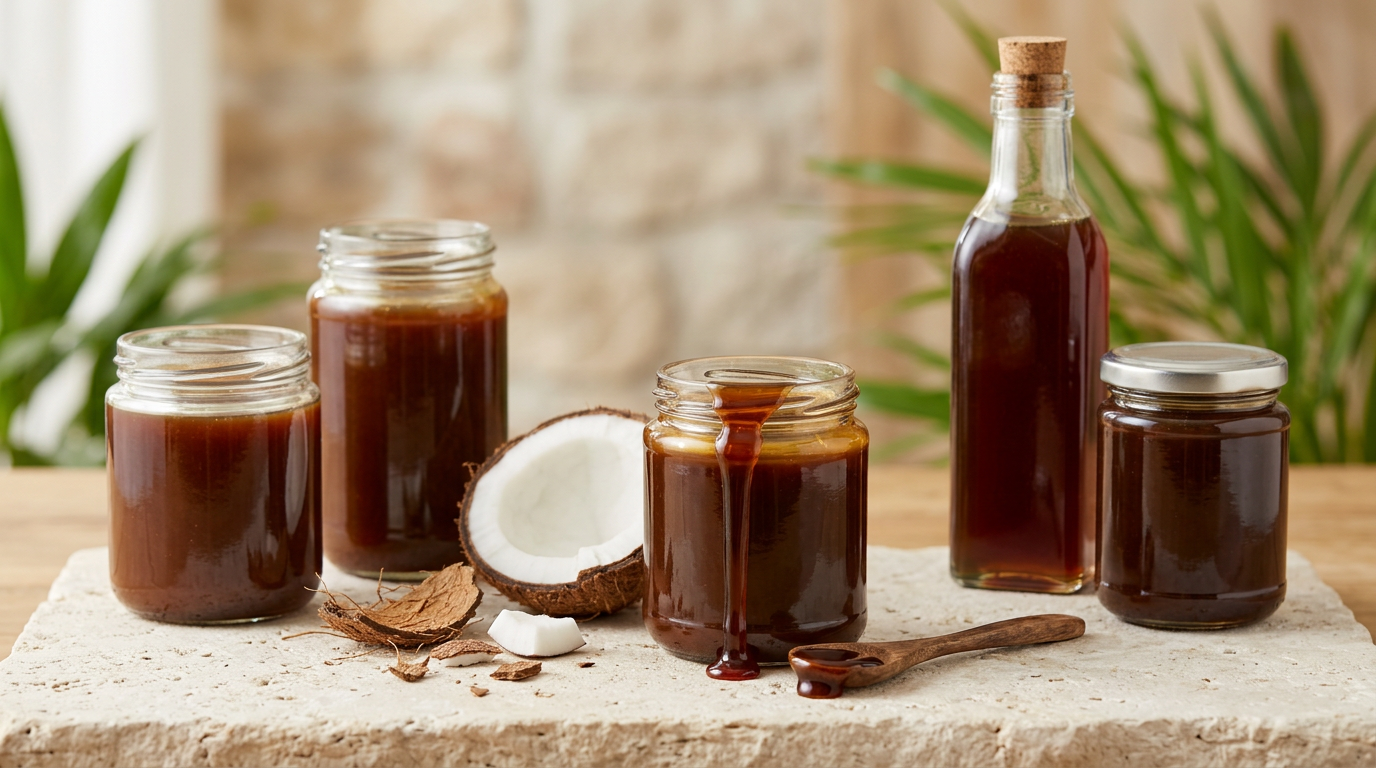
Buyer’s snapshot
- Worker remittances to Sri Lanka reached a record USD 8.076 billion in 2025, up 22.8% on 2024 (Central Bank of Sri Lanka): the diaspora stays closely tied to home.
- Kithul and coconut treacle travel well in glass and carry a low-glycaemic-index story; kithul treacle’s GI is 35 (Ceylon Medical Journal).
- Silk Foods Ceylon (SFC) private-labels both syrups from a 1,500-jar first run, BRCGS- and FSSC 22000 V6-audited and SLSI-cleared.
- See the kithul-versus-coconut-treacle table and the labelling section before briefing a gifting SKU.
A jar of kithul treacle in a returning relative’s suitcase is one of the most dependable Sri Lankan gifts there is. The diaspora gifting channel, the gift shops and online platforms that move Sri Lankan pantry items to family abroad, runs on that kind of memory. Worker remittances reached a record USD 8.076 billion in 2025 (Central Bank of Sri Lanka), a measure of how connected the diaspora stays. For a gift-retail group or a brand owner building a treacle line, the gap between a good syrup and a giftable jar is rarely the syrup. It is the label, the certification chain, and a manufacturer who can hold batch consistency at gift-jar scale. Silk Foods Ceylon (SFC) private-labels both kithul and coconut treacle from its BRCGS- and FSSC 22000 V6-audited facility at Silk AgTech Park in Hapugasyaya, Matale.
Why does treacle fit the diaspora gifting channel?
The diaspora gifting channel moves heritage pantry items to Sri Lankans abroad through gift shops and online gifting platforms. Kithul and coconut treacle suit it well: both are vegan, shelf-stable in glass, and carry a low-glycaemic-index story (kithul treacle’s GI is 35, per the Ceylon Medical Journal, 2023). Format and positioning follow.
Treacle is a fixture of the Sri Lankan table: poured over buffalo curd, drizzled on hoppers and pancakes, stirred into festive sweets. For a household abroad, a jar is a direct line to that table, which is why it sells as a gift rather than a weekly staple. Two practical traits make it travel. It is shelf-stable, so it survives a suitcase or a courier route without a cold chain. And it pours from glass, which reads as a gift in a way a plastic pouch does not. The buyer here is usually a gift-retail group, a hospitality gift shop, or a brand owner assembling a hamper line, and the same logic drives private-label gift-shop SKUs for hotel groups. The occasion is often the festive season or a returning traveller stocking up. None of that works, though, if the jar inside cannot pass a label check.
Kithul treacle and coconut treacle are not the same product
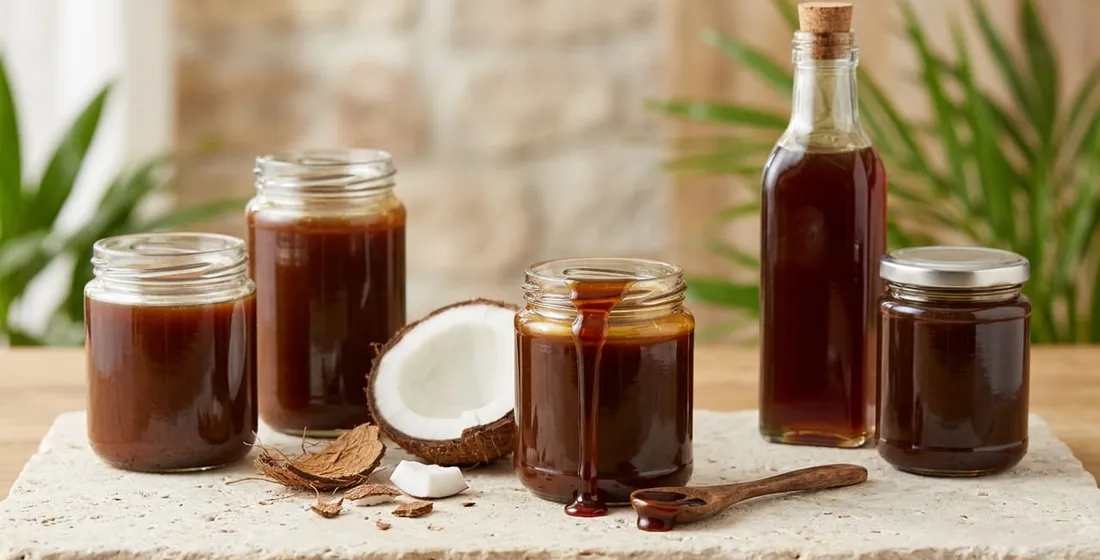
Kithul treacle is tapped from the inflorescence of the kithul palm (Caryota urens, the fishtail palm) and boiled down to a dark syrup; coconut treacle comes from coconut-flower sap. Both are Sri Lankan, both low-GI, but they differ in flavour, cost, and supply. The table below sets the two side by side for a gifting decision.
| Dimension | Kithul treacle | Coconut treacle |
|---|---|---|
| Source | Sap from the kithul palm inflorescence (Caryota urens) | Sap from the coconut flower (Cocos nucifera) |
| Colour and flavour | Dark, deep, smoky caramel | Lighter brown, milder, rounded |
| Glycaemic index | 35 (low; Ceylon Medical Journal, 2023) | Low (palm-sap sweetener) |
| Relative cost per jar | Higher; tapper-dependent supply | Lower; more abundant supply |
| Supply reliability | Tighter, seasonal, tapper-limited | Steadier year-round |
| Best gifting fit | Hero single-jar gift | Volume hampers and dual-jar sets |
For a gifting SKU, the choice is rarely either-or. Kithul is the higher-value syrup, darker and more complex, and it is what most buyers picture when they think of a treacle gift. Coconut treacle is more abundant and lands at a lower cost per jar, which makes it the workhorse for volume hampers. There is a catch the trade knows well. Because kithul commands a higher price and its supply depends on a shrinking pool of tappers, kithul treacle is one of the more adulterated products on the local market, often cut with cheaper coconut treacle or plain sugar syrup (FAO). A gifting brand that puts kithul on the label needs a manufacturer who can document what is actually in the jar.
What does private labelling treacle at Silk Foods Ceylon involve?
Private labelling means a Silk Foods Ceylon recipe carried under the buyer’s brand, drawn from a catalogue of 50-plus ready-to-go SKUs that includes both kithul and coconut treacle. Treacle fills into clear glass jars and bottles; the first commercial run sits at 1,500 jars, with SLSI submission support inside the engagement.
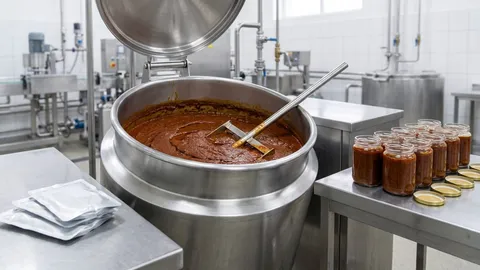
The liquid-filling line at the Matale facility fills glass jars and bottles, with gift-friendly formats at 220 ml, 330 ml, and 500 ml. A buyer can take an existing treacle formulation under their own label, or brief a custom blend through the in-house R&D and NPD team (a kithul-forward syrup, a specific viscosity for a squeeze bottle, a dual-jar gift set). First-run economics are built for a local launch: 1,500 jars is a half-day production block, and lead time runs two to three weeks once a recipe is locked. The largest line in the per-jar LKR cost is the raw treacle itself, kithul especially, so the blend choice moves the gift price more than the packaging does.
Service snapshot: private labelling at Silk Foods Ceylon
- Service: an SFC-formulated SKU carried under the buyer’s brand (50-plus ready-to-go SKUs).
- Formats: clear glass jars and bottles at 220 ml, 330 ml, and 500 ml for gifting.
- First-run MOQ: 1,500 jars per SKU (about a half-day production block).
- Lead time: two to three weeks from locked recipe to dispatch; SLSI submission support included.
- Cert coverage: BRCGS- and FSSC 22000 V6-audited, with SLSI clearance on every retail SKU.
Labelling and clearance decide whether a gifting SKU ships
Every packaged treacle SKU sold in Sri Lanka must meet the Food (Labelling and Advertising) Regulations 2022, in force since 1 January 2024 (Ministry of Health): a tri-lingual common name, an ingredient list, net weight, country-of-origin, manufacturer details, and a best-before date. SLSI clearance gates the retail shelf.
The label is where a gifting SKU most often stalls. Under the 2022 regulations, the common name appears in Sinhala, Tamil, and English, alongside the ingredient list, net weight, country-of-origin statement, manufacturer name and address, and best-before date in the prescribed form. SLSI clearance is the gating step for a retail shelf; the submission window typically runs four to eight weeks, so most brands plan a six-to-ten-week buffer between QA sign-off and a target shelf date. For jars that ship abroad through the diaspora channel, the destination market’s own food-import and labelling rules apply on top of the local ones. This is where the certification stack for a Sri Lankan FMCG launch earns its place: a BRCGS- and FSSC 22000 V6-audited facility, with SLSI clearance and Sri Lanka Food Act 1980 compliance on every retail SKU, clears those gates faster than an uncertified co-packer.
Can a kithul treacle gift SKU carry a Ceylon or GI claim?
Sri Lanka now runs a geographical-indication registry. Ceylon Cinnamon became the country’s first GI, with EU protected status granted in February 2022, followed by Ceylon Tea (Sri Lanka Export Development Board). Kithul and coconut treacle are not GI-registered, so a gifting label leans on accurate origin statements and manufacturer traceability, not a protected seal.
Provenance sells in the gifting channel, but it has to be claimed honestly. A treacle jar can state Sri Lankan origin and tell the kithul-palm story in its label copy and inserts. What it cannot do, today, is carry a geographical-indication seal the way Ceylon Cinnamon can, because no GI exists yet for kithul or coconut treacle. The credible substitute is traceability: a manufacturer who can trace the syrup to its source and stand behind the kithul content. That, paired with the right retail and gifting channel fit, is the asset a gifting brand actually ships.
Frequently asked questions
What is the MOQ for private-label kithul or coconut treacle at Silk Foods Ceylon?
The first commercial run is 1,500 jars per SKU, roughly a half-day production block on the glass-fill line at the Matale facility. Lead time runs two to three weeks once the recipe is locked, with SLSI submission support included in a standard private-label engagement.
Is kithul treacle healthier than refined sugar?
Kithul treacle carries a glycaemic index of 35, which classes it as a low-GI food (Ceylon Medical Journal, 2023), against the higher GI of white sugar. It is also vegan. For a gifting SKU this supports a natural-sweetener positioning, not a medical claim, which Sri Lankan labelling rules keep separate.
What labelling does a treacle gift jar need in Sri Lanka?
Under the Food (Labelling and Advertising) Regulations 2022, in force since 1 January 2024, a packaged treacle jar needs a tri-lingual common name (Sinhala, Tamil, English), an ingredient list, net weight, country-of-origin, manufacturer details, and a best-before date. SLSI clearance is required for the retail shelf.
Can Silk Foods Ceylon develop a custom treacle blend for my brand?
Yes. The in-house R&D team at Matale can formulate a custom blend, for example a kithul-forward syrup or a specific pouring viscosity, and typically works through two to four sample iterations before the recipe locks. From there the same line produces the first commercial run under contract manufacturing.
Does the diaspora gifting channel need export certification?
For jars sold inside Sri Lanka, SLSI clearance and Sri Lanka Food Act 1980 compliance are the requirements. For SKUs that ship abroad to diaspora customers, the destination market’s import and labelling rules apply, and a BRCGS- and FSSC 22000 V6-audited manufacturer eases that step considerably.
How Silk Foods Ceylon can help
For gift-retail groups, hospitality gift shops, and brand owners building a gifting line, Silk Foods Ceylon (SFC) private-labels a catalogue of 50-plus ready-to-go SKUs, including kithul treacle, coconut treacle, and coconut products, in retail-ready glass. Existing formulations carry the buyer’s brand without re-development; first-run MOQ sits at 1,500 jars per SKU, which keeps a multi-SKU gift range on a single production block. The Matale facility is BRCGS- and FSSC 22000 V6-audited, with SLSI clearance on every retail SKU, and the adjoining plantation supports the provenance storytelling a gifting brand leans on. Custom blends and gift-set formats run through the in-house R&D team.
To brief a gifting programme, email b2b@esilkroute.com.lk or call +94 76 441 0389 / +94 76 918 5744.
Sources
- Central Bank of Sri Lanka (2025), “Workers’ Remittances”, https://www.cbsl.gov.lk/en/workers-remittances (retrieved 2026-06-19).
- Ceylon Medical Journal (2023), “Kithul (Caryota urens) treacle: a healthy natural sweetener?”, https://cmj.sljol.info/ (retrieved 2026-06-19).
- Ministry of Health, Sri Lanka, “Food (Labelling and Advertising) Regulations 2022” (effective 1 January 2024), via USDA FAS GAIN report, https://www.fas.usda.gov/data/sri-lanka-sri-lanka-enacts-new-legislation-food-labeling-and-advertising (retrieved 2026-06-19).
- Sri Lanka Export Development Board (2022), “Sri Lanka achieves its first ever GI certification with Ceylon Cinnamon”, https://www.srilankabusiness.com/news/sri-lanka-achieves-its-first-ever-gi-certification-with-ceylon-cinnamon.html (retrieved 2026-06-19).
- Food and Agriculture Organization (FAO), “A study on the Kithul (Caryota urens) industry in Sri Lanka”, https://openknowledge.fao.org/ (retrieved 2026-06-19).
Written by the Silk Foods Ceylon Team. Silk Foods Ceylon (Pvt) Ltd. is a BRCGS- and FSSC 22000 V6-audited contract manufacturer in Matale, Sri Lanka, offering contract manufacturing, private labelling, co-packing, and in-house R&D for local Sri Lankan brand owners, FMCG companies, hotel and restaurant groups, and distributors. To brief a project: b2b@esilkroute.com.lk, +94 76 441 0389, or +94 76 918 5744.