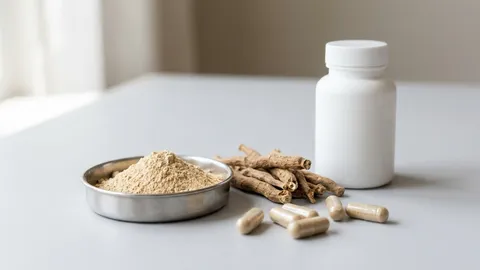
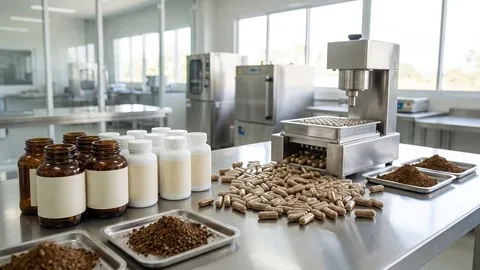
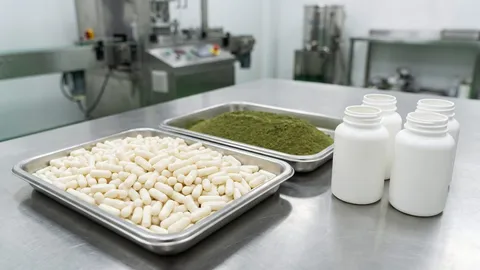
Private-label moringa capsules for the Sri Lankan wellness shelf
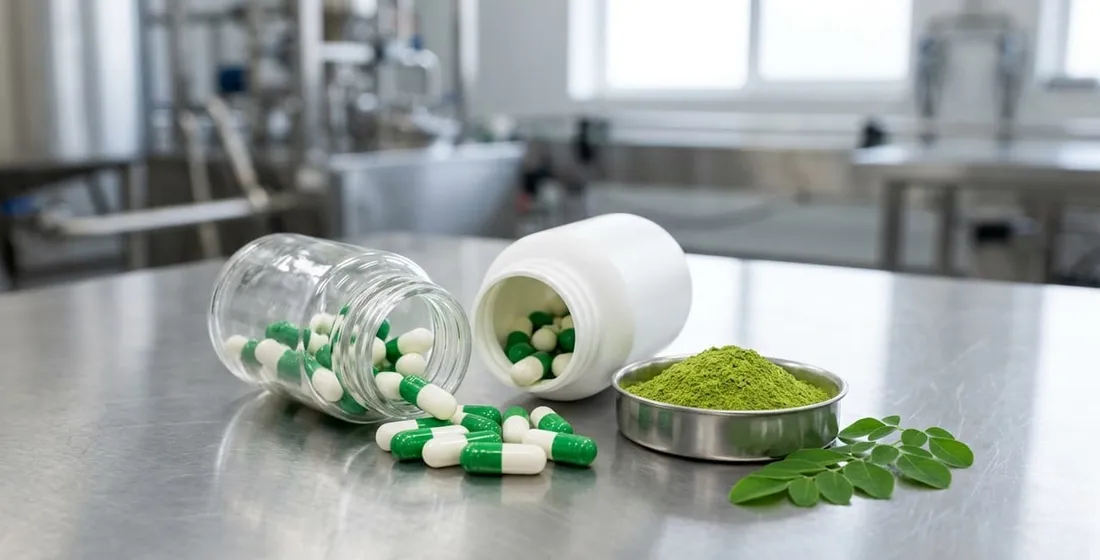
Buyer’s snapshot
- The global moringa products market sat at about USD 9.3 billion in 2025 and is projected to reach roughly USD 23 billion by 2035, a growth rate near 9.6% a year (Future Market Insights, 2025).
- Moringa is already a familiar Sri Lankan crop, locally murunga, grown and eaten across the island, so a local wellness brand starts with recognition that imported superfoods have to buy.
- The route most local brands actually want is private labelling: an SFC-formulated moringa capsule under the buyer’s own brand, with no recipe development to start.
- Silk Foods Ceylon (SFC) runs an encapsulation line at the Matale facility at 100,000 capsules per single shift, first-run MOQ from 180 bottles, under a BRCGS- and FSSC 22000 V6-audited cert stack with SLSI clearance on every retail SKU.
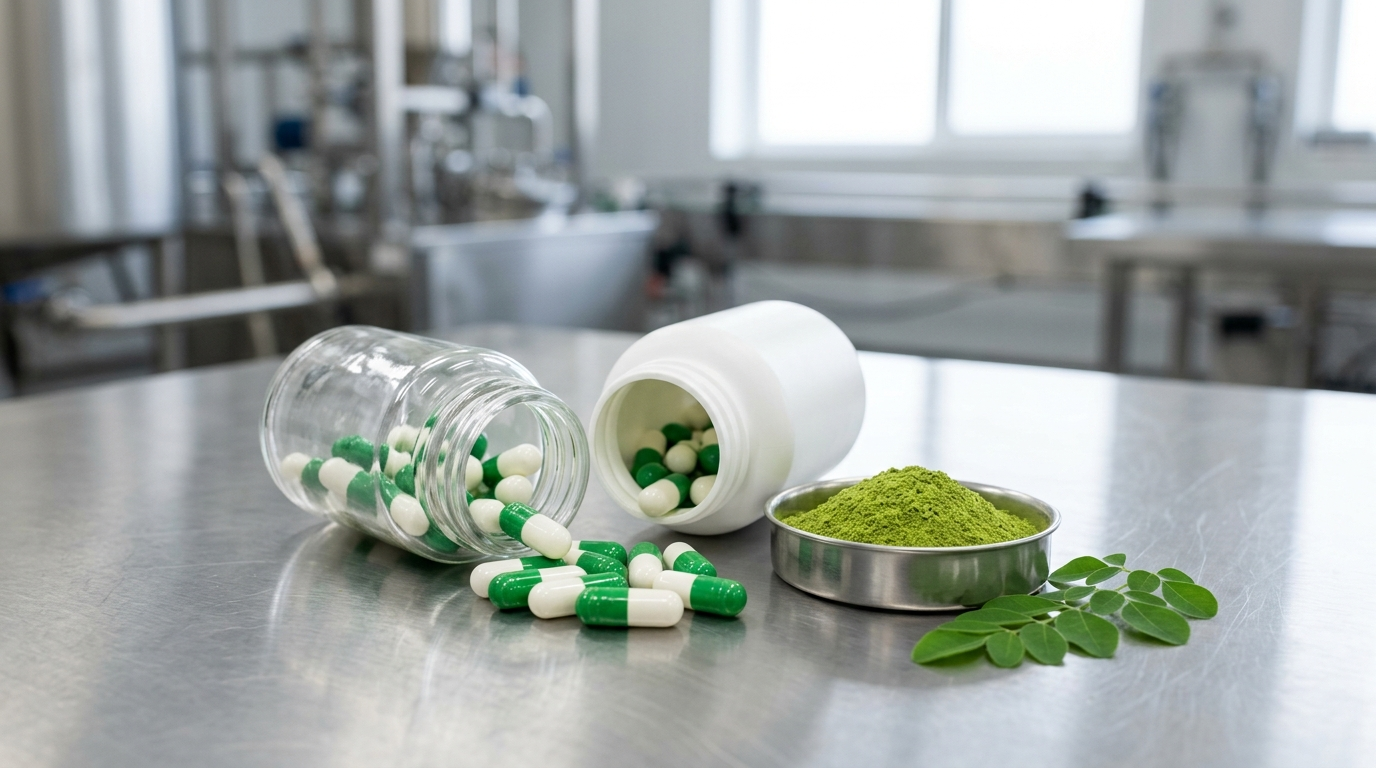
Most local wellness brands that want a moringa capsule do not need a chemist. The leaf grows a short drive from most of the island, it already carries a Sinhala name on every kitchen list (murunga), and the capsule format is settled. What the brand needs is a manufacturer who can turn a familiar plant into a shelf-ready, SLSI-cleared SKU under its own brand, with a label that survives a regulator reading it. That is a private-labelling job, and the work sits less in the recipe than in the raw material and the compliance.
Is moringa a category worth private labelling in Sri Lanka?
The demand is not speculative. The global moringa products market was valued at about USD 9.3 billion in 2025 and is forecast to reach roughly USD 23 billion by 2035, growing near 9.6% a year (Future Market Insights, 2025). Supplements are one of the faster segments inside that, because a capsule is the simplest way to put a green leaf powder into a daily routine without asking the buyer to change how they eat.
Sri Lanka enters this category with two advantages most markets lack. The plant grows locally at scale: moringa, or murunga, is cultivated across the dry zone, with farming communities in areas such as the Wellawaya Divisional Secretariat building it into a cash crop under state agricultural support (DHL Sri Lanka, 2024). And the intent to make capsules from it is already on record, through a publicised technology-transfer offer to help Sri Lanka produce medicinal capsules and powder from moringa (DHL Sri Lanka, 2024). For a local brand owner, the raw material and the will to manufacture are both already here. The gap is a certified line and a compliant label, which is exactly where private labelling for Sri Lankan brand owners starts.
Private labelling, contract manufacturing, or co-packing: which one is a moringa capsule?
For a capsule SKU, the three SFC services answer three different questions. Private labelling means the formulation is SFC’s and the buyer brings a brand. Contract manufacturing means the recipe is the buyer’s, made at scale. Co-packing means the buyer ships finished capsules and the SFC team packs, bottles, and labels them. Most first-time local wellness brands want the first.
| Route | Who owns the formulation | What the buyer brings | Best fit for a moringa capsule |
|---|---|---|---|
| Private labelling | SFC (existing formulation) | Brand, label artwork, target shelf | A brand owner who wants a moringa capsule on shelf without developing a spec |
| Contract manufacturing | The buyer | A locked, tested recipe | A brand with its own moringa blend or a standardised active |
| Co-packing | The buyer (finished goods) | Bulk finished capsules | A distributor repacking imported bulk moringa capsules into retail bottles |
The practical read: if the answer to “whose recipe is it” is “we do not have one yet,” private labelling is the route, and an existing SFC moringa formulation skips the development weeks. The capsule itself is a plain two-piece vegetable HPMC shell. The brand lives on the bottle and the label, not on the capsule, which is why a herbal supplement capsule programme can move fast once the artwork and the compliance are settled.
What certifications does a moringa capsule need for the local shelf?
A moringa capsule going onto a Sri Lankan retail shelf needs SLSI clearance for shelf eligibility and Sri Lanka Food Act 1980 compliance for the label. A manufacturer carrying a BRCGS- and FSSC 22000 V6-audited cert stack clears the premium private-label tiers faster, and any SKU that carries an Ayurvedic or traditional-medicine claim adds Department of Ayurveda registration in parallel.
Read in the order procurement reads it: BRCGS and FSSC 22000 V6 on the manufacturer signal the international food-safety floor, USDA Organic and EU Organic apply per SKU when the moringa is certified-organic grown, SLSI clearance is the local shelf gate, Sri Lanka Food Act 1980 governs the label itself, and Department of Ayurveda registration is the parallel step the moment the SKU makes a traditional-health claim. SLSI clearance on a stable formulation typically runs four to eight weeks, so most brands plan a six to ten week buffer to a target shelf date. The full picture sits in the certification stack for a Sri Lankan FMCG launch, and the claim fork is covered in Department of Ayurveda registration in parallel with SLSI.
Can you call a moringa capsule a wellness product? The claim line
This is the decision that quietly sets the regulatory path, and it has nothing to do with the capsule. Moringa carries a well-travelled nutrient story: leaf material is genuinely dense in vitamin C, iron, calcium, and protein (peer-reviewed analysis of moringa leaf powder, PMC, 2021), and the popular shorthand, more calcium than milk and more iron than spinach, gets repeated everywhere. The catch is that the moment that shorthand goes on a Sri Lankan label, it becomes a regulated claim.
Sri Lanka’s Food (Labelling and Advertising) Regulations 2022 carry a general prohibition on false or misleading labelling, phased to full effect by 1 January 2026 (USDA Foreign Agricultural Service, 2024). A nutrient-content claim has to be true for the SKU as sold, not for fresh leaf in a study, which means the number follows the finished capsule through testing. A health or therapeutic claim moves the SKU into Department of Ayurveda territory, where the formulation, the herb source, and the exact claim language go in for registration. The workable path for most wellness-shelf brands is to lead with the plant and a clean descriptor, declare only what is substantiated, and route any traditional-health language through the Ayurveda Department rather than printing it and hoping it passes.
What the moringa raw material decides
A moringa capsule is only as good as the powder inside it, and the powder is where quality separates. Good moringa leaf powder is a bright, even green. A dull brown or a flat yellow tells you the leaf oxidised through slow drying or long storage, taking colour and nutrition with it. The R&D team at the Matale facility checks incoming moringa powder on colour and moisture before it reaches the encapsulation line, because a capsule cannot rescue a raw material that arrived already degraded. Sourcing locally shortens that gap: a Matale and dry-zone supply radius means fresher leaf and a same-week sample when a new batch is ordered, which is the same discipline that runs through traceable herb sourcing for capsule SKUs.
What does a first moringa capsule run cost in MOQ and lead time?
Service snapshot
Service: Private labelling (Our Product to Your Brand on the SFC brochure) for a moringa capsule SKU
First-run MOQ: from 180 bottles per SKU; the common retail format is a 60-count bottle
Line capacity: 100,000 capsules per single shift at the Matale facility
Capsule: plain two-piece vegetable HPMC shell, white or natural
Sample to first PO: 2 to 4 weeks on an existing SFC moringa formulation; 6 to 10 weeks if a custom blend needs R&D first
Cert coverage: BRCGS- and FSSC 22000 V6-audited, with SLSI clearance and Sri Lanka Food Act 1980 compliance on every retail SKU; Department of Ayurveda registration where the SKU makes a traditional-health claim
The 180-bottle first-run MOQ is set low on purpose, for a local brand testing a wellness shelf rather than for export volumes. One local wellness brand started exactly there, with a 180-bottle pilot of a single moringa capsule SKU, then used the same cert stack and the same line to add two more herbal SKUs through 2025 without re-auditing the manufacturer. The unlock was not the per-bottle price. It was that the second and third SKUs rode the audit the first one had already paid for. For a brand building a wellness shelf, and for hotel spa and gift-shop wellness ranges working to small per-SKU runs, that single-audit economics is usually the number that matters more than the unit cost. The same logic carries into capsule SKUs for a hotel signature gift shop.
Frequently asked questions
Does Silk Foods Ceylon offer private-label moringa capsules?
Yes. Silk Foods Ceylon private-labels moringa capsules under a buyer’s brand from existing formulations, so no recipe development is needed to start. First-run MOQ is from 180 bottles per SKU, commonly a 60-count format, produced on an encapsulation line running 100,000 capsules per single shift, under a BRCGS- and FSSC 22000 V6-audited cert stack with SLSI clearance.
What is the MOQ for a private-label capsule SKU at Silk Foods Ceylon?
First-run MOQ for a private-label capsule SKU is from 180 bottles, set for a local brand’s first commercial run rather than export scale. A 60-count bottle is the common retail format. On an existing SFC formulation, lead time is typically 2 to 4 weeks; plan 6 to 10 weeks if a custom moringa blend needs R&D first.
Does a moringa capsule need Department of Ayurveda registration in Sri Lanka?
It depends on the claim, not the ingredient. Sold as a food supplement, a moringa capsule sits under SLSI and Sri Lanka Food Act 1980 compliance. The moment the label carries a traditional or Ayurvedic health claim, Department of Ayurveda registration applies in parallel, reviewing the formulation, the herb source, and the claim language.
How long does SLSI clearance take for a moringa capsule SKU?
For a stable formulation, SLSI clearance for a packaged-food SKU typically runs four to eight weeks (SLSI). Most brands plan a six to ten week buffer between manufacturer-side QA sign-off and a target shelf date, which absorbs document iterations and keeps a launch date from slipping.
How Silk Foods Ceylon can help
For wellness brands, and for hotel spa and gift-shop ranges putting a moringa capsule on a Sri Lankan shelf, Silk Foods Ceylon (SFC) private-labels from a catalogue of existing capsule and herbal formulations, so custom branding goes onto a proven SKU rather than a development project. First-run MOQ sits at 180 bottles per SKU, commonly a 60-count bottle, on an encapsulation line running 100,000 capsules per single shift, which keeps a multi-SKU wellness range on one production block. The Matale facility is BRCGS- and FSSC 22000 V6-audited, with SLSI clearance and Sri Lanka Food Act 1980 compliance on every retail SKU, and Department of Ayurveda registration where a traditional-health claim is made.
To brief a private-label capsule programme, email b2b@esilkroute.com.lk or call +94 76 441 0389 / +94 76 918 5744.
Sources
- Future Market Insights (2025), “Moringa Products Market Size & Growth 2025-35.” https://www.futuremarketinsights.com/reports/moringa-products-market (retrieved 2026-06-23)
- DHL Sri Lanka, Discover (2024), “Moringa products: A rising star in the global market.” https://www.dhl.com/discover/en-lk/e-commerce-advice/e-commerce-sector-guides/moringa-products-in-sri-lanka (retrieved 2026-06-23)
- “Nutritional Value of Moringa oleifera Leaf Powder,” peer-reviewed analysis via PubMed Central (PMC8308447), 2021. https://pmc.ncbi.nlm.nih.gov/articles/PMC8308447/ (retrieved 2026-06-23)
- USDA Foreign Agricultural Service (2024), “Sri Lanka Enacts New Legislation for Food Labeling and Advertising,” documenting the Food (Labelling and Advertising) Regulations 2022. https://www.fas.usda.gov/data/sri-lanka-sri-lanka-enacts-new-legislation-food-labeling-and-advertising (retrieved 2026-06-23)
- Sri Lanka Standards Institution (SLSI), product certification and packaged-food submission framework. https://www.slsi.lk/ (retrieved 2026-06-23)
- Department of Ayurveda, Ministry of Health, registration for products carrying Ayurvedic or traditional-health claims. https://ayurveda.gov.lk/ (retrieved 2026-06-23)
Written by the Silk Foods Ceylon Team. Silk Foods Ceylon (Pvt) Ltd. is a BRCGS- and FSSC 22000 V6-audited contract manufacturer in Matale, Sri Lanka, offering contract manufacturing, private labelling, co-packing, and in-house R&D for local Sri Lankan brand owners, FMCG companies, hotel and restaurant groups, and distributors. To brief a project: b2b@esilkroute.com.lk, +94 76 441 0389, or +94 76 918 5744.