Private-label tea bag programmes for hotel in-room amenity
HORECA snapshot
- Sri Lanka’s 156 classified tourist hotels hold about 15,214 graded rooms, including 28 five-star and 28 four-star properties (Sri Lanka Tourism Development Authority, 2026). Every occupied room turns over an in-room tea amenity.
- The in-room tea bag is a repeated branded touchpoint, not a back-of-house purchase: format, packaging, and the amenity-to-retail line decide the spec.
- Silk Foods Ceylon (SFC) private-labels Ceylon and herbal blends in enveloped string-and-tag, single-chamber paper, and plant-based pyramid formats, BRCGS- and FSSC 22000 V6-audited.
- The format-and-room-tier fit table below maps the packaging decision, and shows where an amenity SKU crosses into a retail SKU.
Sri Lanka’s top hotel groups run in-room amenity programmes where the welcome tray is the guest’s first taste of the brand. The tea bag on that tray repeats every occupied room-night across a property, which makes it one of the most-handled branded items in the building. Most of these SKUs are produced by a local contract manufacturer under the hotel’s own label. The procurement question is rarely the blend. It is which tea bag format survives a warm and often humid room, how it presents on the tray, and whether the same SKU can also be sold at the gift-shop counter.
Why the in-room tea bag is a programme decision, not a purchasing line item
The in-room tea bag is the most repeated branded food item in a hotel. Sri Lanka’s 156 classified tourist hotels hold roughly 15,214 graded rooms (Sri Lanka Tourism Development Authority, 2026), and every occupied room turns over one or two sachets a day through housekeeping. A supermarket SKU is bought once. An amenity SKU is experienced by the guest on the first morning and restocked on every turndown.
That repetition is why the amenity tea sits with the brand team, not only with purchasing. The guest who liked the welcome tea associates the taste with the property, and a growing share of them will ask to buy a box before they check out. The blend is part of the decision, but the format and the packaging are what the guest actually handles: the envelope they tear, the tag they hold, the aroma when the cup is poured in a warm room.
Silk Foods Ceylon (SFC) treats a hotel in-room tea as a private-label product: an SFC-formulated Ceylon or herbal blend, packed in the hotel’s chosen format and finished under the hotel’s brand. It is the same private-label logic behind a boutique hotel gift-shop tea and coconut chips for a hotel minibar, applied to the one amenity a guest meets before anything else.
In-room amenity or retail SKU? The line that changes the whole spec
A complimentary in-room tea bag and a boxed tea sold at the gift-shop counter can look identical, but they sit on opposite sides of a regulatory line. The complimentary sachet placed in the room is a hospitality service consumable. The moment the same tea is sold, at the gift shop, on a chargeable minibar, or as a takeaway box, it becomes a packaged retail food and has to clear SLSI and carry a full retail label under the Food (Labelling and Advertising) Regulations 2022, in force across Sri Lanka in 2026 (Ministry of Health).
The trap is that most hotel groups want one SKU to do both jobs. The tea that greets the guest in the room is the tea they want to sell at the counter, because the brand and the memory are already built. If the amenity sachet was specified only as a service item, with no trilingual label and no SLSI submission, the gift-shop sale is a non-compliant retail sale. The clean answer is to build the amenity SKU to the retail standard from the first run, so the crossover to a sale needs no re-work.
The retail label that crossover triggers is specific. Under the 2022 regulations the common name appears in Sinhala, Tamil, and English; the ingredient list, allergen disclosure, net weight, and the manufacturer’s SLS details are shown; and a blend carrying any wellness or Ayurvedic claim needs Department of Ayurveda registration for the claim language. Planning that label into the amenity sachet from day one costs nothing extra at the design stage and removes the gift-shop compliance gap entirely. SFC has mapped the same paperwork in a worked SLSI clearance example and in private-label capsule SKUs for a hotel gift shop.
One resort group at Silk Foods Ceylon launched an in-room Ceylon tea sachet in 2024 as a pure amenity item, then found guests carrying the sachets to the front desk asking where to buy a box. The gift shop started selling loose stock without a retail label. The blend was right and the demand was real; the fix was a trilingual retail carton and an SLSI submission that should have been planned into the first run. Specifying the amenity to retail standard from the start is the single change that turns unplanned demand into a clean second revenue line.
Where Silk Foods Ceylon walks away
- A single boutique property wanting a fully bespoke blend for a handful of rooms: the R&D cost rarely pays back on amenity volumes alone. Start with a portfolio blend under private label, then commission a custom blend once a group programme justifies it.
- An ‘amenity now, label later’ brief: the trilingual label and SLSI step are the long pole for any SKU that will also be sold. They are planned into the first run, not bolted on after guests start asking to buy it.
Format fit: matching the tea bag to the room tier
Tea bag format is a presentation and preservation decision before it is a cost decision. The three variables that matter in a hotel room are how the bag presents on the welcome tray, how well the packaging protects aroma in a warm and often humid room, and whether the format signals the room tier. A five-star suite and a three-star standard room are not served by the same bag.
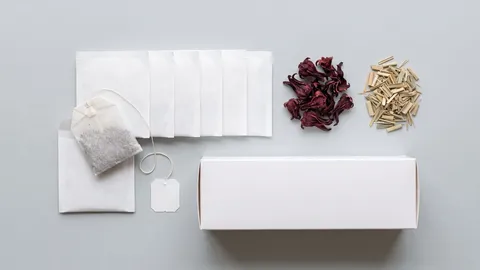
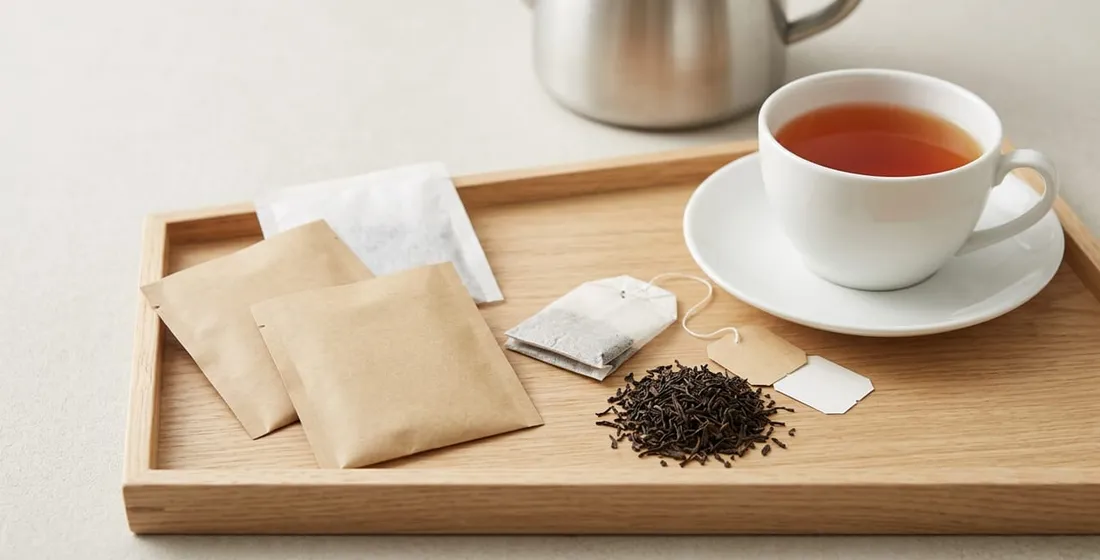
The individually enveloped string-and-tag bag is the workhorse of the in-room amenity. The sealed envelope is tamper-evident for housekeeping, keeps the bag dry through a monsoon-season turndown, and gives a printable surface for the hotel’s mark. A foil-lined envelope protects a delicate green or herbal blend far better than an open box, which matters when a sachet may sit in a coastal room for days before a guest brews it.
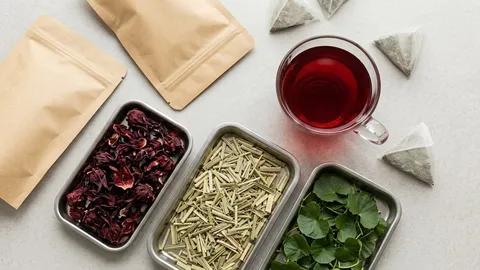
Above the standard tier, a whole-leaf pyramid bag reads as premium because the leaf and flower pieces are visible, and it suits a suite welcome tray or a club-lounge service. Below it, a plain single-chamber paper bag keeps the unit cost down for a high-turnover standard room. The table maps the common formats to room tier and the packaging watch-out for each.
| Tea bag format | Best-fit room tier | Packaging spec | Watch-out |
|---|---|---|---|
| Enveloped string-and-tag (paper bag) | Standard and deluxe rooms | Individually foil or paper enveloped; printed tag | Envelope seal integrity in humidity |
| Whole-leaf pyramid (plant-based mesh) | Suites, club lounge, premium tiers | Certified plant-based mesh, not nylon; carton of 15 to 25 | Confirm the mesh is plant-based, not plastic |
| Single-chamber paper bag (stringless) | High-turnover standard rooms, banquet | Foil-lined outer caddy; lowest unit cost | Less aroma protection once the caddy is opened |
| Loose leaf in a room caddy | Villas, long-stay, brand-signature service | Kraft pouch or small jar, refillable | Needs an in-room infuser and heavier housekeeping |
For most properties the enveloped string-and-tag bag does the bulk of the programme, with a pyramid reserved for the suites. The point is to specify format against the room tier and the climate, not against a single house standard applied to every door.
What about the plastic pyramid problem?
A pyramid tea bag looks premium, but the material matters more than the shape. A single plastic tea bag steeped at brewing temperature releases roughly 11.6 billion microplastic and 3.1 billion nanoplastic particles into one cup, from the nylon and polyethylene terephthalate mesh the bag is made of (Environmental Science and Technology, 2019). For a hotel positioning itself on sustainability, a nylon pyramid in the room is a brand contradiction a guest can now read about.
The fix is a material choice, not a format retreat. A whole-leaf presentation can be delivered in a certified plant-based mesh, made from cornstarch-based PLA or a comparable plant fibre, that gives the same visible-leaf look without the nylon. For properties that want to avoid mesh entirely, an unbleached paper single-chamber or string-and-tag bag carries no plastic film at all. SFC specifies the bag material alongside the blend, so a sustainability-positioned hotel is not left discovering the mesh type after the first run has shipped.
The same logic runs to the outer packaging. An unbleached kraft envelope and a recyclable carton fit an eco-positioned welcome tray better than a laminated foil pouch, provided the aroma-protection trade-off is understood and the blend is chosen to suit. The material story is one a guest increasingly checks, and it is cheaper to specify correctly at the briefing stage than to re-tool a programme after a review.
The packaging and MOQ math for a multi-property programme
Sri Lanka shipped 26.4 million kilograms of tea in tea-bag form in 2025, and value-added tea reached 59 percent of all tea exports, an eleven-year high (Daily FT, 2026). The tea-bagging capability that serves that export line is the same capability that packs a hotel amenity SKU, which is why a local private-label run does not carry an import lead time or a currency exposure on the tea itself.
Private labelling is what keeps a multi-property amenity programme affordable. The hotel chooses a blend from the SFC Ceylon and herbal portfolio, approves a packed sample in the chosen format, and signs off label artwork. The formulation cost that usually forces a high minimum order is removed, because the blend already exists and the line is already audited. A first run is structured per SKU rather than per property, so a group can standardise one amenity sachet across several hotels on a single production block.
The calendar is the part worth planning. A portfolio blend reaches a packed sample in one to two weeks; if the amenity SKU is built to retail standard, as it should be for gift-shop crossover, the SLSI submission adds a buffer before the SKU can be sold at the counter, and SLSI publishes no processing time, so confirm the current window with SLSI at submission. Booking that buffer against the target launch date is the difference between a programme that ships on time and one that waits on paperwork. For the retail-shelf tea version of the same work, see SFC’s notes on co-packing imported tea into retail tea bags and on supermarket and hotel gift-shop co-packing.
Service snapshot: private-label tea amenity at Silk Foods Ceylon
- Service: SFC-formulated Ceylon or herbal blend, packed and finished under the hotel’s brand.
- Formats: enveloped string-and-tag, single-chamber paper, whole-leaf plant-based pyramid; loose leaf in a room caddy.
- First run: structured per SKU, standardisable across several properties on one production block.
- Cert coverage: BRCGS- and FSSC 22000 V6-audited, plus SLSI clearance and Sri Lanka Food Act compliance on every retail SKU; Department of Ayurveda registration where a wellness claim applies.
- Lead time: 1 to 2 weeks to a packed sample; SLSI buffer before a gift-shop sale, with the window confirmed with SLSI at submission.
Frequently asked questions
Does Silk Foods Ceylon private-label tea bags for hotel in-room amenities?
Yes. SFC private-labels Ceylon black, green, and herbal blends from its Matale portfolio in enveloped string-and-tag, single-chamber paper, and whole-leaf plant-based pyramid formats, finished under the hotel’s own brand. First runs are structured per SKU and can be standardised across several properties on one production block.
Does an in-room amenity tea bag need SLSI clearance?
A complimentary in-room sachet is a hospitality service consumable. But the moment the same tea is sold, at a gift shop, a chargeable minibar, or as a takeaway box, it becomes a packaged retail food that needs SLSI clearance and a trilingual retail label under the Food (Labelling and Advertising) Regulations 2022.
Are plastic pyramid tea bags a problem for a hotel amenity?
A single plastic tea bag can release billions of microplastic and nanoplastic particles when brewed, from its nylon and polyethylene terephthalate mesh (Environmental Science and Technology, 2019). For a sustainability-positioned property, a certified plant-based mesh or an unbleached paper bag avoids the issue while keeping a whole-leaf look.
What is the minimum order for a private-label hotel tea in Sri Lanka?
Because the blend comes from an existing audited portfolio, SFC structures a first run per SKU rather than per property, which lets a hotel group standardise one amenity sachet across several hotels on a single production block. A packed sample of a portfolio blend is ready in one to two weeks.
How Silk Foods Ceylon can help
For hotel and restaurant groups running in-room amenity, gift-shop, or minibar tea programmes, Silk Foods Ceylon (SFC) private-labels Ceylon and herbal blends from a Matale portfolio in enveloped string-and-tag, single-chamber paper, and plant-based pyramid formats. Custom branding is applied to existing SFC formulations, so first-run minimums sit per SKU and a multi-property programme runs on a single production block. The Matale facility is BRCGS- and FSSC 22000 V6-audited, with SLSI clearance and Sri Lanka Food Act compliance on every retail SKU, which is what lets an in-room amenity built to retail standard cross cleanly into a gift-shop sale.
To brief an in-room or gift-shop tea programme, email brands@esilkroute.com.lk or call +94 77 157 7294.
Sources
- Sri Lanka Tourism Development Authority (2026), “Tourist Accommodation and Monthly Tourist Arrivals Reports”, sltda.gov.lk, https://www.sltda.gov.lk/en/development-standards (retrieved 2026-07-03).
- Daily FT (2026), “Tea exports top $ 1.5 b in 2025 despite price pressures”, ft.lk, https://www.ft.lk/front-page/Tea-exports-top-1-5-b-in-2025-despite-price-pressures/44-787299 (retrieved 2026-07-03).
- Hernandez, L.M., Xu, E.G., Larsson, H.C.E., Tahara, R., Maisuria, V.B., Tufenkji, N. (2019), “Plastic Teabags Release Billions of Microparticles and Nanoparticles into Tea”, Environmental Science and Technology 53(21), https://pubs.acs.org/doi/10.1021/acs.est.9b02540 (retrieved 2026-07-03).
- USDA Foreign Agricultural Service (2024), “Sri Lanka Extends Implementation of the Food Labeling and Advertising Regulations 2022”, fas.usda.gov, https://www.fas.usda.gov/data (retrieved 2026-07-03).
- Ministry of Health, Food Control Administration Unit (2026), “Food (Labelling and Advertising) Regulations (Current Regulations)”, eohfs.health.gov.lk, https://eohfs.health.gov.lk/food/ (retrieved 2026-07-03).
- Further reading: Silk Foods Ceylon, “Private labelling herbal tea for a boutique hotel gift shop”, https://silkfoodsceylon.com/blog/private-label-herbal-tea-boutique-hotel-gift-shop/.
Written by the Silk Foods Ceylon Team. Silk Foods Ceylon (Pvt) Ltd. is a BRCGS- and FSSC 22000 V6-audited contract manufacturer in Matale, Sri Lanka, offering contract manufacturing, private labelling, co-packing, and in-house R&D for local Sri Lankan brand owners, FMCG companies, hotel and restaurant groups, and distributors. To brief a project: brands@esilkroute.com.lk or +94 77 157 7294.