Co-Packing Gift SKUs for the Sri Lankan Diaspora Channel
Buyer’s snapshot
- Workers’ remittances to Sri Lanka reached USD 8,076.2 million in 2025, and December alone brought USD 879.1 million, a record monthly high (Central Bank of Sri Lanka data reported by EconomyNext, 2026). December 2025 was also the strongest month in the history of Sri Lankan tourism at 258,928 arrivals (Sri Lanka Tourism Development Authority, 2026).
- The gifting channel peaks twice: December, and Sinhala and Tamil New Year in April. The two peaks have different buying windows, so one packing plan does not cover both.
- The Food (Labelling and Advertising) Regulations 2022 came into force on 1 January 2026 after a final six-month extension (USDA Foreign Agricultural Service, 2025). Bulk goods repacked locally now carry the date of manufacture and the date of repackaging.
- Co-packing at Silk Foods Ceylon (SFC) runs 1 to 2 weeks once finished goods reach the Matale facility, across kraft pouches from 50 g to 1 kg and glass jars from 50 ml to 1 L.
- The comparison table below sets co-packing against private labelling and contract manufacturing for a gift SKU.
Workers’ remittances to Sri Lanka reached USD 8,076.2 million in 2025, 22.8% above the USD 6.58 billion recorded a year earlier, and December alone brought USD 879.1 million, a record monthly high (Central Bank of Sri Lanka data reported by EconomyNext, 2026). December 2025 was also the strongest month Sri Lankan tourism has recorded, at 258,928 arrivals (Sri Lanka Tourism Development Authority, 2026). Money and people move in the same weeks.
For a distributor building a gift range, that overlap is the business case. It is also where the planning goes wrong, because the diaspora gifting channel does not spike once a year. It spikes twice, on two different clocks, and since 1 January 2026 both runs have had to carry a label the 2005 rules never asked for.
The gifting channel runs on two peaks, not one
The Sri Lankan diaspora gifting channel peaks twice a year. December combines the arrivals peak of 258,928 visitors (Sri Lanka Tourism Development Authority, 2026) with the remittance peak of USD 879.1 million in the same month (Central Bank of Sri Lanka data reported by EconomyNext, 2026). Sinhala and Tamil New Year in April carries the second peak, on a shorter buying window and a more domestic buyer.
The two peaks behave differently at the shelf. December buying starts in late November and runs into the first week of January, and much of it happens at the end of a trip, when a returning visitor is filling the last few kilograms of a baggage allowance. April buying compresses into roughly three weeks before the New Year, and a large share of it never leaves the country at all. Same product, two different pack sizes and two different volumes.
The shoulder after December is not empty either. Arrivals stayed at record levels into the new year, reaching 279,328 in February 2026, 16.2% above February a year earlier. A gift range planned only against the December week runs out of stock in the month that follows it.
Export demand sits alongside the carried-out volume. Sri Lankan processed vegetables are shipped to ethnic communities in Europe, the Middle East, Australia and New Zealand, and food and beverage export earnings reached USD 48.67 million in December 2025, 17.28% above the same month a year earlier, with processed food up 12.04% (Sri Lanka Export Development Board, 2026). A distributor serving both the carried gift and the shipped case is running one product through two channels with different label obligations.
What does a co-packing run for a gift SKU actually cover?
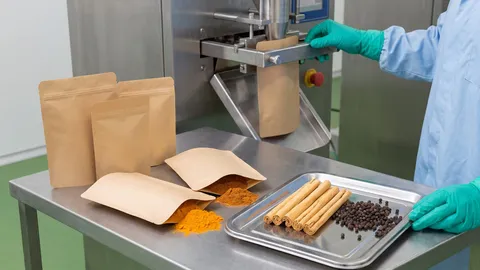
Co-packing is the service where the buyer supplies finished goods and the manufacturer packs, seals, labels and repackages them into retail-ready formats. No recipe changes hands and no formulation work happens. For a gift range assembled from bulk treacle, dried fruit, spice, tea or coconut products, that is usually the correct service, and it is the cheapest of the three to book.
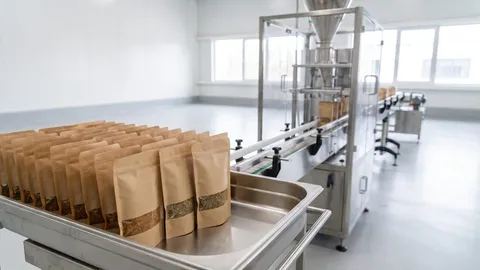
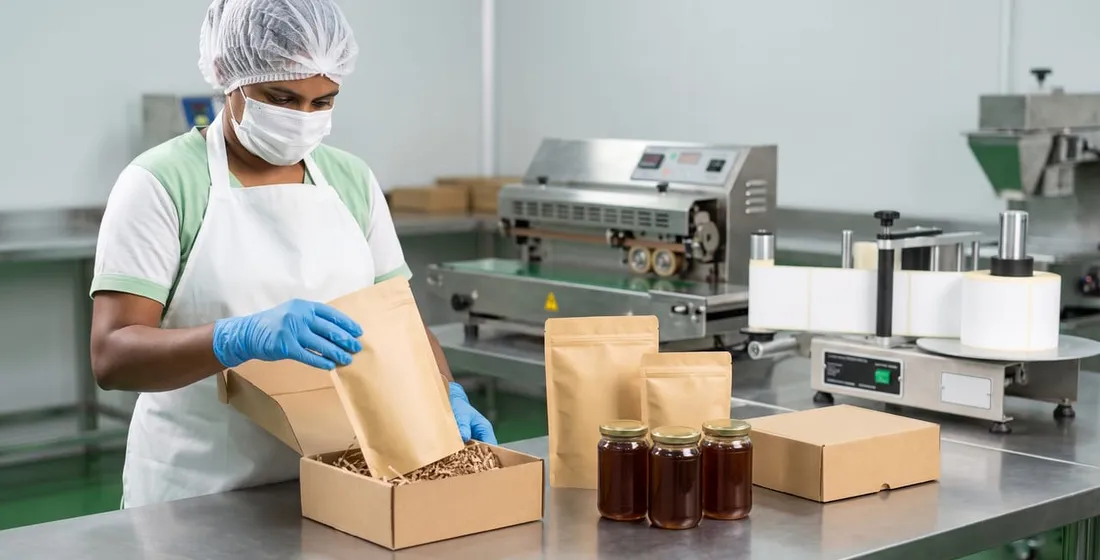
The formats decide the range more than the contents do. Silk Foods Ceylon co-packs into brown and white kraft pouches at 50 g, 100 g, 250 g, 500 g and 1 kg, window pouches at the same sizes, glass jars at 50 ml, 220 ml, 330 ml, 500 ml and 1 L, 400 ml round tin cans, and 60-count capsule bottles. A gift box is generally built from the two smallest pouch sizes plus one jar, because that is what a baggage allowance tolerates.
| Co-Packing | Private Labelling | Contract Manufacturing | |
| Who supplies the goods | The buyer, as finished goods | Silk Foods Ceylon, from the existing portfolio | Silk Foods Ceylon, to the buyer’s recipe |
| Who owns the recipe | The buyer or the original producer | Silk Foods Ceylon | The buyer |
| Best fit for a gift range | Bulk already imported or already bought locally | A multi-SKU gift box built fast from 50+ ready-to-go products | A signature item that has to be made to a specific formulation |
| First-run volume | Typically a one-day production block, often multi-SKU | 1,500 jars or 1,250 bottles per SKU; 180 bottles for capsules | 1,500 jars (300 g glass); 1,250 bottles (200 ml) |
| Lead time once goods are at Matale | 1 to 2 weeks | 2 to 3 weeks | 2 to 3 weeks on a locked recipe; 6 to 10 weeks with new formulation work |
Consolidation is the part distributors underuse. A gift programme is rarely one SKU. It is four to eight items that all need the same packing, sealing and labelling operations in the same weeks. Running them as one consolidated production block at a single facility keeps the whole range on one audit trail and one set of packing dates, which matters more at the label stage than it does at the invoice stage.
The label a repacked gift SKU has to carry from 1 January 2026
The Food (Labelling and Advertising) Regulations 2022 replaced the 2005 regulations and took effect on 1 January 2026, after the Ministry of Health moved the date from 1 July 2025 by a Gazette Extraordinary of 30 June 2025 (USDA Foreign Agricultural Service, 2025). December 2026 is the first December peak that has to be planned entirely inside the new regime, and April 2026 was the first New Year peak under it.
Two provisions bite hardest on a repacked gift SKU. The common name has to appear in bold in all three languages, Sinhala, Tamil and English. And where food is imported in bulk and repackaged, the label carries both the date of manufacture and the date of repackaging, not one date standing in for the other.
| Label element | What the rules require | Where a gift SKU trips |
| Common name | Bold type, in Sinhala, Tamil and English | An English-only pack designed to look like an export item still sells inside Sri Lanka, so it still needs all three languages |
| Date of manufacture and date of repackaging | Both dates, where bulk imported food is repackaged locally | Carrying the original producer’s manufacture date alone, which is the default habit from the 2005 rules |
| Country of origin | Declared for imported food | A hamper mixing imported and local contents needs origin handled item by item, not box by box |
| Importer name and address | Declared for imported food | The gift-box brand owner is often not the importer of record on the bulk that went into it |
| Sugar, salt and fat colour code | Applied to solid and semi-solid packaged foods under the Food (Colour Coding for Sugar, Salt and Fat) Regulations 2019 | Sweet gift items such as treacle, jam, confectionery and sweetened coconut products are exactly the categories it catches |
The practical consequence is that label artwork stops being a design job and becomes a scheduling item. Trilingual copy needs translation and proofing before it can be printed, and a repackaging date cannot be printed before the packing block is scheduled, which means the date field has to be applied on the line rather than pre-printed into the artwork.
One Sri Lankan distributor co-packing an imported dried fruit range at Silk Foods Ceylon carried the producer’s manufacture date across to the repacked 100 g gift pouch and left the repackaging date off, on the reading that the pack had not been manufactured twice. The correction was mechanical rather than serious, but it was a full relabel of the run. Two weeks disappeared inside a four-week December window, which for a seasonal SKU is most of the season.
How far ahead does a December run have to be booked?
A December shelf date works backwards through four fixed blocks: label artwork and trilingual proofing, SLSI clearance where the SKU needs it, the arrival of finished goods at the facility, and the packing block itself. SLSI clearance on a packaged food typically runs 4 to 8 weeks, and the sensible planning buffer between manufacturer sign-off and a retail shelf date is 6 to 10 weeks. The packing block is the shortest step at 1 to 2 weeks.
Working back from a 1 December shelf date, a realistic calendar looks like this:
- Late August: lock the range, the pack sizes and the origin of every item in the box. Origin decides which label elements each SKU needs.
- Early September: brief the label artwork, including Sinhala and Tamil copy for the common name, and confirm which items fall under the sugar, salt and fat colour code.
- Mid September: open the SLSI submission for any SKU that needs it, allowing the 6 to 10 week buffer rather than the 4 to 8 week typical case.
- Late October: finished goods land at the Matale facility, with the repackaging date field left to be applied on the line.
- Early November: the consolidated packing block runs, 1 to 2 weeks across the whole range.
- Mid November: stock ships to the channel, ahead of the late-November start of the buying window.
Service snapshot: Co-Packing at Silk Foods Ceylon Service: the buyer supplies finished goods; the SFC team packs, seals, labels and repackages Formats: kraft pouches 50 g to 1 kg (plain and window), glass jars 50 ml to 1 L, 400 ml round tin cans, 60-count capsule bottles Volume: typically a one-day production block, usually run as a consolidated multi-SKU booking Lead time: 1 to 2 weeks once finished goods reach the Matale facility Cert coverage: BRCGS- and FSSC 22000 V6-audited, with SLSI submission support and Sri Lanka Food Act compliance on the label |
The April peak compresses the same calendar. The buying window is roughly three weeks rather than six, so the packing block has to finish in early March rather than drifting into the month of the season. Distributors who run both peaks off one artwork set and one SLSI file absorb that compression comfortably. Those who treat April as a fresh project do not.
Where a gifting co-pack brief goes wrong
Most gifting briefs that stall at a contract manufacturer stall on paperwork rather than production. The packing itself is a short, well-understood operation. What holds it up is an incomplete picture of what is going into the box and where each item came from.
Buyer's checklist: before briefing a gifting co-pack run 1. The full item list, with the origin of each item and whether it arrived as bulk import or local finished goods 2. Pack size per item, chosen against a baggage allowance rather than a shelf planogram 3. Confirmation of which items fall under the sugar, salt and fat colour code 4. Trilingual common-name copy, translated and proofed, not left as an artwork placeholder 5. Whether the same SKU also ships as an export case, which changes the destination label set 6. The SLSI position on every SKU, including the ones carried over from a previous season 7. A shelf date, so the packing block can be booked backwards from it rather than forwards from goods arrival |
Silk Foods Ceylon declines briefs where the origin of the bulk cannot be established, because the country-of-origin and importer declarations cannot be built without it, and because the audit trail on a repacked SKU is only as good as its inbound documentation. That is a short conversation early and an expensive one late.
Frequently asked questions
What does the co-packing service at Silk Foods Ceylon include for a gift range?
The buyer supplies finished goods and the SFC team packs, seals, labels and repackages them into retail-ready formats, with SLSI submission support. Formats run from 50 g to 1 kg kraft pouches, 50 ml to 1 L glass jars, 400 ml tin cans and 60-count capsule bottles. A run typically takes 1 to 2 weeks once goods arrive.
Does a repacked gift SKU need both a manufacture date and a repackaging date?
Yes. Where food is imported in bulk and repackaged, the Food (Labelling and Advertising) Regulations 2022 require the date of manufacture and the date of repackaging on the label (USDA Foreign Agricultural Service, 2025). The regulations took effect on 1 January 2026, replacing the 2005 labelling regulations.
Does a gift pack aimed at overseas recipients still need Sinhala and Tamil on the label?
If it is sold in Sri Lanka, yes. The common name must appear in bold in Sinhala, Tamil and English. An English-only pack designed to look like an export item is still a domestic retail sale when a visitor buys it here, and the domestic label rules apply to that sale.
How far ahead should a December gifting run be booked?
Work backwards from the shelf date. SLSI clearance typically takes 4 to 8 weeks and a 6 to 10 week buffer is safer, artwork and trilingual proofing take about two weeks, and the packing block itself takes 1 to 2 weeks. A 1 December shelf date means a late-August start.
Can several gift SKUs be packed in one production run?
Yes, and it is usually cheaper. A gift programme of four to eight items needs the same packing, sealing and labelling operations in the same weeks, so it runs as one consolidated block at the Matale facility. That keeps the whole range on one audit trail and one set of packing dates.
How Silk Foods Ceylon can help
For distributors converting imported or locally bought bulk into Sri Lankan retail-ready gift SKUs, Silk Foods Ceylon operates a dedicated co-packing capability at the Matale facility. The buyer supplies finished goods; the SFC team handles packing, sealing, labelling and SLSI submission support under the Sri Lanka Food Act labelling framework, including the trilingual common name and the dual manufacture and repackaging dates now required on repacked bulk. Packaging runs from 50 g to 1 kg kraft pouches through glass jars from 50 ml to 1 L, 400 ml round tin cans and 60-count capsule bottles, and a multi-SKU gift range books as a single consolidated production block of 1 to 2 weeks. The BRCGS and FSSC 22000 V6 cert stack on the repacker side holds the audit chain that retail and hotel-group procurement teams ask about.
To brief a co-packing or consolidation plan for a seasonal gift range, email b2b@esilkroute.com.lk or call +94 76 441 0389 / +94 76 918 5744.
Related reading
- Private labelling kithul and coconut treacle for diaspora gifting
- Co-packing 250 g kraft pouches for ethnic-grocery export
- Backward planning an Avurudu festive private-label range
- Co-packing for supermarket and hotel gift-shop SKUs
- Co-packing kraft pouches for distribution
- SLSI packaged-food submission, step by step
- Contract manufacturing certifications in Sri Lanka
Sources
- EconomyNext (2026), reporting Central Bank of Sri Lanka data: worker remittances reached USD 8,076.2 million in 2025, up 22.8% from USD 6.58 billion in 2024, with December 2025 at a record monthly USD 879.1 million, up 43.2%. https://economynext.com/sri-lanka-worker-remittances-up-43-2-pct-to-record-high-in-december-2025-256913/ (retrieved 2026-08-01).
- Sri Lanka Tourism Development Authority (2026), Monthly Tourist Arrivals Report December 2025: 258,928 arrivals in December 2025, the strongest month on record, contributing to 2.36 million arrivals for the year, up 15.1%. https://www.sltda.gov.lk/storage/common_media/Monthly_Tourits_Arrivals_Report-December-2025-Final.pdf (retrieved 2026-08-01).
- United States Department of Agriculture, Foreign Agricultural Service (2025), GAIN report CE2025-0003, Sri Lanka Extends Implementation of the Food Labeling and Advertising Regulations-2022 by Additional Six Months: implementation moved from 1 July 2025 to 1 January 2026 for Regulations 2 to 13(15) and Regulation 15 with Schedules I to IX, by Gazette Extraordinary of 30 June 2025. https://www.fas.usda.gov/data/sri-lanka-sri-lanka-extends-implementation-food-labeling-and-advertising-regulations-2022-0 (retrieved 2026-08-01).
- United States Department of Agriculture, Foreign Agricultural Service (2023), GAIN report CE2023-0011, Sri Lanka Enacts New Legislation for Food Labeling and Advertising: common names in bold in Sinhala, Tamil and English; date of manufacture and date of repackaging for bulk imported food repackaged locally; country of origin and importer name and address for imported food. https://www.fas.usda.gov/data/sri-lanka-sri-lanka-enacts-new-legislation-food-labeling-and-advertising (retrieved 2026-08-01).
- Ministry of Health, Sri Lanka, Food (Colour Coding for Sugar, Salt and Fat) Regulations 2019, made under the Food Act No. 26 of 1980, applying a colour-code declaration to solid and semi-solid packaged foods. Record held by FAOLEX, LEX-FAOC195988. https://www.fao.org/faolex/results/details/en/c/LEX-FAOC195988/ (retrieved 2026-08-01).
- Sri Lanka Export Development Board (2026), export performance: food and beverage export earnings of USD 48.67 million in December 2025, up 17.28% year on year, with processed food up 12.04%; processed vegetables destined to ethnic communities in Europe, the Middle East, Australia and New Zealand. https://www.srilankabusiness.com/food-and-beverages/processed-food-vegetables-juices.html (retrieved 2026-08-01).
Written by the Silk Foods Ceylon Team. Silk Foods Ceylon (Pvt) Ltd. is a BRCGS- and FSSC 22000 V6-audited contract manufacturer in Matale, Sri Lanka, offering contract manufacturing, private labelling, co-packing, and in-house R&D for local Sri Lankan brand owners, FMCG companies, hotel and restaurant groups, and distributors. To brief a project: b2b@esilkroute.com.lk, +94 76 441 0389, or +94 76 918 5744.