From Brief to First Commercial Run: How a Test Batch Actually Works
By the Silk Foods Ceylon Editorial Team
Buyer’s snapshot
- A pilot trial should mirror real production before a commercial run is committed, and FARE Science puts the usual count at one to three pilot trials before the commercial trial.
- At Silk Foods Ceylon (SFC), signed brief to approved formulation is 3 to 4 weeks at most. A locked recipe then runs 2 to 3 weeks from PO to dispatch.
- First commercial runs start at 1,500 jars, 1,250 bottles or 180 capsule bottles. SFC has no published minimum for earlier test batches, so each is quoted per brief.
- The stage table and the first-meeting checklist are the two to take into a planning call.
A small brand owner usually arrives with a sample that works. It tasted right at the kitchen table, a few friends bought it, and a retail buyer has asked for a listing. What is missing is the path between that sample and 1,500 identical jars, and the questions that come with it. How many test batches? What does each cost? Who owns the recipe at the end?
This guide walks the pathway at the Matale facility in order: brief, bench sample, pilot, first commercial run. It gives the time and cost bands the Silk Foods Ceylon (SFC) team plans against, names the figures SFC has not published, and closes with what to have ready before the first meeting.
What are the stages between a brief and a first commercial run?
Food development moves through three scales. FARE Science describes them as benchtop, pilot and commercial: the benchtop is for initial R&D and samples for buyer meetings, the pilot is for pre-commercial production tests, and the commercial trial combines what both taught. After one to three pilot trials, it says, the commercial trial follows. SFC runs the same sequence with a fourth gate, labelling, because a locked recipe still has to survive the label review.
The table sets each stage against what it answers, the output, and a planning band. The bands are a planning assumption built from the SFC team’s project history, not an audited or fixed price list, and they match the iteration ladder in food product development in Sri Lanka: budgeting for R&D iterations.
| Stage | Question it answers | Output | Planning band |
|---|---|---|---|
| Brief | What is the product, for which shelf, at what cost per unit? | Signed brief and target spec | No charge to discuss; the clock starts at signature |
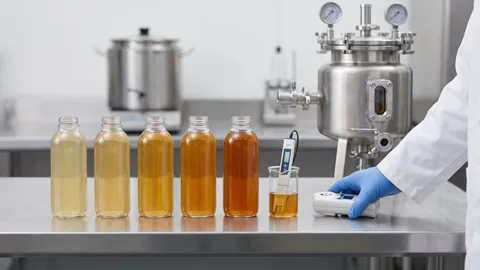
| Bench sample | Does the recipe hold in a 1 to 5 kg batch? | Sample for tasting and for the retail buyer | LKR 40,000 to 70,000, week 1 |
| Pilot batch | Does it survive real process conditions? | Process-adjusted batch, viscosity and fill data | LKR 60,000 to 100,000, week 2 |
| Shelf-life and micro panel | Does it keep, batch after batch? | Recipe lock, or one more preservation tweak | LKR 80,000 to 150,000, weeks 2 to 3 |
| Label review (when triggered) | Does the locked recipe pass the claim and label rules? | Final lock | LKR 40,000 to 90,000, week 4 |
| First commercial run | Can it be made at shelf volume, repeatedly? | 1,500 jars, 1,250 bottles or 180 capsule bottles | Quoted separately; 2 to 3 weeks from PO to dispatch |
Read the table top to bottom and one pattern shows. Each stage tests a different way the product can fail, and a failure caught at the bench costs a fraction of the same failure found in a commercial run.
How long does each stage take, and what does it cost?
The whole R&D phase, from signed brief to approved formulation, fits inside 3 to 4 weeks at most. That is the SFC promise, and it covers every sample iteration inside it. Most products need two to four. A full pass through all four bands at the top of each range comes to roughly LKR 340,000 (about USD 1,100) before a commercial batch is quoted.
For a recipe that already exists and only needs scaling, the schedule is shorter. Sample dispatch for an existing recipe takes one to two weeks, and the first PO then follows once the buyer approves. The R&D weeks drop out entirely.
A timeline helps, so here is a planning scenario, not a client record. A brand owner signs a brief for a ginger and turmeric drink concentrate on a Monday. Bench samples go out at the end of week 1. A process-adjusted batch runs in week 2, shelf-life work runs through weeks 2 and 3, and the recipe locks at the close of week 3. The PO lands in week 4, and dispatch follows 2 to 3 weeks later. From signature to pallet is about 6 to 7 weeks. The brand owner who skips the pilot to save a week usually spends more than that week fixing separation in the field.
That sequence is also why a budget built for one trial is the most common reason a project stalls. Round two is not a failure of round one. It is the next question.
What is the minimum size of a test batch?
This is the question most buyers ask first, and the honest answer is that it depends on the stage.
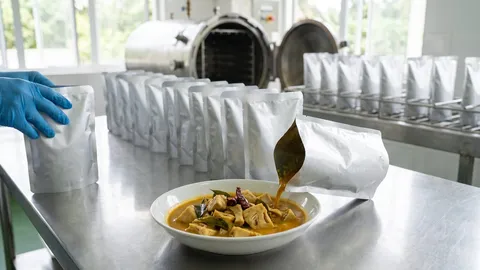
At bench scale, the working range is 1 to 5 kg, which is enough for tasting, a retail buyer sample and a first read on stability. At pilot scale, the batch has to behave like production. A plant trial, in the food-safety trade literature, should closely mirror actual production conditions, and for batch processes a full batch is usually the minimum that teaches anything. SFC does not publish a standard pilot batch size, because it depends on the product format and the line it will run on. It is quoted per brief.
The floor that is documented is the first commercial run. The table below sets out the three formats with a published minimum.
| Format | First commercial run | Notes |
|---|---|---|
| Spreads and semi-liquids (300 g glass jar) | 1,500 jars | Line capacity runs to 3,000 jars a day, so the first run fits in one day |
| Beverages (200 ml bottle) | 1,250 bottles | Retort and fill conditions decided at the pilot |
| Capsules | 180 bottles | Fill weight and cap size confirmed at bench |
The practical rule is to ask for the pilot size in the quote and to ask what happens to the pilot product. A pilot batch that passes can often feed the retail buyer, a sensory panel and the shelf-life study at the same time. For how a panel is used before a commitment, see sensory panel screening before you commit.
Who owns the formulation at the end?
Ownership is the stage most buyers leave until last, and it is the one that costs the most to settle late. In Sri Lankan food launches it is not one asset but several, held by different parties under different instruments. The full table is in private label, contract manufacturing or OBM: who owns what.
The short version for a test-batch project has three parts. A recipe the buyer brings stays the buyer’s. A formulation drawn from the SFC private-label portfolio stays with SFC, and the buyer owns the brand on the pack. A recipe the SFC R&D team develops from a brief sits between those two, so its owner is whatever the written R&D agreement says. Settle it in that agreement, before the brief is signed.
Protection also depends on what the owner does. Section 160 of the Intellectual Property Act No. 36 of 2003 treats breach of confidence and acquisition of undisclosed information as unfair competition, but information qualifies as undisclosed only when its holder has taken reasonable steps to keep it secret. A signed confidentiality agreement, covering the recipe, the supplier names and the process settings, is one of those steps. Ask for it at the first meeting, not the third.
What can go wrong between pilot and commercial run?
Three things account for most of the surprises. First, the recipe changes character at scale. A product that sets well in a 2 litre pot behaves differently in a 200 litre kettle, because heat transfer and mixing shear change. Second, the raw-material supplier changes. A pilot run on a lot of ingredient from one supplier does not guarantee the next lot behaves the same, so supplier details belong in the spec. Third, the label changes the recipe. A capsule SKU with a traditional-use claim can pass every bench and shelf-life test and still need a tweak once the claim is reviewed against the herb content.
Each is fixable, and none is fixable in the same trial that fixed the flavour. The step that carries the shelf-life evidence is covered in accelerated stability testing for Sri Lankan food products, and the clearance route in the SLSI packaged-food submission step by step.
Working with the manufacturer directly shortens each loop. The R&D team sits on the same site as the line, so a bench result on a Tuesday can shape a process trial the following week. A broker between brand owner and plant adds a relay at every stage, and a one-week test window can stretch to three.
What should a buyer have ready before the first meeting?
A first meeting goes quickly when the buyer arrives with a short list. The checklist below is the one the SFC team would ask for on a first call, and none of it needs a lawyer or a lab.
- The product in one sentence. Format, pack size, target shelf price and the channel it is meant for.
- The sample or recipe. A working sample, or the written recipe with quantities, even if it has only been made in a home kitchen.
- The claims. Any statement the pack will make, such as organic, sugar free or traditional use, since claims decide which review the label needs.
- The first-run quantity. A number the buyer can actually sell, tested against the minimums above.
- The sales plan. Which retail buyer, which listing date, and whether SLSI clearance is already in motion.
- The ownership question. Whether the recipe is the buyer’s, SFC’s or to be developed, and whether a confidentiality agreement is needed.
- A budget range. For the R&D phase and for the first commercial run, stated separately.
A brand with items 1, 2 and 4 has what it needs for a useful first meeting. A brand with none of them is better served by a few more rounds of kitchen testing before it books bench time. SFC is a poor fit for someone still iterating flavour at home scale, and says so, because a pilot booked too early gets spent finding out what the kitchen could have told the founder for free.
Frequently asked questions
How long does a test batch take at Silk Foods Ceylon?
Signed brief to approved formulation is 3 to 4 weeks at most, including every sample iteration. Sample dispatch for an existing recipe takes 1 to 2 weeks. After the recipe locks, a first commercial run takes 2 to 3 weeks from PO to dispatch, so a full path runs about 6 to 7 weeks.
What does R&D cost before the first commercial run?
The SFC planning bands run from LKR 40,000 to 70,000 for a bench formulation up to LKR 80,000 to 150,000 for shelf-life validation. A full pass at the top of each band is about LKR 340,000. These are planning assumptions, and the quote for a given SKU is set against the brief.
Who owns the formulation after a test batch?
A recipe the buyer brings stays the buyer’s, and a recipe taken from the SFC private-label portfolio stays with SFC. A recipe developed from a brief is owned as the written R&D agreement says, so it should be settled in that agreement before the brief is signed.
Can Silk Foods Ceylon develop a new recipe for a local brand?
Yes. The in-house R&D team takes a signed brief to an approved formulation in 3 to 4 weeks at most, then the same Matale line runs the first commercial run under contract manufacturing. First runs start at 1,500 jars, 1,250 bottles or 180 capsule bottles.
How Silk Foods Ceylon can help
For founders and small brands moving from a working sample to a first commercial run, Silk Foods Ceylon (SFC) runs R&D / NPD (Co-Development on the SFC brochure) and contract manufacturing on one cellular-manufacturing site in Matale. R&D takes a signed brief to an approved formulation in 3 to 4 weeks at most, and first commercial runs start at 1,500 jars, 1,250 bottles or 180 capsule bottles. The facility is BRCGS- and FSSC 22000 V6-audited, with SLSI submission support inside a standard engagement.
To brief a project, email b2b@esilkroute.com.lk or call +94 76 441 0389 / +94 76 918 5744.
Sources
FARE Science, Pilot and Commercial Stages of Food Product Development: benchtop for initial R&D and samples, pilot for pre-commercial tests, one to three pilot trials before a commercial trial. Retrieved 3 October 2026. https://www.farescience.com/pilot-commercial-production
Food Safety Magazine, From Benchtop to Scale-Up: Food Safety Considerations for New Product Development: a plant trial should closely mirror actual production, and a full batch is typically the minimum for batch processes (read via search summary, page not directly fetched). Retrieved 3 October 2026. https://www.food-safety.com/articles/9243-from-benchtop-to-scale-up-food-safety-considerations-for-new-product-development
Government of Sri Lanka, Intellectual Property Act No. 36 of 2003, section 160, unfair competition and undisclosed information (via WIPO Lex). Retrieved 3 October 2026. https://www.wipo.int/wipolex/en/legislation/details/6705
Silk Foods Ceylon, internal capability data for the Matale facility: R&D 3 to 4 weeks maximum from signed brief to approved formulation; sample dispatch for an existing recipe 1 to 2 weeks; PO to dispatch 2 to 3 weeks; first-run MOQs 1,500 jars, 1,250 bottles, 180 capsule bottles; planning bands for the R&D iteration ladder (assumption, not a fixed price list).
Written by the Silk Foods Ceylon Team. Silk Foods Ceylon (Pvt) Ltd. is a BRCGS- and FSSC 22000 V6-audited contract manufacturer in Matale, Sri Lanka, offering contract manufacturing, private labelling, co-packing, and in-house R&D for local Sri Lankan brand owners, FMCG companies, hotel and restaurant groups, and distributors. To brief a project: b2b@esilkroute.com.lk, +94 76 441 0389, or +94 76 918 5744.