Spray-Dried Drink Powders for Private Label in Sri Lanka
By the Silk Foods Ceylon Editorial Team
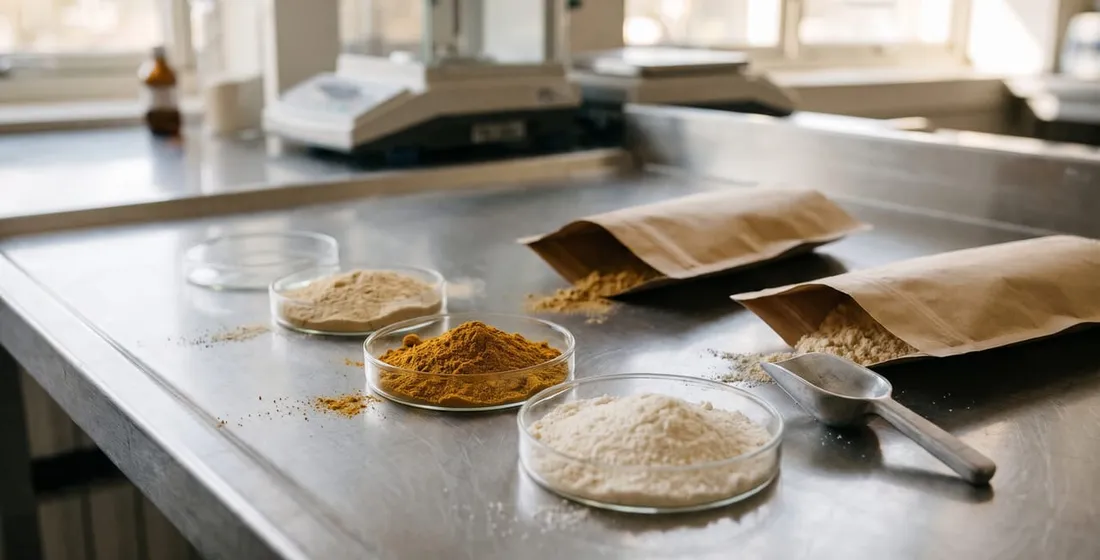
Golden turmeric, pale ginger and creamy coconut spray-dried powders in small glass dishes beside two open, unlabelled kraft pouches on a stainless steel bench.
Buyer’s snapshot
- An untreated spray-dried fruit powder in aluminium laminate rose from a water activity of 0.28 to 0.71 over 180 days at ambient conditions (Bashir et al., 2023). Carrier and pack barrier are shelf-life decisions.
- Silk Foods Ceylon (SFC) runs spray drying today. Pouches, jars and bulk packs are available now, and single-serve stick packs arrive from December 2026.
- R&D takes 3 to 4 weeks at most from signed brief to approved formulation. Small runs welcome, quote on request.
- Tables below compare spray-dried and dry-blended powders, and the four pack formats.
A hotel group wants its own turmeric latte for the in-room tray. A wellness brand wants a ginger drink it can post to customers. A distributor wants a king coconut powder under its own label. All three are asking for the same thing: a liquid recipe turned into a powder that pours, dissolves and survives a Colombo shelf.
This guide is for the brand owner with an idea and no specification yet. It covers what spray drying does, why carrier and moisture matter, which pack format suits which channel and what to settle before a quote. Stick packs arrive from December 2026. Until then the formats are pouches, jars and bulk packs.
What does spray drying do to a liquid drink recipe?
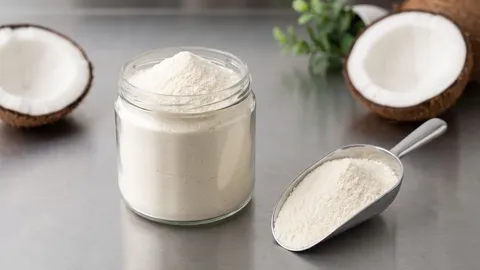
Spray drying turns a liquid recipe into a free-flowing powder. The liquid is atomised into a stream of hot air, the water leaves in moments, and dry particles are collected. At Silk Foods Ceylon the spray-drying line is live, and it suits small-batch and pilot powders from plant milks, fruit, herbal extracts and coconut.
The line at Matale is built from a preparation tank, a pipe filter, a colloid mill and the spray drier itself. The first three matter as much as the drier. The liquid is mixed, filtered and milled to a uniform feed before it is atomised, because a variable feed makes a variable powder.
A recipe that already exists as a liquid is the easiest starting point. The instant drink bases in the SFC portfolio follow that pattern: turmeric latte, ginger drink, king coconut water, plant milk powders (oat, soy, rice and coconut), fruit drinks and herbal drink bases.
Why do carrier, moisture and hygroscopicity decide shelf life?
Sugar-rich liquids dry into powders that stick, absorb moisture and cake. A 2020 study ties this mainly to the low glass transition temperature of fruit sugars: about 31 °C for glucose, 26 °C for fructose and 62 °C for sucrose (Etzbach et al., 2020). A carrier raises that temperature, so carrier choice is a shelf-life decision made before batch one.
Hygroscopicity is how readily a powder takes water from the air. In a 2023 study in Foods, an untreated spray-dried fruit powder sealed in aluminium laminate rose in water activity from 0.28 to 0.71 over 180 days at ambient conditions, and its flowability fell during storage (Bashir et al., 2023).
Carriers are solids approved for food use and added to the liquid before drying. Maltodextrin is the common one, and gum arabic and modified starch are others. A 2020 study compared ten powders made with different carrier systems and found moisture uptake over 24 hours ranging from 14.1 to 17.2 per cent (Etzbach et al., 2020). No carrier is neutral. Each changes sweetness, mouthfeel, cost and label claims, and each is an ingredient that helps decide whether a recipe qualifies for Vegan (Control Union) or organic certification.
Moisture matters at the filling table too. A damp powder clumps in the hopper and doses unevenly, so residual moisture is set at the bench and the pack barrier is chosen to match. A lined pouch protects a sugary powder better than plain kraft.
Spray-dried or dry-blended: which route fits the recipe?
A dry blend mixes finished powders, such as ground ginger and sugar. A spray-dried powder starts as a liquid and dries into particles that all carry the same recipe. Choose spray drying when the base is a juice, extract or plant milk, or when every spoonful must taste the same. Choose a dry blend when the ingredients are already powders.
| Question | Dry blend | Spray-dried powder |
|---|---|---|
| Starting material | Ground or dried ingredients mixed together | A liquid: extract, juice, plant milk or coconut base |
| Uniformity | Particles of different size can separate in the hopper and the pouch | Each particle carries the whole recipe |
| Carrier | Not needed | Needed for most sugar-rich feeds, chosen per recipe |
| Best fit | Spice-forward mixes and simple premixes | Latte bases, herbal and fruit drinks, plant milks, coconut |
Many products use both routes. A turmeric latte base, for example, can pair a spray-dried coconut or milk component with milled turmeric and ginger blended in afterwards.
Which pack format fits your channel: pouch, jar, bulk or stick pack?
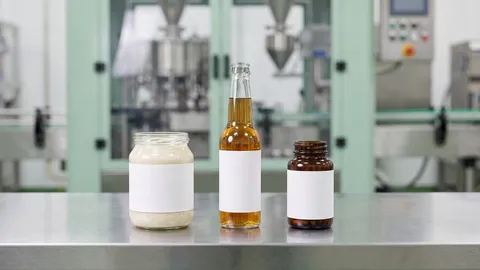
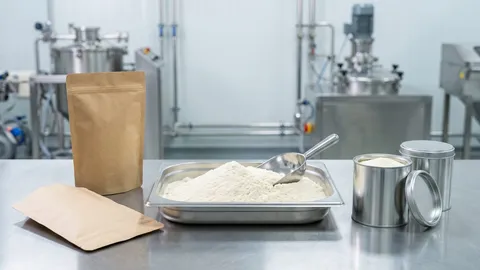
Four formats cover most drink-powder brands. Kraft pouches, glass jars and bulk packs run now. Single-serve stick packs arrive from December 2026, because the stick-pack machine is being installed at Matale. Until then, single-serve sachets are scoped per quote. The table compares use, shelf presence, dose and channel.
| Format | Best use | Shelf presence | Unit dose | Best channel | Status |
|---|---|---|---|---|---|
| Kraft pouch | Multi-serve retail and refills | Good, and a window shows the colour | Scoop at home | Independent grocers, online shops, gifting | Available now |
| Glass jar | Multi-serve premium and cafe use | Strongest, with a good reseal | Scoop at home | Specialty retail, hospitality gift shops, cafes | Available now |
| Bulk pack | Ingredient or food-service supply | None | Measured by the user | Cafes, bakeries, hotel kitchens, other brands | Available now |
| Stick pack | Single serve, sampling, travel, in-room trays | Carton-led, a slim box on the shelf | One fixed serving | Supermarket chains, pharmacies, hospitality, online | From December 2026 |
A stick pack holds one serving in thin laminate with little air, so the film’s moisture barrier matters even more than for a jar. Brands planning a stick-pack range for December 2026 need not wait for the machine, because the recipe, carrier and moisture work is the same in any format. Scheduling is quoted on request and confirmed once the line is commissioned, as the stick-pack capability page explains.
What should a brand decide before asking for a quote?
Four decisions move a drink-powder quote: the recipe, the carrier, the pack format and the label. Settle them in that order. The first two shape R&D, which Silk Foods Ceylon completes in 3 to 4 weeks at most from signed brief to approved formulation. The last two shape artwork and filling. Small runs are welcome, quote on request.
| Decision | What to settle | Why it moves the quote |
|---|---|---|
| Recipe | Taste, serving size, sweetness, and any organic or vegan target | Sets the R&D scope. Organic and Vegan are available for qualifying recipes |
| Carrier | The R&D team’s choice, or fixed by a claim | Changes cost, mouthfeel and what the label may say |
| Pack format | Pouch, jar, bulk, or stick pack from December 2026 | Sets the filling method, barrier and artwork |
| Label | Languages, claims, nutrition panel and any SLS mark | Starts the artwork window, usually the longest item |
Consider a composite brief, not one client. A wellness brand asks for a turmeric latte base that is “just turmeric and coconut”, with no carrier, in a stick pack. The bench conversation covers three points. A liquid with no carrier makes a sticky feed and a powder that cakes, so a carrier goes in. Turmeric in the product name means its percentage goes on the label. And “supports joint health” is a health claim, so the wording waits for approval. The brand leaves with a declared carrier, a shorter claim and a format plan: jar or pouch now, stick packs from December 2026.
Labelling is the decision most often left late. Under the Food (Labelling and Advertising) Regulations 2026, an ingredient named in the product name has its percentage declared (regulation 9(2)), and a health claim needs prior written approval from the Chief Food Authority (regulation 13(6)(a)). A pack of 25 g or less is exempt from the main particulars if the container it is customarily sold from is at the point of sale and fully labelled (regulation 5(3)) (Ministry of Health, 2026). The wider checklist is in Sri Lanka’s 2026 food labelling rules.
The Sri Lanka Standards Institution (SLSI) is a separate question. The compulsory SLS mark covers a defined list of foods under Gazette No. 746/4 of 21 December 1992, including fruit cordials and ready-to-serve fruit drinks. Powdered drink mixes are not named on it, and the mark is otherwise voluntary (SLSI, 2026). A fruit drink powder sold as a reconstituted fruit drink is worth confirming with SLSI.
How does Silk Foods Ceylon run a drink-powder project?
Silk Foods Ceylon runs a drink-powder project in four steps: a signed brief, R&D of 3 to 4 weeks at most, a pilot powder on the spray-drying line, then packing into pouches or jars, with stick packs from December 2026. Contract Manufacturing or Private Labelling applies, depending on whether the recipe is the buyer’s or one from the SFC portfolio.
- Brief. The buyer states the drink, serving, channel and any claim in mind.
- R&D. The in-house team formulates and presents samples until the formulation is approved. The R&D and NPD service takes 3 to 4 weeks at most.
- Pilot. The approved liquid goes through the spray-drying line, and the powder is checked for moisture, flow and dissolving before any pack is filled.
- Pack. The powder is filled into pouches or jars, labelled and coded, with a stick-pack option from December 2026.
A buyer who wants to skip R&D can start from a portfolio drink base and put it under its own brand. That route sits under Private Labelling and skips the R&D step.
Where SFC walks away
Silk Foods Ceylon declines to promise a stick-pack delivery date before the machine is commissioned, to print a shelf-life claim before stability data exists, and to put a health claim on a label before it is approved.
Frequently asked questions
Can Silk Foods Ceylon spray dry my own drink recipe for a private label?
Yes. Silk Foods Ceylon runs a live spray-drying line at Matale, and its in-house R&D team takes a brief to an approved formulation in 3 to 4 weeks at most. Small runs are welcome, quote on request. Pouches, jars and bulk packs run today.
Are stick packs available now?
No. Silk Foods Ceylon offers single-serve stick packs from December 2026, because the stick-pack machine is being installed at Matale. Until then, drink powders run in pouches, jars and bulk packs. Formulation can start now, and scheduling is confirmed once the line is commissioned.
Why does a drink powder cake in the pouch?
Sugar-rich powders absorb moisture from the air. In a 2023 Foods study, an untreated spray-dried fruit powder in aluminium laminate rose from a water activity of 0.28 to 0.71 over 180 days at ambient conditions (Bashir et al., 2023). A suitable carrier, controlled moisture and a good barrier pack slow that.
Does a drink powder need the SLS mark in Sri Lanka?
The compulsory SLS mark covers a listed set of foods under Gazette No. 746/4 of 1992, such as fruit cordials and ready-to-serve fruit drinks. Powdered drink mixes are not named on it, and the mark is otherwise voluntary (SLSI, 2026). Confirm the position for a specific product with SLSI.
How Silk Foods Ceylon can help
For brand owners, distributors and hospitality buyers planning an own-label instant drink, Silk Foods Ceylon (SFC) runs a live spray-drying line and an in-house R&D team at its Matale facility. R&D takes 3 to 4 weeks at most from signed brief to approved formulation, and small runs are welcome, quote on request. Pouches, jars and bulk packs run now, and single-serve stick packs arrive from December 2026. The site is BRCGS certified and FSSC 22000 V6 certified, with USDA Organic, EU Organic and Vegan (Control Union) available for qualifying recipes, plus GMP and HACCP. Certification scope for the stick-pack line is confirmed once it is commissioned.
To brief a project, email b2b@esilkroute.com.lk or call +94 77 157 7294.
Sources
- Etzbach, L. et al. (2020), “Effects of carrier agents on powder properties, stability of carotenoids, and encapsulation efficiency of goldenberry (Physalis peruviana L.) powder produced by co-current spray drying”, Current Research in Food Science, on the glass transition of fruit sugars and moisture uptake across ten powders. pmc.ncbi.nlm.nih.gov (retrieved 30 October 2026).
- Bashir, O. et al. (2023), “Influence of Anticaking Agents and Storage Conditions on Quality Characteristics of Spray Dried Apricot Powder”, Foods 12(1), 171, on water activity, flowability and caking in storage. doi.org (retrieved 30 October 2026).
- Ministry of Health, Sri Lanka (2026), Food (Labelling and Advertising) Regulations 2026, Gazette Extraordinary No. 2494/47 of 26 June 2026, regulations 5(3), 9(2) and 13(6)(a). eohfs.health.gov.lk (retrieved 30 October 2026).
- Sri Lanka Standards Institution (2026), “Information for Local Manufacturers”, on the compulsory SLS mark list under Gazette No. 746/4 of 21 December 1992 and voluntary product certification. slsi.lk (retrieved 30 October 2026).
Written by the Silk Foods Ceylon Team. Silk Foods Ceylon (Pvt) Ltd. is a BRCGS- and FSSC 22000 V6-audited contract manufacturer in Matale, Sri Lanka, offering contract manufacturing, private labelling, co-packing, and in-house R&D for local Sri Lankan brand owners, FMCG companies, hotel and restaurant groups, and distributors. To brief a project: b2b@esilkroute.com.lk or +94 77 157 7294.