Private Label Range for Distributors: Volumes and SKU Count
By the Silk Foods Ceylon Editorial Team
Buyer’s snapshot
- Sri Lanka’s supermarket revenue grew 7% in 2023-24 and 10% in 2024-25 (Sparkwinn Research, via Daily Mirror, March 2026), so a distributor’s own-label range now has more modern trade shelf to chase.
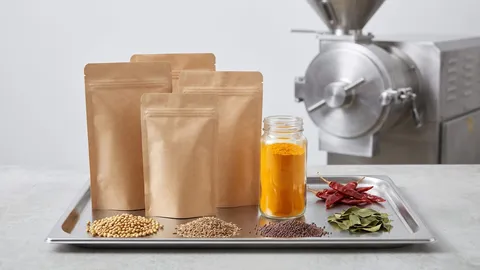
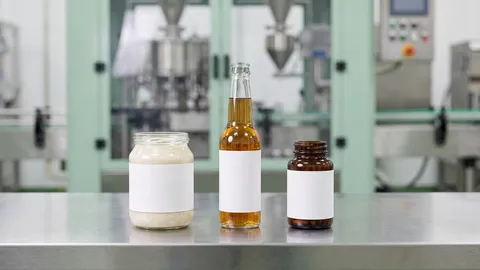
- First-run minimums apply per SKU, not per range: 1,500 jars, 1,250 bottles, 180 capsule bottles or 50 kg of spice blend each. An eight-SKU starter range adds up to about 7,860 units.
- That volume needs under three production days at Silk Foods Ceylon (SFC). The limit on range size is how fast your outlets can sell it inside the shelf life, not factory capacity.
- The stacking table and the SKU decision rules below are written for distributors planning a first own-label order.
A distributor with a reliable order book and a few hundred outlets usually reaches the same idea: stop carrying other brands’ margin and put a label of your own on the lines that already move. The recipes are rarely the hard part. The hard part is deciding how many products to start with, because every SKU you add brings its own minimum, its own artwork and its own clock.
Silk Foods Ceylon (SFC) formulates and packs private-label food at its Matale facility. This post is about the range-size decision for a distributor who sells into general trade and modern trade. It sits beside our posts on sequencing a three-SKU launch and on spice blend MOQ maths. Those cover how to order a small range and one category. This one asks how large the range should be in the first place.
Why does a distributor’s own-label range fail at the first order?
Most first own-label ranges fail on stock cover, not on taste. Each SKU has a minimum run, and the minimum is sized for the factory, not for your outlet count. If the first order outlasts the printed shelf life before it sells through, the range loses money on units that never reach a shelf.
The demand side is real. Euromonitor’s staple foods summary for Sri Lanka describes private label as the fastest-growing segment, and one supermarket chain’s own-label lines were priced about 10% below comparable brands in 2023 (Daily FT, February 2023). Price-led demand rewards a range that is always in stock. It does not reward a long list that is half out of date.
Retail evidence on range length is mixed. A retailer-panel study of French stores (Dietsch and Willart, 2009) found that adding private label SKUs lifted sales only in the largest stores, and often at the expense of brands already on the shelf. A distributor is not a hypermarket. A narrow range with deep stock usually beats a wide range with thin stock.
What do the minimums add up to across a range?
The table stacks SFC’s first-run minimums for an illustrative eight-SKU starter range, with the line time each block needs at the facility’s published rates. The mix is an example, not a recommendation for your categories. It shows how quickly per-SKU minimums become a range-level commitment.
| SKU group | SKUs | First-run minimum per SKU | Units in range | Line time at published rate |
|---|---|---|---|---|
| Spreads or jams, 300 g glass jar | 3 | 1,500 jars | 4,500 jars | About 1.5 days (3,000 jars a day) |
| Beverages, 200 ml glass bottle | 2 | 1,250 bottles | 2,500 bottles | About 1 day (2,500 bottles a day) |
| Herbal capsules, 60-count bottle | 2 | 180 bottles | 360 bottles | Roughly a tenth of a day (200,000 capsules a day) |
| Spice blend, 100 g pouch | 1 | 50 kg (500 pouches) | 500 pouches | Under an hour (100 to 200 kg an hour) |
| Total | 8 | 7,860 units | Under 3 line days |
Two things stand out. The factory time is small: under three days of line work for the whole range, plus changeovers between SKUs. And the units are lopsided. Three jar SKUs make up well over half the units, so the jar lines carry nearly all the stock risk. Capsules and spice blends cost you very little cover by comparison.
A glass-jar first run can add about a week of lead time for tooling, per SFC’s own catalogue figures, and production from purchase order to dispatch is typically 2 to 3 weeks on an existing recipe. Where a SKU needs new formulation, R&D / NPD (Co-Development on the SFC brochure) adds 3 to 4 weeks at most, from signed brief to approved formulation.
How many SKUs should a first range have?
Start with six to eight SKUs in no more than three format families, and add a SKU only after an existing one has been reordered. That figure is SFC’s planning guidance from the minimums above, not an industry standard. It keeps the first order to roughly one pallet-load per format family and leaves room to learn which lines your outlets actually reorder.
Three rules do most of the work.
- Group by format family. SKUs that share a jar, bottle or pouch share a changeover, a packaging order and an artwork template. Three jars and two bottles are cheaper to run than five different formats.
- Anchor on what already sells. Pick the lines your outlets reorder today under other brands, then your own label inherits demand instead of building it. A new flavour with no sales history is a second-round SKU.
- Set the delist rule before the order. Decide in advance that a SKU is dropped if it has not reordered after two cycles. Writing the rule down removes the temptation to keep a slow line out of loyalty.
Will the first order sell before the shelf life runs out?
Test it with one division before you sign. Months of cover equals units delivered divided by units sold per month across your outlets. If the cover is longer than about half the printed shelf life, cut the SKU count or the pack size, because the last units will reach a customer with little life left.
Take an illustrative case. A Colombo distributor with 60 outlets takes 1,500 jars of one jam. That is 25 jars per outlet for the first fill. If each outlet sells six jars a month, the cover is about four months. Against a 12-month shelf life on the approved spec, that is a third of the life gone before the last jar sells, which is workable. Against a six-month shelf life, it is not.
The same maths explains why pack size matters. A 1,500-jar minimum is fixed. A smaller jar changes the volume per outlet, not the number of units. Where the numbers do not work, the fix is usually fewer SKUs in the format family, so each one turns faster. Our post on matching shelf life to fixture and format covers the fixture side of the same decision, and the shelf life testing guide explains how the printed date is set.
Buyer’s checklist: before you commit to a range size
- Monthly sell-through per SKU across your own outlets, from your invoices, not an estimate.
- Printed shelf life per SKU on the approved spec.
- Months of cover for each first run, with the figure written next to the shelf life.
- One format family per pallet, so a mixed pallet does not hold a fast line behind a slow one.
- A delist rule and a reorder trigger agreed with your sales team.
- Artwork budget for every SKU, since each carries its own label approval.
What does the label add to the range decision?
Every SKU needs its own artwork, and since 1 July 2026 that artwork is checked against the Food (Labelling and Advertising) Regulations 2026 (Gazette Extraordinary No. 2494/47). The regulations do not apply to food manufactured before that date, so existing stock is not the exposure. New artwork is. A longer range means more label approvals running in parallel.
Any health or nutrient-function claim on a pack needs prior written approval from the Chief Food Authority under the 2026 rules. Keep claims off a first-round label unless the claim itself is the product. SLSI is a separate track: the Sri Lanka Standards Institution (SLSI) publishes no fixed processing time, so confirm the current window with SLSI before you commit to a shelf date. Our SLSI submission walk-through lists the steps.
Artwork timing can set the real launch date. If approvals are the slowest step, a shorter range reaches the shelf sooner than a longer one, which is another reason to start narrow. See artwork print lead time for how long the print side takes.
Where SFC walks away
SFC is not the right fit for a distributor who wants twenty SKUs at the first minimum with no sales history behind them, or who plans to bring in a recipe that has never been tested at 1,500 units. It is also not a fit where no one on the distributor’s side owns label approval. A range with no named owner for artwork and stock planning tends to stall in the same place every time: the sample was approved, the order never was.
The honest answer for those cases is a smaller range, one format family and a few reorders first. SFC’s team will say so in the first call, because a first run that does not sell through is bad for both sides.
Frequently asked questions
What is the minimum order for a private label range at Silk Foods Ceylon?
Minimums apply per SKU: 1,500 jars for a 300 g spread, 1,250 bottles for a 200 ml beverage, 180 bottles for capsules, 50 kg for spice, herb and fruit powders, and 5,000 to 10,000 units for frozen formats. An eight-SKU mix of jars, bottles, capsules and spice adds up to roughly 7,860 units (SFC product and service catalogue).
How many SKUs should a distributor launch with?
Six to eight SKUs in no more than three format families is SFC’s planning guidance for a first own-label range, not an industry rule. Add a SKU only after an existing one has reordered. A retailer-panel study found more private label SKUs raised sales only in the largest stores (Dietsch and Willart, 2009).
How long does a private label range take to produce at Silk Foods Ceylon?
Production runs 2 to 3 weeks from purchase order to dispatch on an existing recipe, with glass-jar tooling adding about a week. An eight-SKU starter range needs under three line days. New formulation through R&D / NPD adds 3 to 4 weeks at most, from signed brief to approved formulation.
Does Silk Foods Ceylon help with SLSI and label compliance for a distributor’s range?
Yes. SLSI submission support and labelling support under the Food (Labelling and Advertising) Regulations 2026 sit inside a standard private-label engagement. SLSI publishes no fixed processing time, so SFC advises confirming the current window with SLSI before fixing a shelf date for the range.
How Silk Foods Ceylon can help
For distributors building an own-label range, Silk Foods Ceylon (SFC) offers a private-label catalogue of 50+ ready-to-go products at its Matale facility, with first-run minimums of 1,500 jars, 1,250 bottles or 180 capsule bottles per SKU, and 50 kg for spice, herb and fruit powders. A typical eight-SKU starter range runs in under three line days, and production takes 2 to 3 weeks from purchase order to dispatch on an existing recipe. The facility is BRCGS- and FSSC 22000 V6-audited, with SLSI submission support inside a standard engagement. Where a SKU needs a new recipe, R&D / NPD (Co-Development on the SFC brochure) takes 3 to 4 weeks at most.
To brief a range plan, email b2b@esilkroute.com.lk or call +94 76 441 0389 / +94 76 918 5744.
Sources
- Sparkwinn Research, reported by Daily Mirror (2026), “Consumer goods in modern trade record strong growth momentum over 3 years”, March 2026. https://www.dailymirror.lk/print/business/Consumer-goods-in-modern-trade-record-strong-growth-momentum-over-3-years/215-335839 (retrieved 2026-10-17).
- Daily FT (2023), “Own label brands way forward for supermarkets in economic crisis: Dr. Rohantha Athukorala”, 16 February 2023. https://www.ft.lk/Marketing/Own-label-brands-way-forward-for-supermarkets-in-economic-crisis-Dr-Rohantha-Athukorala/54-745358 (retrieved 2026-10-17).
- Euromonitor International (2026), “Staple Foods in Sri Lanka” (report summary). https://www.euromonitor.com/staple-foods-in-sri-lanka/report (retrieved 2026-10-17).
- Dietsch, M. and Willart, S. (2009), “The resistible rise of private labels”, working paper. https://halshs.archives-ouvertes.fr/halshs-00784013 (retrieved 2026-10-17).
- Government of Sri Lanka (2026), Food (Labelling and Advertising) Regulations 2026, Gazette Extraordinary No. 2494/47, 26 June 2026. https://documents.gov.lk/view/egz/2026/6/2494-47_E.pdf (retrieved 2026-10-17).
- Silk Foods Ceylon (2026), Capabilities Flyer, Food and Beverage Contract Manufacturing brochure and product and service catalogue (first-party minimum, capacity and lead-time data).
- Further reading: minimum order quantity by format and sample order to full pallet PO.
Written by the Silk Foods Ceylon Team. Silk Foods Ceylon (Pvt) Ltd. is a BRCGS- and FSSC 22000 V6-audited contract manufacturer in Matale, Sri Lanka, offering contract manufacturing, private labelling, co-packing, and in-house R&D for local Sri Lankan brand owners, FMCG companies, hotel and restaurant groups, and distributors. To brief a project: b2b@esilkroute.com.lk, +94 76 441 0389, or +94 76 918 5744.