Minimum Order Quantities by Format: Capsule, Pouch, Sachet
By the Silk Foods Ceylon Editorial Team
Buyer’s snapshot
- A first capsule run at Silk Foods Ceylon (SFC) is 180 bottles, or 10,800 capsules, about 5% of one day on a line rated at 200,000 capsules a day (SFC line data, 2026).
- Contract packaging minimums across consumer goods run from roughly 1,000 to 100,000 units per SKU, and pilot runs below the standard floor often carry a 15 to 40 per cent unit premium (contract-packaging industry guide, July 2026).
- A retort pouch is planned against 1,500 pouches, about 450 kg of finished food at 300 g. A drink sachet has no per-sachet minimum; a production block is the unit.
- The format table and the cash-at-the-floor table are the two to take into a budgeting meeting.
A founder with three products on the roadmap usually asks one question first: what is the smallest first run? The honest answer is three different answers. A capsule SKU, a retort pouch SKU and a drink-powder sachet SKU are each limited by a different thing, and a rupee figure that looks small for one format looks large for another.
This page sets the three side by side for a first run at the Matale facility: what the floor is, what it is made of, and how many LKR it ties up. Where SFC has not documented a number, the page says so.
Why does the first-run minimum change with the format?
A minimum is the smallest run that pays for its own set-up. Set-up, calibration, changeover and first-article checks cost about the same whether a run is small or large, so a short run spreads that fixed cost over fewer units (contract-packaging industry guide, July 2026). What differs by format is the biggest fixed item. For a capsule it is the encapsulation set-up, which is small. For a retort pouch it is the cook cycle and the printed film. For a sachet it is the changeover and the laminate.
Silk Foods Ceylon (SFC) quotes the minimum per format, not per factory. That is why the ladder below does not collapse into one number.
| Format | Unit of the minimum | Documented first-run floor | What sets the floor |
|---|---|---|---|
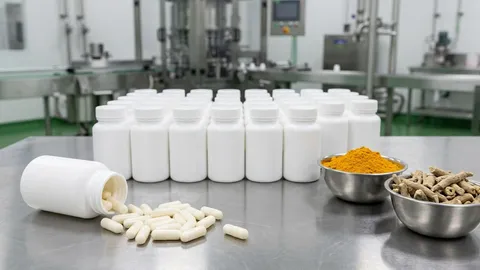
| Capsule bottle, 60-count | Bottles per SKU | 180 bottles (10,800 capsules) | Encapsulation set-up on a 200,000-a-day line |
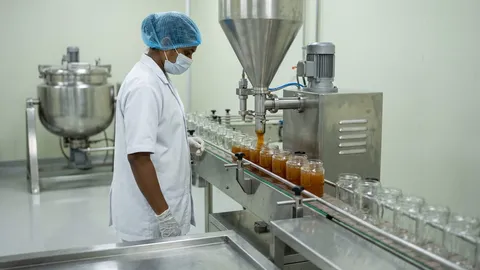
| Glass jar or retort pouch, semi-solid | Units per SKU | 1,500 units | A cook or retort load plus filling; glass tooling adds one week |
| Beverage bottle, 200 ml | Bottles per SKU | 1,250 bottles | Filling and capping block |
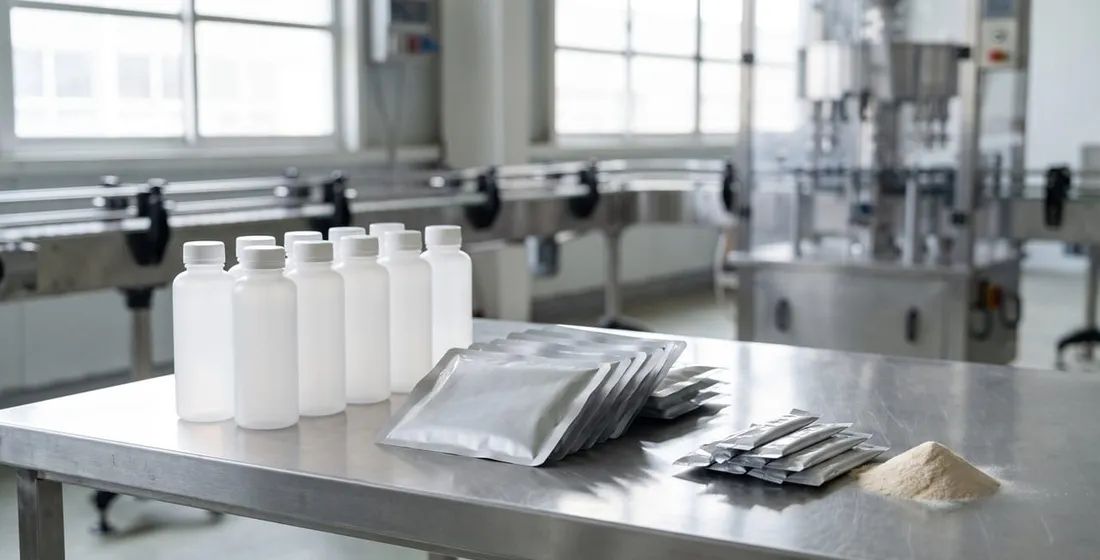
| Drink-powder sachet or stick | A production block | No per-sachet minimum published | Changeover, laminate and the day booked |
What does a 180-bottle capsule run really commit?
A 60-count bottle holds 60 capsules, so 180 bottles is 10,800 capsules. The capsule line is rated at 100,000 capsules per single shift and 200,000 a day, which puts a full first run at about 11% of one shift. The line is not the constraint. The buyer’s cash is.
Because the floor is small, capsules are where most local wellness brands test a concept. The cost of that low floor sits elsewhere: bottle, cap, label and the fill powder, each bought in its own minimum. A capsule that carries an Ayurvedic claim also needs Department of Ayurveda registration before it reaches a shelf, which is a calendar item and not a production one. The full first-run economics are in capsule contract manufacturing at a 180-bottle MOQ, and the packaging side is in white versus black capsule bottles and the label cost.
Service snapshot: Private Labelling and Contract Manufacturing, capsules
First-run MOQ: 180 bottles per SKU, 60 capsules each
Line rate: 100,000 capsules per single shift, 200,000 per day
Sample dispatch for an existing recipe: 1 to 2 weeks
Cert coverage: BRCGS- and FSSC 22000 V6-audited, plus SLSI clearance and Sri Lanka Food Act compliance on retail SKUs
Why does a retort pouch need 1,500 units and not 180?
A retort pouch is cooked in its pack. The floor is therefore a load, not a count: enough pouches to fill the retort and make the cook cycle worth running, plus the filling and sealing set-up. SFC plans first runs of shelf-stable semi-solid formats against 1,500 units, the same floor it uses for 300 g jars and cans. At 300 g per pouch that is 450 kg of finished food.
For a curry, a gravy or a jackfruit dish, 450 kg is a single production day. The worked scenario, with a 1,500-pouch run and the steps from brief to release, is in shelf-stable curry pouch R&D in Sri Lanka. Glass jars follow the same 1,500 floor with one added week for glass tooling, as set out in first-run maths for a contract-manufactured sauce.
Retort also asks more of the recipe. A kitchen formulation that holds in a pot does not always hold in a retort, which is why the R&D / NPD (Co-Development on the SFC brochure) step comes first for most pouch briefs. That step is 3 to 4 weeks at most from signed brief to approved formulation, and it sits ahead of the first-run clock, not inside it.
What does a drink-powder sachet cost to start?
SFC publishes no per-sachet minimum for buyer-supplied powder. The unit booked is a production block, typically a single day, varying with the number of flavours and pack sizes. Lead time is one to two weeks from the arrival of finished goods at Matale.
Where the powder has to be made first, the floor moves back a step. The spray-drying line has a documented minimum of 50 kg for plant milk powder, a single-day batch. At a 5 g serving, 50 kg is 10,000 sachets before fill losses, which is a useful way to size a first run even though it is arithmetic and not a published sachet MOQ. The format and fill-weight detail is in sachet and stick-pack co-packing for powdered drinks.
A sachet is also the one format where the pack, not the product, usually sets the calendar. Printed laminate for a first private-label pack runs 8 to 13 working weeks in SFC’s working plan, against a filling block of one to three days. The schedule logic is in artwork and print lead time for private label.
How much cash does each floor tie up?
The factory minimum is only the first layer. The cash a first run ties up is units multiplied by landed unit cost, and the unit cost differs widely by format. The figures below use placeholder unit costs to show the shape of the calculation. They are not SFC prices and they are not a quote. Replace each placeholder with the number from your own quote.
| Format | Run at the floor | Placeholder landed unit cost (LKR) | Cash at the floor (LKR) |
|---|---|---|---|
| Capsule bottle, 60-count | 180 bottles | 1,500 | 270,000 |
| Retort pouch, 300 g | 1,500 pouches | 600 | 900,000 |
| Drink sachet, 5 g | 10,000 sachets (50 kg batch) | 35 | 350,000 |
Read the table by the ratio, not the totals. Moving from a capsule to a pouch multiplies the units by 8.3 and, at these placeholders, the cash by 3.3. The pouch is the biggest commitment even though its unit cost is lower than the capsule bottle’s, because the retort load fixes the count. A sachet sits between them, and its real number depends on laminate and flavour count.
Where does the packaging minimum override the run minimum?
The factory floor is not always the binding one. A flexible-packaging converter’s published terms show how. One converter lists a minimum of 2,000 to 3,000 finished pouches, depending on size, and a minimum order value for printed roll film, with rollstock per SKU generally 1,000 or more because each roll needs enough material to cover set-up waste (the converter’s published terms, 2026). Those are one supplier’s terms and not SFC’s, but the pattern is general.
Set that beside a 1,500-pouch run. The buyer needs 1,500 pouches and has to buy 2,000 to 3,000, so 500 to 1,500 are left over. They are not waste if the next run is planned, because pouches keep, but the cash is paid on day one. A buyer who plans two runs from one pouch order is using the minimum, not fighting it.
Consider a founder launching a curry pouch and a ginger drink mix in the same quarter. The founder plans a 1,500-pouch run and 10,000 sticks. The pouch converter’s floor leaves 1,000 pouches in stock, and the laminate order for the sticks is a roll the founder will not finish in one run. Neither number appears in the factory quote. Both sit in the cash plan. (This is a worked scenario, not a client case.)
For the broader step from home-scale to a first commercial run, see home kitchen to contract manufacturing: the first run in Sri Lanka.
Where SFC walks away
A brand still adjusting the recipe: that is an R&D brief, 3 to 4 weeks at most, and it comes before a production slot.
A run below the floor on a format that carries one: the line books a day, and a day has a cost.
A pack with no packaging decision: a slot booked before the pouch or laminate is chosen is released and rebooked.
What should a first-time buyer settle before asking for a quote?
Five inputs turn a range into a firm quote. Settle them in this order, because each constrains the next.
- The format, and the pack size inside it.
- The recipe status: locked, or needing R&D first.
- The number of SKUs in the first booking, since several flavours or sizes in one block share set-up cost.
- The packaging: who supplies the bottle, pouch or laminate, and its own minimum.
- The compliance scope: label review under the Sri Lanka Food Act and SLSI submission support, plus Department of Ayurveda registration where an Ayurvedic claim is made.
Confirm the current clearance window for any SLSI submission directly with SLSI before fixing a shelf date, as SLSI publishes no processing-time commitment.
Frequently asked questions
What is the minimum order quantity for capsules at Silk Foods Ceylon?
The first-run minimum is 180 bottles per SKU, each a 60-count bottle, which is 10,800 capsules. The capsule line is rated at 100,000 capsules per single shift and 200,000 per day, so a first run takes a fraction of a shift (Silk Foods Ceylon, 2026).
Why is a retort pouch minimum higher than a capsule minimum?
A retort pouch is cooked in its pack, so the floor is a retort load plus the filling set-up. SFC plans semi-solid shelf-stable formats at 1,500 units, about 450 kg at 300 g a pouch. A capsule floor is lower because encapsulation set-up is smaller (Silk Foods Ceylon, 2026).
Is there a minimum order for drink-powder sachets?
SFC publishes no per-sachet minimum for buyer-supplied powder. The unit booked is a production block, typically a single day, with lead time of one to two weeks from arrival of finished goods. Printed laminate is planned separately and is usually the longer item (Silk Foods Ceylon, 2026).
Can Silk Foods Ceylon run a first batch below the standard minimum?
SFC’s published floors are the planning basis, and a run below them is quoted case by case. Across consumer goods, pilot runs below standard minimums often carry a 15 to 40 per cent unit premium (contract-packaging industry guide, July 2026). Send the brief to b2b@esilkroute.com.lk for a quote.
How Silk Foods Ceylon can help
For local brand owners choosing a first format, Silk Foods Ceylon (SFC) runs Contract Manufacturing and Private Labelling on one BRCGS- and FSSC 22000 V6-audited site in Matale. First-run floors are 180 bottles for capsules and 1,500 units for jars, cans and retort pouches, with a production block as the unit for drink-powder co-packing. Where the recipe is not locked, the in-house R&D team takes a signed brief to an approved formulation in 3 to 4 weeks at most. SLSI submission support and Sri Lanka Food Act label review sit inside the engagement.
To brief a first run, email b2b@esilkroute.com.lk or call +94 76 441 0389 or +94 76 918 5744.
Sources
Assemblies, Contract Packaging MOQs: What Is Normal and How to Work Within Them, published 1 July 2026: fixed set-up cost spread over run size, typical MOQ range of about 1,000 to 100,000 units per SKU, and a 15 to 40 per cent premium on pilot runs. Retrieved 12 October 2026. https://assemblies.com/contract-packaging-moqs
ePac Flexibles, Understanding ePac’s Minimum Order Requirements: minimum 2,000 to 3,000 finished pouches by size, minimum order value of USD 1,500, rollstock per-SKU minimum generally 1,000 or more. One converter’s terms, used as a pattern, not an SFC supplier. Retrieved 12 October 2026. https://epacflexibles.com/en-au/understanding-epacs-minimum-order-requirements
Ministry of Health, Sri Lanka, Food (Labelling and Advertising) Regulations 2026, Gazette Extraordinary No. 2494/47 of 26 June 2026, made under the Food Act No. 26 of 1980, the label framework referred to under compliance scope. Retrieved 23 August 2026. https://www.eohfs.health.gov.lk/food/images/2494-47_E.pdf
Silk Foods Ceylon, internal capability data for the Matale facility (2026): capsule MOQ 180 bottles of 60 capsules, line rate 100,000 capsules per shift and 200,000 per day; semi-solid and jar first run 1,500 units with one added week for glass tooling; beverage bottle 1,250; spray-dried plant milk powder 50 kg single-day batch; co-packing lead time one to two weeks; first printed pack plan 8 to 13 working weeks; R&D 3 to 4 weeks maximum.