A HORECA Private-Label Buyer's Guide: MOQ, Lead Time, Compliance
HORECA snapshot
- Sri Lanka’s classified tourist hotel segment held roughly 18,300 rooms in 2025, up from about 16,800 a year earlier (Daily Mirror, 2025, citing Sri Lanka Tourism Development Authority data).
- A hotel group commissioning a private-label condiment, tea, or gift-line SKU is buying a manufacturer relationship, not a single product: SLSI clearance, a current food-safety audit, and a believable lead time narrow the shortlist fast.
- Silk Foods Ceylon (SFC) runs first-run MOQs of 1,500 jars or 1,250 bottles per SKU, low enough to fit a multi-property rollout on a single production block.
- See the MOQ, packaging, and lead-time table below before briefing a co-manufacturer.
Sri Lanka’s hotel groups run private-label SKU programmes for in-room amenities, gift-shop retail, and minibar consumables well beyond tea: condiments, spice blends, coconut products, herbal capsules, and seasonal gift lines all follow the same commissioning logic. Most of these SKUs come from one of a small number of local contract manufacturers, working under the hotel group’s own brand. The shortlist narrows on four criteria: SLSI clearance, a current food-safety audit on the manufacturer, low-MOQ flexibility across a multi-property rollout, and a lead time procurement can actually plan a launch date against.
What a HORECA private-label programme actually covers
A HORECA private-label programme is a hotel group’s own branded SKU, manufactured by a third party, placed inside the property as an in-room amenity, a gift-shop item, or a minibar consumable. The category runs wider than tea: condiments, spice blends, coconut products, herbal capsules, and seasonal gift ranges all follow the same commissioning process, from brief to shelf.
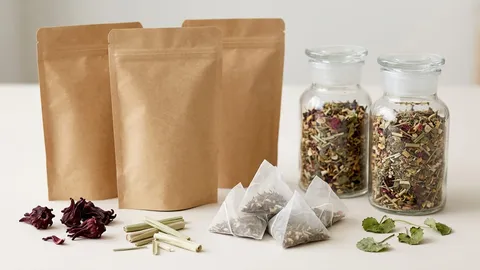
Tea gets most of the attention because it is the easiest in-room SKU to commission: small format, long shelf life, low per-unit cost. Silk Foods Ceylon (SFC) has covered the tea-specific mechanics of an in-room amenity programme elsewhere. This guide covers the wider category instead: what a hotel group briefs, what a co-manufacturer needs to quote a real MOQ and lead time, and what SLSI and Sri Lanka Food Act compliance require before a signature condiment, tea, or gift-line SKU reaches a guest room or gift shop shelf.
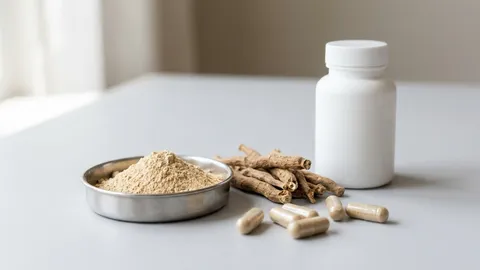
A condiment or coconut-product SKU carries a different production path than tea: a filled and sealed glass jar rather than a bagged dry good, a shorter shelf life that needs a real cold-chain or ambient-shelf answer, and a label that has to carry the same tri-lingual and allergen information as any other packaged food sold in Sri Lanka. A capsule-format wellness gift SKU adds a third path again: Department of Ayurveda registration sits alongside SLSI if the SKU makes any Ayurvedic or herbal claim.
What does a hotel group need before it briefs a co-manufacturer?
A workable HORECA private-label brief names the SKU category, the target property count, the packaging format, and the target in-room or gift-shop date before it goes to a co-manufacturer. Missing any one of these turns a two-week quoting process into a six-week back-and-forth.
Procurement teams that have never briefed a co-manufacturer usually lose the most time on the brief itself, not on production. Before the first call, a hotel group’s buyer’s checklist should cover:
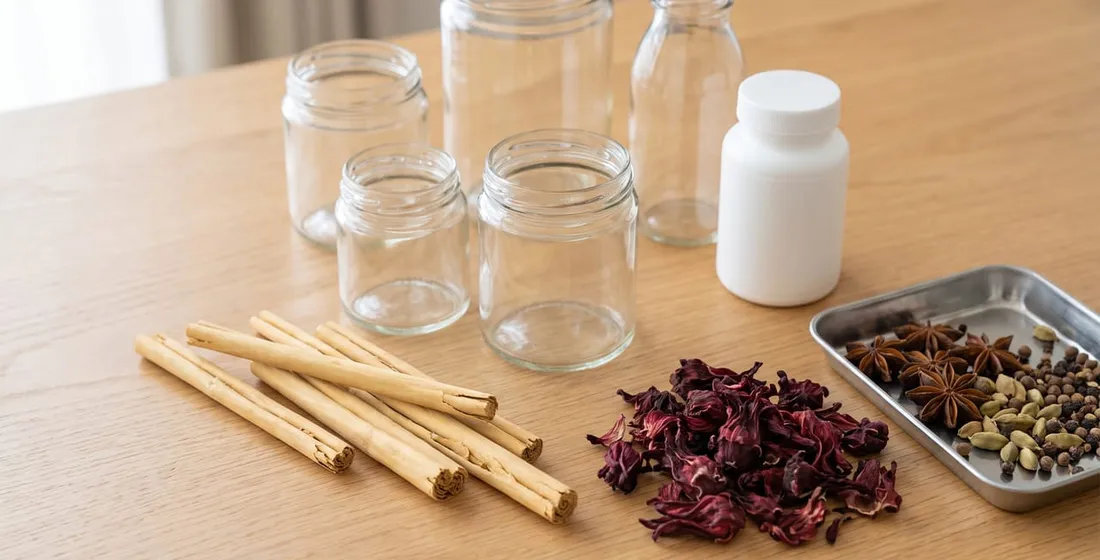
Buyer's checklist: before you brief a co-manufacturer The SKU category: condiment, tea blend, spice blend, coconut product, or capsule gift SKU Target property count and an estimated monthly consumption per property Packaging preference: glass jar, glass bottle, kraft pouch, or capsule bottle Branding assets: finished label artwork, or a placeholder brief for the manufacturer's design step Target in-room or gift-shop date, worked backward from an SLSI submission window A budget band in LKR per unit, held as a range rather than a fixed number until the brief firms up Whether the SKU carries any Ayurvedic or herbal claim, since that triggers Department of Ayurveda registration alongside SLSI |
A brief with all seven items lets a manufacturer return a real MOQ and lead time on the first call, rather than a placeholder range that changes twice before a purchase order is signed.
MOQ that works for a multi-property rollout
Silk Foods Ceylon’s first-run MOQs sit at 1,500 jars for condiments and coconut products, 1,250 bottles for liquid formats, and 180 bottles for capsule SKUs, per SKU. That MOQ band is set for a hotel group’s first commercial run across a handful of properties, not for export-scale volumes.
| SKU format | Typical packaging | First-run MOQ | Lead time (existing recipe) |
| Condiment or spread | 300 g glass jar | 1,500 jars | 2 to 4 weeks |
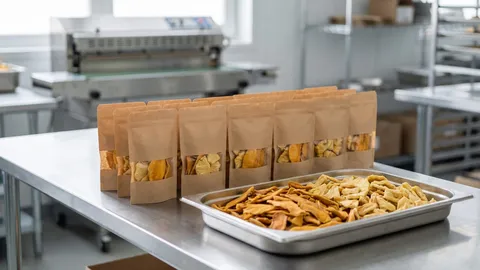
| Coconut product (jam, spread, chips) | Glass jar or kraft pouch | 1,500 jars or units | 2 to 4 weeks |
| Tea blend | Pyramid, tag-and-string, or filter-paper bag | Varies by pack format | 2 to 4 weeks |
| Liquid or beverage format | 200 ml glass bottle | 1,250 bottles | 2 to 4 weeks |
| Capsule gift SKU | 60-count capsule bottle | 180 bottles | 2 to 4 weeks |
| Any format, new formulation | As above | Same MOQ, R&D runs first | 6 to 10 weeks |
A multi-property hotel group rarely needs a separate production run per property. Running the same 1,500-jar or 1,250-bottle MOQ against a combined order across three or four properties keeps a signature SKU on a single production block, rather than splitting a small run into sub-MOQ batches that don’t pencil for the manufacturer or the hotel group’s per-unit cost.
Lead time and the SLSI calendar
SLSI clearance is the gating step for any packaged SKU placed inside a Sri Lankan hotel property. The submission window typically runs four to eight weeks for a stable formulation (Sri Lanka Standards Institution); the practical planning number is a six to ten week buffer between manufacturer QA sign-off and a target in-room date.
In 2025, SLSI tightened submission timelines for packaged-food clearance, particularly for anything carrying an Ayurvedic or herbal claim (Sri Lanka Standards Institution). For a hotel group planning a signature gift-line launch against a peak-season date, the practical consequence is the same buffer holds no matter how far in advance procurement thinks it is planning: the calendar, not the recipe, is usually what slips.
Working backward from a target date, a hotel group’s procurement timeline for a new SKU runs roughly: two to four weeks for a sample and brief sign-off, two to four weeks for production once the SLSI submission is filed, and four to eight weeks of SLSI review running in parallel with production planning. Held end to end, that is a ten to fourteen week window from a signed brief to an in-room date on an existing recipe, longer if the SKU needs R&D work first. A gift-line SKU tied to a festive calendar date, for example an Avurudu-season assortment, needs the same buffer worked backward from the season, Avurudu gift-range planning not from a generic launch date.
Which amenity format fits which SKU?
In-room amenity formats fit a narrow packaging window: small glass jars, tea bag formats, or single-serve sachets. Gift-shop formats have more room to work with: full-size jars, capsule bottles, or a multi-SKU seasonal gift set.
In-room amenity SKUs sit in a welcome tray or a minibar shelf, so the format has to be small, low per-unit cost, and shelf-stable for a slow-turning inventory. A signature condiment or coconut product built for a full-size gift jar has more design room: a 300 g jar reads well on a gift-shop shelf but is oversized and overpriced for an in-room tray.
Gift-shop programmes carry the most format flexibility. A full-size glass jar of a signature coconut spread works as a stand-alone gift-shop SKU; a capsule-format wellness product, a capsule gift SKU for a hotel gift shop, reads as a spa or wellness-adjacent gift when the hotel runs a spa or ayurveda programme. Minibar consumables sit closest to the in-room amenity format: small, low per-unit cost, and a shelf life that survives weeks between minibar restocks rather than the days a fresh in-room tray item needs.
Compliance: what SLSI and the Food Act actually check
Sri Lanka Food Act 1980, with amendments, sets the labelling floor for every packaged SKU placed inside a Sri Lankan hotel property: a tri-lingual product name, allergen disclosure, a manufacturer SLS number, and an expiry date in the prescribed format. SLSI certifies compliance with the standards the Act derives from.
Certification snapshot: Silk Foods Ceylon, Matale BRCGS-audited FSSC 22000 V6 (covers the processing scope across condiment, tea, and capsule lines) SLSI clearance on every retail and in-room SKU Sri Lanka Food Act 1980 compliance built into the engagement Department of Ayurveda registration on capsule and herbal-claim gift SKUs |
For a local floor, SLSI clearance and Sri Lanka Food Act compliance are non-negotiable for any packaged SKU that reaches a guest room or gift shop, an SLSI clearance walkthrough for a private-label coconut jam SKU covers the submission mechanics in more detail. Beyond the floor, hotel groups increasingly ask whether the manufacturer carries a current BRCGS or FSSC 22000 V6 audit, particularly for properties in international groups that apply the same procurement standard across markets. A capsule or kashaya-format gift SKU carrying an Ayurvedic claim needs Department of Ayurveda registration alongside SLSI: the Department’s submission asks for the formulation, the source of the active herbs, and the exact claim language, in writing.
What it costs, in LKR
Hotel procurement teams often compare a manufacturer’s quote against an informal local co-packer’s lower per-unit price. The comparison usually breaks down once SLSI delay, audit gaps, and the cost of switching mid-launch enter the total, not just the invoice line.
Silk Foods Ceylon’s LKR pricing runs in tiers by format and order volume; a firm quote follows a signed brief, not the reverse. The more useful comparison for a procurement lead is total cost, not invoice price: an informal co-packer without a current BRCGS or FSSC audit, and sometimes without SLSI clearance for a new SKU, can quote a lower per-jar price and still cost more once a delayed SLSI submission pushes a launch date past a peak season, or a re-listing is needed mid-programme. For a hotel group weighing an export-curious step later, for example supplying an international sister property, the audit cost on a BRCGS- and FSSC 22000 V6-audited manufacturer is already sunk (roughly LKR 330 per USD at the 2026 indicative rate, Central Bank of Sri Lanka, for any onward comparison in dollar terms).
Frequently asked questions
Does Silk Foods Ceylon offer private labelling for hotel gift-shop SKUs?
Yes. Silk Foods Ceylon runs a private-label catalogue of 50 or more ready-to-go products across spice blends, coconut SKUs, herbal teas, and capsules, branded under a hotel group’s own label at a first-run MOQ of 1,500 jars or 1,250 bottles per SKU.
What is the MOQ for a hotel group’s first private-label condiment run?
The first-run MOQ for a condiment or coconut-product SKU in a 300 g glass jar is 1,500 jars, roughly a single production block. Capsule-format gift SKUs run a lower MOQ of 180 bottles per SKU.
How long does SLSI clearance take for a hotel amenity SKU?
SLSI’s packaged-food submission window typically runs four to eight weeks for a stable formulation. Procurement teams should plan a six to ten week buffer between manufacturer QA sign-off and a target in-room or gift-shop date.
Can a multi-property hotel group launch several SKUs on one production block?
Yes. Combining orders for the same SKU across three or four properties against a single 1,500-jar or 1,250-bottle MOQ keeps a signature SKU on one production run, rather than splitting into sub-MOQ batches that don’t pencil per property.
Does a herbal or Ayurvedic-claim gift SKU need Department of Ayurveda registration?
Yes, if the SKU carries an Ayurvedic or herbal claim on the label. Registration under the Department of Ayurveda, Ministry of Health, runs parallel to SLSI clearance and asks for the formulation, herb source, and claim language in writing.
How Silk Foods Ceylon can help
For hotel and restaurant groups running in-room amenity, gift-shop, or minibar SKU programmes, Silk Foods Ceylon (SFC) offers a private-label catalogue of 50+ ready-to-go products across spice blends, coconut SKUs, herbal teas, capsules, jams, and vegan formats. Custom branding is applied to existing SFC formulations; first-run MOQs sit at 1,500 jars or 1,250 bottles per SKU, which keeps a multi-SKU hotel programme on a single production block. The Matale facility is BRCGS- and FSSC 22000 V6-audited, with SLSI clearance on every retail SKU. The adjoining plantation supports brand storytelling for sustainability-positioned hotel groups.
To brief an in-room or gift-shop programme, email brands@esilkroute.com.lk or call +94 76 441 0389 or +94 76 918 5744.
Sources
- Daily Mirror (2025), “Sri Lanka’s tourism investments hit six-year high in 2025 amid substantial capacity expansion”, https://www.dailymirror.lk/business-news/Sri-Lankas-tourism-investments-hit-six-year-high-in-2025-amid-substantial-capacity-expansion/273-338793 (retrieved 2026-08-16).
- Daily FT (2025), “Tourism arrivals grow by 15% to 2.36 m record high in 2025”, https://www.ft.lk/top-story/Tourism-arrivals-grow-by-15-to-2-36-m-record-high-in-2025/26-786582 (retrieved 2026-08-16).
- Sri Lanka Standards Institution, “SLS certification and packaged-food submission framework”, https://www.slsi.lk/ (retrieved 2026-08-16).
- Ministry of Health, Sri Lanka, “Food Act No. 26 of 1980 (and amendments)”, https://www.health.gov.lk/ (retrieved 2026-08-16).
- Department of Ayurveda, Ministry of Health, “Ayurvedic product and claim registration”, https://ayurveda.gov.lk/ (retrieved 2026-08-16).
- Central Bank of Sri Lanka, “Indicative USD/LKR spot exchange rate”, https://www.cbsl.gov.lk/en/rates-and-indicators/exchange-rates (retrieved 2026-08-16).
Written by the Silk Foods Ceylon Team. Silk Foods Ceylon (Pvt) Ltd. is a BRCGS- and FSSC 22000 V6-audited contract manufacturer in Matale, Sri Lanka, offering contract manufacturing, private labelling, co-packing, and in-house R&D for local Sri Lankan brand owners, FMCG companies, hotel and restaurant groups, and distributors. To brief a project: brands@esilkroute.com.lk, +94 76 441 0389, or +94 76 918 5744.