Contract manufacturing in Sri Lanka: the 2026 founder's maths
Buyer’s snapshot
- The Central Bank of Sri Lanka raised the Overnight Policy Rate by 100 basis points to 8.75% in May 2026, which reprices every borrowed rupee of factory capex.
- CCPI food inflation accelerated to 6.3% in July 2026 from 3.6% in June 2026 (Central Bank of Sri Lanka, 2026).
- Manufacturing PMI stood at 53.0 in June 2026, with food and beverage manufacturing driving the production sub-index.
- Silk Foods Ceylon (SFC) runs first-run MOQs of 1,500 jars, 1,250 bottles, and 180 capsule bottles from Matale, on a BRCGS- and FSSC 22000 V6-audited site.
- The comparison table below sets your own line against contract manufacturing, cost line by cost line.
Most local Sri Lankan food brands start in a kitchen or a rented industrial bay. The recipe works, the first few thousand units sell, and the obvious next move looks like buying a line of your own. In 2026 that move costs more than it did two years ago. The Central Bank of Sri Lanka raised the Overnight Policy Rate by 100 basis points to 8.75% in May 2026, and food inflation reached 6.3% year on year in July. Borrowed capex and volatile inputs now sit on the same balance sheet, in the same quarter.
What changed for a Sri Lankan food brand in 2026?
The Central Bank of Sri Lanka increased the Overnight Policy Rate by 100 basis points to 8.75% in May 2026, and CCPI food inflation accelerated to 6.3% in July 2026 from 3.6% in June. Manufacturing PMI stood at 53.0 in June 2026, with the production sub-index expansion driven by the manufacture of food and beverages sector.
Read those three numbers together and the picture gets specific. Demand for locally manufactured food is expanding, because the production sub-index expansion came from food and beverage. Input costs are climbing faster than most retail price lists move. And the cost of borrowing to buy a line went up in the same quarter. A brand financing its own factory in 2026 pays more for the money at exactly the point its margin is thinnest.
Contract manufacturing changes the shape of that cost, not merely the size of it. Capital expenditure becomes a per-unit charge that fires only when a batch runs. For a founder whose monthly volume swings with a festive season or a diaspora gifting cycle, shape matters more than the headline rate.
The capex line most founders underestimate
A dedicated food production line in Sri Lanka carries four costs beyond the machinery: the building and its food-grade fit-out, the QA and documentation team, the certification audit cycle, and the idle time between runs. Contract manufacturing converts all four into a per-batch charge, which is why first-run economics usually favour outsourcing.
| Cost line | Your own production line | Contract manufacturing at Matale |
| Capital outlay | Financed up front, priced against an 8.75% policy rate | None; charged per batch |
| Food-grade fit-out | Your project, your timeline, your delays | Already built and audited |
| QA and documentation | A QA lead plus lab support on payroll | Inside the standard engagement |
| Certification | Your audit, your annual renewal cycle | BRCGS and FSSC 22000 V6 already held on site |
| Idle capacity | Paid for whether it runs or not | Not billed |
| Time to a retail-ready batch | Months, from lease to first passed audit | 2 to 4 weeks once the recipe is locked |
The fourth row is the one founders discount. A certification audit is not a single event; it is a cycle with a renewal date, a corrective-action window, and a documentation burden that lands on somebody’s desk every week. Buying a line means buying that cycle too.
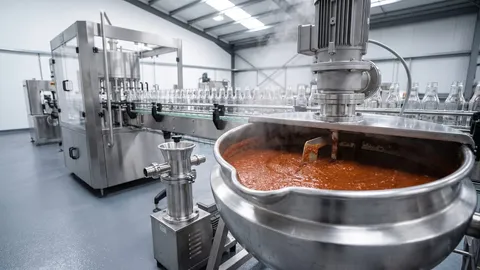
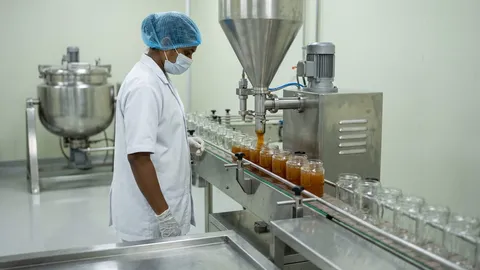
For a local brand running this maths, contract manufacturing is the operational equivalent of moving from a kitchen team of three to a line that delivers 3,000 jars in a single shift. The recipe stays the buyer’s. The line, the audit, and the compliance file move under the manufacturer. That is the argument behind the cellular layout at the Matale factory, which is built to reconfigure between formats rather than sit in one shape.
The label rules moved, and the deadline is behind you
The Food (Labelling and Advertising) Regulations 2022 were published in Gazette Extraordinary No. 2319/40 on 14 February 2023, made under section 32 of the Food Act No. 26 of 1980, with commencement set for 1 January 2024. They make nutrition labelling mandatory and set minimum letter heights for both the common name and the nutrition panel.
Two numbers in that gazette decide whether artwork passes. The letters used for the common name must be no less than one third of the size of the letters used for the trade or brand name, whichever is larger, subject to a minimum height of 3 millimetres. Nutrition labelling must be printed at no less than 1.5 millimetres. Date of expiry, batch number, and date of manufacture carry the same 1.5 millimetre floor, stamped on the bottle neck for bottled products and on the lid for metal cans.
The R&D and packaging desk at the Matale facility sees the same failure arrive repeatedly. Artwork comes in locked, print-ready, and signed off by the brand’s own designer, with the brand name set large and the common name set as a delicate subtitle underneath it. Under the 2022 regulations that subtitle has to reach a third of the brand name’s letter size and clear 3 millimetres. Re-plating a pouch print run costs considerably more than the fifteen-minute artwork review that would have caught it.
Compliance is a sequencing problem before it is a cost problem. Artwork review belongs beside the formulation sign-off, not after it, and the certification stack a Sri Lankan contract manufacturer should already hold determines how much of that sequencing the buyer has to run alone.
Does your SKU actually need the SLS mark?
The Sri Lanka Standards Institution (SLSI) operates the SLS mark product certification scheme under the Sri Lanka Standards Act No. 6 of 1984. Under the Consumer Protection Act No. 01 of 1979, the mark is compulsory for 46 products. Whether a given food format sits inside that list decides whether SLS certification is a legal gate or a commercial choice.
The list is published by SLSI and is worth checking line by line before any launch date is committed, because a compulsory certification and a voluntary one carry different timelines and different consequences for a shelf date. Where the mark is voluntary, it usually returns as a buyer requirement anyway: modern-trade procurement teams and the larger Sri Lankan hotel groups tend to ask for the manufacturer’s audit position before they ask for a price.
Either way, compliance with the Food Act 1980 and the 2022 labelling regulations is not optional for a packaged food sold in Sri Lanka, and SKUs carrying a traditional claim need Department of Ayurveda registration running in parallel. That parallel track is the reason a capsule line starts at a 180-bottle MOQ rather than a pallet.
What a first commercial run looks like at Matale
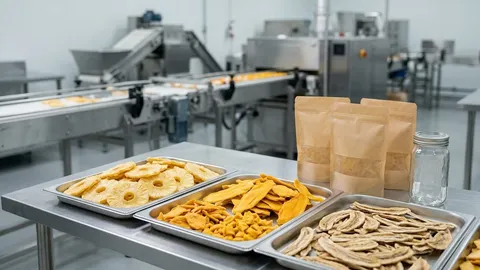
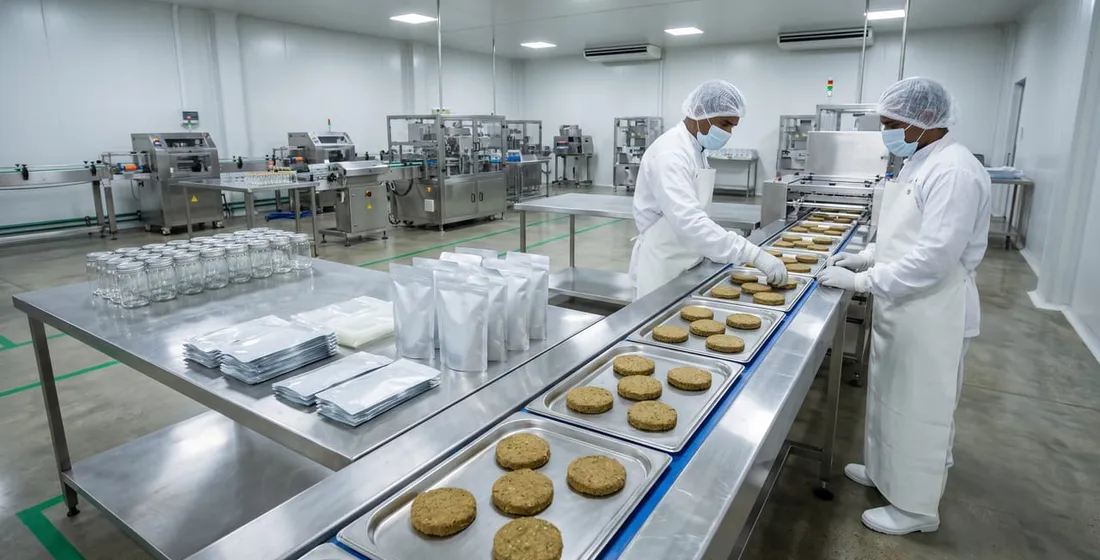
Silk Foods Ceylon runs a 10,000 sq ft cellular-manufacturing facility carrying 50-plus ready-to-go SKUs on a single certification stack. Daily capacity runs to 3,000 jars on semi-liquids, 2,500 bottles of 200 ml on beverages, 200,000 capsules, 15,000 patties, and 30,000 nuggets. First-run MOQs start well below those ceilings.
Service snapshot: Contract Manufacturing at Silk Foods Ceylon
|
The gap between the two timelines is where most first-time briefs land. A recipe that works in a home kitchen has usually never been adjusted for retort temperature, glass-jar headspace, or batch-to-batch consistency at 1,500 units. The in-house R&D team budgets two to four sample iterations before a formulation locks, and each iteration carries its own sample turnaround.
For plant-based formats the iteration count tends to run at the upper end, because binding, moisture and freeze-thaw behaviour all shift once a bench batch becomes a line batch. The detail is in what a first plant-based patty run involves.
When is contract manufacturing the wrong answer?
Where Silk Foods Ceylon walks away
|
The last case is the expensive one. Switching manufacturers mid-programme means rebuilding the audit chain, re-running the artwork approval, and re-establishing batch history from zero, which is why a co-packer handover has to be planned rather than improvised. A first run placed with the right manufacturer is cheaper than a second run placed to correct the first.
Frequently asked questions
Does Silk Foods Ceylon offer contract manufacturing for plant-based and functional SKUs?
Yes. Silk Foods Ceylon manufactures a buyer’s locked recipe at the Matale facility across patties, nuggets, spreads, beverages, teas and capsules. First-run MOQs start at 5,000 units for formed plant-based formats, 1,500 jars for 300 g spreads, and 180 bottles for capsules, on a BRCGS- and FSSC 22000 V6-audited site.
What does a first contract manufacturing run cost a Sri Lankan brand in capital?
No line capital. Contract manufacturing converts building, equipment, QA staffing and audit cost into a per-batch charge. That shift matters more in 2026, because the Central Bank of Sri Lanka raised the Overnight Policy Rate by 100 basis points to 8.75% in May 2026, repricing every borrowed rupee of factory capex.
What do the 2022 labelling regulations require on a Sri Lankan food label?
The Food (Labelling and Advertising) Regulations 2022, gazetted on 14 February 2023 under the Food Act No. 26 of 1980, make nutrition labelling mandatory. The common name must reach at least one third of the brand name letter size, with a minimum height of 3 millimetres, and nutrition labelling must print at no less than 1.5 millimetres.
Is the SLS mark required for every packaged food sold in Sri Lanka?
No. The Sri Lanka Standards Institution runs the SLS mark scheme under the Sri Lanka Standards Act No. 6 of 1984, and the mark is compulsory for 46 products under the Consumer Protection Act No. 01 of 1979. Check your format against that list before budgeting a certification timeline.
How Silk Foods Ceylon can help
For local FMCG brands shifting from in-house production to professional contract manufacturing, Silk Foods Ceylon (SFC) operates a 10,000 sq ft cellular-manufacturing facility in Matale with the line flexibility to run 50-plus ready-to-go SKUs on a single BRCGS- and FSSC 22000 V6-audited certification stack. Capacity ranges across formats: 3,000 jars per day on semi-liquids, 2,500 bottles of 200 ml per day on beverages, 200,000 capsules per day, 15,000 patties per day, 30,000 nuggets per day. The in-house R&D team works alongside production planning, which means a multi-SKU launch can run in parallel rather than serial. SLSI submission support sits inside the standard engagement.
To brief a project, email brands@esilkroute.com.lk or call +94 76 441 0389 / +94 76 918 5744.
Sources
Central Bank of Sri Lanka (2026). Monetary Policy Review No. 3 of 2026. https://www.cbsl.gov.lk/en/news/monetary-policy-review-no-3-of-2026
Central Bank of Sri Lanka (2026). CCPI-based headline inflation accelerated in July 2026. https://www.cbsl.gov.lk/en/news/ccpi-inflation-july-2026
Central Bank of Sri Lanka (2026). SL Purchasing Managers’ Index, Manufacturing and Services, June 2026. https://www.cbsl.gov.lk/en/news/sl-pmi-manufacturing-services-june-2026
Ministry of Health, Sri Lanka (2023). Food (Labelling and Advertising) Regulations 2022, Gazette Extraordinary No. 2319/40, 14 February 2023. https://www.eohfs.health.gov.lk/food/images/2319-40_E.pdf
Sri Lanka Standards Institution (2026). SLS Mark Product Certification. https://slsi.lk/en/services/sls-mark-product-certification/
All sources retrieved 12 August 2026.
Written by the Silk Foods Ceylon Team. Silk Foods Ceylon (Pvt) Ltd. is a BRCGS- and FSSC 22000 V6-audited contract manufacturer in Matale, Sri Lanka, offering contract manufacturing, private labelling, co-packing, and in-house R&D for local Sri Lankan brand owners, FMCG companies, hotel and restaurant groups, and distributors. To brief a project: brands@esilkroute.com.lk, +94 76 441 0389, or +94 76 918 5744.