Coconut Water Powder Co-Packing in Sri Lanka: The Spec Limits
Buyer’s snapshot
- Sri Lankan coconut-based exports reached 1,233 million US dollars in 2025, past the previous peak of 864.3 million in 2024, per Export Development Board figures reported by EconomyNext in January 2026. Coconut cream grew 93 percent, coconut oil 79 percent, coconut milk powder 61 percent.
- Coconut water powder is not in that list. The Export Development Board’s own coconut-water product page names three items: tender coconut water, coconut water vinegar, and king coconut water. No powder. No concentrate.
- A spray-dried coconut water needs a carrier. The published optimum for tender coconut water is 30 percent maltodextrin, which means the finished powder is 70 percent coconut at best, and the ingredient list has to say so.
- The Silk Foods Ceylon spray-drying train at Matale runs at a documented 50 kg minimum on a single-day batch. At a 70:30 blend that batch eats roughly 580 litres of chilled coconut water arriving the same morning. The dryer is not the constraint. The feed is.
Sri Lankan coconut-based exports hit 1,233 million US dollars in 2025, against a previous peak of 864.3 million the year before, according to Export Development Board figures reported by EconomyNext in January 2026. Coconut cream grew 93 percent, coconut oil 79 percent, coconut milk powder 61 percent. Every one of those is a fat-bearing or oil-bearing stream with an established processing route.
Coconut water powder is a different animal, and local beverage brands asking for it this year keep hitting the same three walls: the carrier, the feed, and the label. What follows separates what a Sri Lankan brand can put in a request for quotation today from what still needs a formulation programme, with the arithmetic behind each line.
What coconut water powder actually is
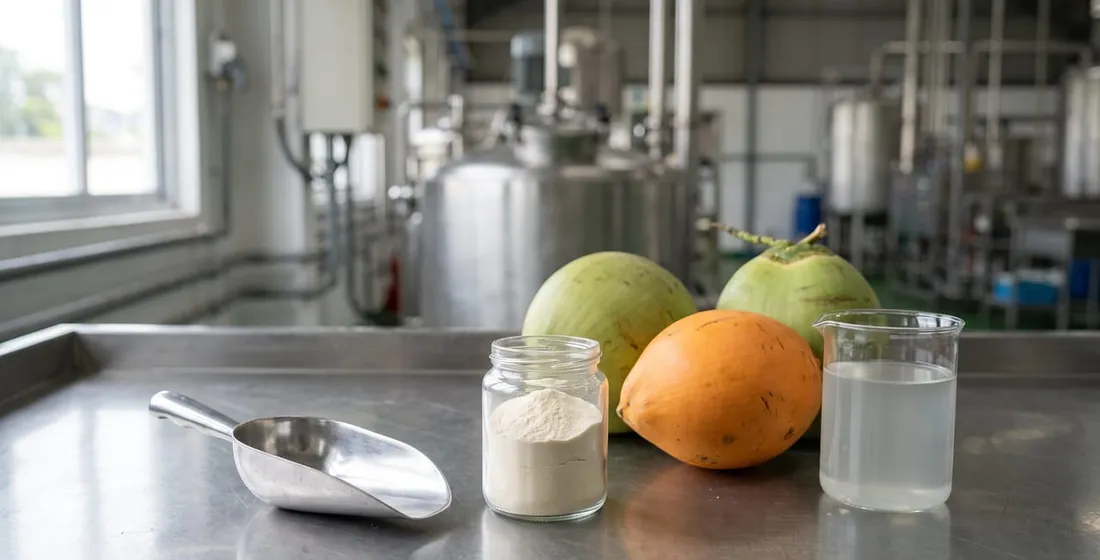
Coconut water powder is a spray-dried blend of coconut water solids and a drying carrier, reconstituted with water at the point of use. It is not dehydrated coconut water in the way instant coffee is dehydrated coffee. Coconut water at single strength is 92 to 95 percent water, per the Tetra Pak Coconut Handbook, which leaves 5 to 8 percent solids, and those solids are mostly simple sugars.
Sugar is the problem. Sugars have a low glass transition temperature, so a sugar-dominant feed hitting a hot drying chamber turns tacky instead of powdery, sticks to the chamber wall, and comes out as a low yield of hygroscopic lumps. The carrier exists to raise the glass transition temperature of the blend. It is a process necessity, not a cost-down adulterant, and a brand that refuses one is refusing the dryer.
The fat-bearing counterpart, where the chemistry is friendlier, is covered in private-label coconut milk powder and spray drying.
Why can a Sri Lankan brand not spec a 100 percent coconut water powder?
Because the published process window does not have one. Nambiar, Sellamuthu and Perumal, working on tender coconut water microencapsulation in Food and Bioprocess Technology in 2017, landed on an optimum wall material of 30 percent maltodextrin with 1.5 percent Moringa oleifera gum at a 120 degree Celsius inlet temperature, reaching an encapsulation efficiency of 94.86 percent. Thirty percent of the finished dry mass is carrier by design.
That number drives everything downstream. A 70:30 blend cannot be declared as coconut water powder full stop; the ingredient list carries maltodextrin, and a front-of-pack claim of pure or 100 percent will not survive a label review. Brands that write 100 percent natural coconut water powder into a brief are specifying a product no commercial dryer will hand back.
The inlet temperature matters as much as the ratio. The same work found encapsulation efficiency rising at lower inlet temperature, which pulls against throughput: a cooler chamber is gentler on the product and slower per kilogram. A pilot programme decides that trade-off with the brand’s own retention target on the table, not with a generic setting.
| Spec line | What a brand asks for | What the dryer returns | Where the gap gets closed |
| Coconut content | 100 percent coconut water | About 70 percent, carrier makes up the rest | Pilot trial fixes the actual ratio |
| Carrier declaration | Not mentioned in the brief | Maltodextrin appears in the ingredient list | Label copy agreed before artwork |
| Inlet temperature | Whatever is fastest | Lower inlet lifts retention, cuts throughput | Retention target set by the brand |
| Powder behaviour | Free flowing on the shelf | Hygroscopic, cakes in open storage | Barrier film and moisture spec |
| Reconstitution | Tastes like the fresh nut | Sweetness and mouthfeel shift with carrier load | Sensory panel across ratios |
The equivalent trade-off on a plant milk stream is worked through in spray drying against UHT for plant-based milk.
The feed is the constraint, not the dryer
Work the arithmetic backwards from a batch. At 6 percent solids, a midpoint of the 5 to 8 percent range implied by the Tetra Pak figure, one litre of coconut water carries about 60 grams of solids. A kilogram of finished 70:30 powder needs 700 grams of coconut water solids, so roughly 12 litres of coconut water per kilogram of powder. Without a carrier it would be about 17 litres.
Now apply the Silk Foods Ceylon (SFC) minimum. The spray-dried powder line at Matale is documented at 50 kg per batch as a single-day run. Fifty kilograms of 70:30 powder needs about 35 kg of coconut water solids, which is roughly 580 litres of coconut water, chilled, delivered on the morning of the batch, and de-oiled and filtered before it goes anywhere near the preparation tank.
| Planning line | Figure | What it means for the brand |
| Coconut water solids | About 6 percent, from 92 to 95 percent water | Nineteen parts liquid discarded for one part solid |
| Coconut water per kg of 70:30 powder | About 12 litres | Carrier cuts liquid demand by roughly a third |
| Coconut water per kg with no carrier | About 17 litres | The reason a no-carrier spec is expensive as well as sticky |
| Documented spray-dry batch minimum | 50 kg, single-day run | The smallest commercial commitment on the line |
| Coconut water needed for that batch | About 580 litres, same day | A cold-chain and scheduling problem, not a drying problem |
| Alternative feed route | Concentrate at 60 to 65 Brix, held at minus 18 degrees Celsius | Removes the same-day cold-chain race |
Those are planning figures, and a brand should re-run them against its own supply. The Tetra Pak Coconut Handbook describes the industrial answer to the same problem: pre-concentrate by reverse osmosis, finish on multiple-effect evaporation to 60 to 65 Brix, and hold frozen at minus 18 degrees Celsius for up to two years. A concentrate feed turns a same-morning cold-chain scramble into a stock line.
Sri Lanka does not visibly have that concentrate stream yet. The Export Development Board’s coconut-water page lists three exportable products, tender coconut water, coconut water vinegar and king coconut water, and names neither a concentrate nor a powder. A brand specifying coconut water powder here is specifying the second step of a chain whose first step is not on the local map.
Why the facility sits inland rather than in the capital, and what that does to inbound fresh feed, is covered in the case for a cellular manufacturing factory in Matale.
What a local beverage brand can specify at Matale today
Three things are quotable now, and one is not. The spray-drying train at the Matale facility, preparation tank, pipe filter, colloid mill and spray drier, is in production on plant milk powders and fruit powders, both fed by streams that already exist locally. Coconut water is a formulation programme rather than a catalogue line, because the feed and the ratio are both open questions.
| What the brand wants | Status at the Matale facility | Minimum and lead |
| Co-packing a bought-in coconut water powder into sachets or pouches | Available now, buyer supplies the finished powder | Booked as a production block, typically one day |
| Spray-dried plant milk powder under contract manufacturing | In production | 50 kg, single-day batch |
| Spray-dried fruit powder under contract manufacturing | In production | 50 kg per SKU, tiers at 500, 1,000 and 2,500 kg |
| Ready-to-drink beverage in a 200 ml glass bottle | In production on the liquid line | 1,250 bottles, glass tooling adds a week |
| Spray-dried coconut water powder from fresh feed | Needs an R&D and NPD programme first | Pilot trial, then a commercial minimum once the ratio is fixed |
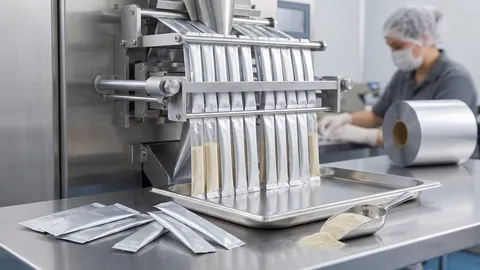
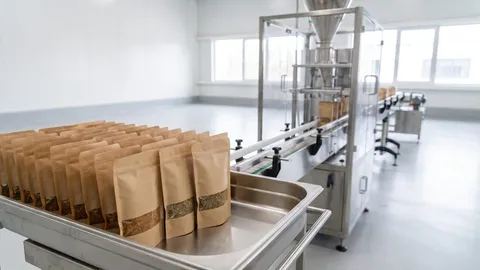
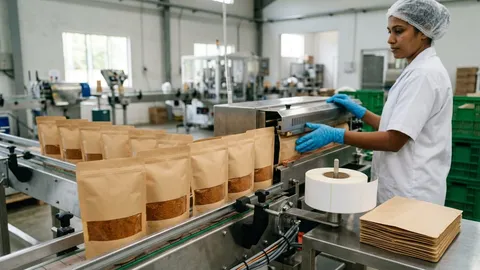
The co-packing line is the one most brands overlook. A brand that has already sourced a coconut water powder, from an importer or a regional supplier, can have it filled, sealed, coded and labelled at Matale under the same block booking used for seasoning formats, which puts a saleable Sri Lankan SKU on a shelf without waiting on a formulation programme.
Sachet and portion-pack fill rates are set out in the seasoning sachet and portion-pack note, and the fruit-powder equivalent of the drying question is in spray-dried fruit powder contract manufacturing.
What belongs in the request for quotation
A coconut water powder brief that names the carrier, the retention target and the feed route gets a real quotation. One that names a flavour and a pack size gets a meeting. The difference is six lines.
- Carrier and ratio, stated as a range the brand will accept rather than a single number, since the pilot moves it.
- Feed route: fresh coconut water delivered chilled on the batch day, or concentrate held frozen at 60 to 65 Brix.
- Retention target for whatever the brand intends to claim, with the assay method named alongside it.
- Moisture and water activity specification on the finished powder, plus the barrier film the pack will use.
- Reconstitution ratio and the sensory reference the panel will taste against.
- Label copy for the ingredient list, agreed before artwork rather than after the first batch.
The label line is where local compliance bites. The Food (Labelling and Advertising) Regulations 2022 are now in force, after the deferral that the United States Department of Agriculture Foreign Agricultural Service reported in February 2025, and they set the tri-lingual declaration rules the pack has to meet. There is no shortcut for a blended powder: maltodextrin is an ingredient and it gets declared.
International standards give no cover either. Codex Alimentarius covers aqueous coconut products in CXS 240-2003, and that standard is written for coconut milk and coconut cream. Coconut water powder sits outside it, so a buyer asking which standard the product is made to gets an answer built from the contract specification and the manufacturer’s food-safety scheme rather than a numbered Codex clause.
The local clearance route for a finished packaged SKU is set out in the SLSI packaged-food submission, step by step.
Frequently asked questions
Can Silk Foods Ceylon make coconut water powder today?
Not as a catalogue line. The Matale spray-drying train runs plant milk powders and fruit powders at a documented 50 kg single-day batch minimum. Coconut water needs an R&D and NPD programme first, because both the carrier ratio and the feed route have to be fixed before a commercial minimum means anything.
Why does coconut water powder contain maltodextrin?
Because coconut water solids are mostly sugars, which turn tacky in a hot drying chamber. The carrier raises the glass transition temperature of the blend so the feed dries to a powder rather than sticking to the wall. Published work on tender coconut water puts the optimum at 30 percent maltodextrin.
How much coconut water does a kilogram of powder need?
About 12 litres for a 70:30 blend, working from roughly 6 percent solids in single-strength coconut water. With no carrier it rises to about 17 litres. A 50 kg batch therefore needs in the region of 580 litres delivered chilled on the day, which is a cold-chain problem before it is a drying problem.
Is there a Codex standard for coconut water powder?
No. Codex Alimentarius CXS 240-2003 covers aqueous coconut products and is written for coconut milk and coconut cream. A coconut water powder is specified through the contract specification and the manufacturer’s food-safety scheme, alongside the Sri Lankan labelling regulations that apply to the finished retail pack.
What can a Sri Lankan beverage brand order now instead?
Co-packing of a bought-in coconut water powder into sachets or pouches, booked as a production block of typically one day. Spray-dried plant milk and fruit powders run at 50 kg minimums, and a ready-to-drink beverage in a 200 ml glass bottle runs from 1,250 bottles with a week added for glass tooling.
How Silk Foods Ceylon can help
For Sri Lankan beverage brands and hotel groups working out whether a coconut water powder belongs in the range, Silk Foods Ceylon (SFC) runs contract manufacturing, co-packing and an R&D and NPD function from the 10,000 sq ft cellular-manufacturing facility at Matale. The spray-drying train, preparation tank through colloid mill to spray drier, is already in production on plant milk and fruit powders at a 50 kg single-day batch, the liquid line fills 200 ml glass bottles from 1,250 units, and buyer-supplied powder can be co-packed into sachets and pouches on a block booking. The site is BRCGS- and FSSC 22000 V6-audited, with SLSI submission support where the pack crosses into local retail.
To brief a coconut water powder feasibility trial or a co-packing block, email brands@esilkroute.com.lk or call +94 76 441 0389 / +94 76 918 5744.
Sources
EconomyNext, Sri Lanka’s coconut-based exports hit record high in 2025; rubber dips, tea edges up, 27 January 2026, reporting Sri Lanka Export Development Board data. economynext.com. Retrieved 19 August 2026.
Sri Lanka Export Development Board, Coconut Water Based Products from Sri Lanka, industry capability page, 2026. srilankabusiness.com. Retrieved 19 August 2026.
Nambiar, R. B., Sellamuthu, P. S. and Perumal, A. B., Microencapsulation of Tender Coconut Water by Spray Drying: Effect of Moringa oleifera Gum, Maltodextrin Concentrations, and Inlet Temperature on Powder Qualities, Food and Bioprocess Technology, volume 10, number 9, pages 1668 to 1684, 2017. link.springer.com. Retrieved 19 August 2026.
Tetra Pak, The Coconut Handbook, Coconut Food Production chapter, 2026 edition. coconuthandbook.tetrapak.com. Retrieved 19 August 2026.
FAO and WHO Codex Alimentarius Commission, Standard for Aqueous Coconut Products: Coconut Milk and Coconut Cream, CXS 240-2003. fao.org. Retrieved 19 August 2026.
USDA Foreign Agricultural Service, Sri Lanka Extends Implementation of the Food Labeling and Advertising Regulations-2022 by Additional Six Months, GAIN report CE2025-0003, 26 February 2025. apps.fas.usda.gov. Retrieved 19 August 2026.