Frozen Plant-Based Seitan SKU R&D: Formulation and Cold Chain
Buyer's snapshot Sri Lanka's Food (Labelling and Advertising) Regulations 2022 list wheat among the allergens every packaged label must declare, with enforcement now pushed to 1 January 2026 (Ministry of Health, Sri Lanka / USDA FAS GAIN, 2025). For a frozen seitan SKU, that allergen line sits next to a storage-temperature instruction before SLSI will clear the label. Silk Foods Ceylon runs seitan formulation and frozen dispatch on one BRCGS- and FSSC 22000 V6-audited line at Matale, with reefer storage on site. The comparison table below lines up seitan against SFC's other frozen plant-based formats; the R&D section covers the iteration count and cold-chain buffer to plan around. |
Sri Lanka’s food and beverage exports grew 24.23% to US$583.89 million in 2025, with processed food shipments up 40.4% over the prior year (Sri Lanka Export Development Board, 2026). Plant-based formats are a growing share of that processed-food push, and seitan, a wheat-gluten product with a firm, sliceable, meat-like texture, is one of the newer requests reaching the in-house R&D team at Silk Foods Ceylon (SFC). Most inquiries do not start with a locked recipe. They start with a home-kitchen version that has never been frozen, sliced, or moved through a blast freezer, and that gap is where the R&D brief actually begins.
SFC, a BRCGS- and FSSC 22000 V6-audited contract manufacturer at Silk AgTech Park in Hapugasyaya, Matale, treats a frozen seitan brief as two linked problems: getting the wheat-gluten formulation to hold its texture through freeze and thaw, and getting the finished pouch through a cold chain that meets Sri Lankan storage and labelling rules. Both problems belong to R&D / NPD (Co-Development on the SFC brochure), the service that runs ahead of contract manufacturing whenever the recipe is not yet locked.
Seitan is a wheat-gluten product, not a meat or soy alternative
A buyer asking what seitan is often assumes it behaves like tofu or a meat substitute. Seitan is cooked vital wheat gluten: firm, dense, fibrous, and pale tan to light brown once cooked, closer in texture to a lean cut of meat than to tofu or tempeh. The distinction matters for formulation, freezing, and the allergen line on the finished label.
Vital wheat gluten is the protein fraction left once starch is washed out of a wheat-flour dough, and Codex Alimentarius sets the reference specification for it under CXS 163-1987 (Rev. 1-2001), the Codex Standard for Wheat Protein Products Including Wheat Gluten, adopted in 1987 and revised in 2001. The standard defines vital wheat gluten by its high viscoelasticity once hydrated, the property that gives cooked seitan its sliceable, fibrous bite. Tofu, by contrast, is coagulated soy milk: soft and smooth, closer to a custard than a cut of protein. Tempeh is fermented whole soybean, with a visible bean texture. None of the three are interchangeable in a formulation brief.
Because seitan is concentrated wheat gluten, the finished SKU carries one of Sri Lanka’s mandatory allergen declarations. The Food (Labelling and Advertising) Regulations 2022, gazetted by the Ministry of Health in February 2023 and now due for enforcement from 1 January 2026 after two extensions, require wheat to appear on the allergen line of every packaged label. For a frozen seitan pouch, that line sits next to the storage-temperature instruction, not instead of it.
Wheat itself is an imported raw material for any Sri Lankan manufacturer, since the country grows no commercial wheat. The Sri Lanka Standards Institution’s import inspection scheme lists wheat-based food ingredients among the items requiring clearance at the port before they reach a manufacturer’s floor, which is one reason a formulation brief for seitan starts with confirming the raw-material supply chain, not just the recipe.
How does an R&D brief for a frozen seitan SKU move from concept to first commercial batch?
A local FMCG brand asking how long a new seitan SKU takes from brief to shelf is really asking two questions: how many formulation rounds, and how much time cold-chain testing adds. An R&D/NPD engagement at Silk Foods Ceylon for a frozen plant-based SKU typically runs 2 to 4 sample iterations before the recipe locks, with a further round for freeze-thaw stability once a working formulation exists.
The first iteration usually tests hydration ratio and cook time against a target internal moisture, since a formulation calibrated for stovetop cooking rarely survives a blast freezer without drying out or turning rubbery. The second checks slice integrity after freeze and thaw: whether the fibrous grain holds together or delaminates along its own lines. A third and fourth round, when needed, tune seasoning carry-through, since freezing mutes surface flavour more than a home-kitchen test batch suggests. Buyers reformulating an existing home-kitchen recipe for retort or batch consistency go through a similar sequence.
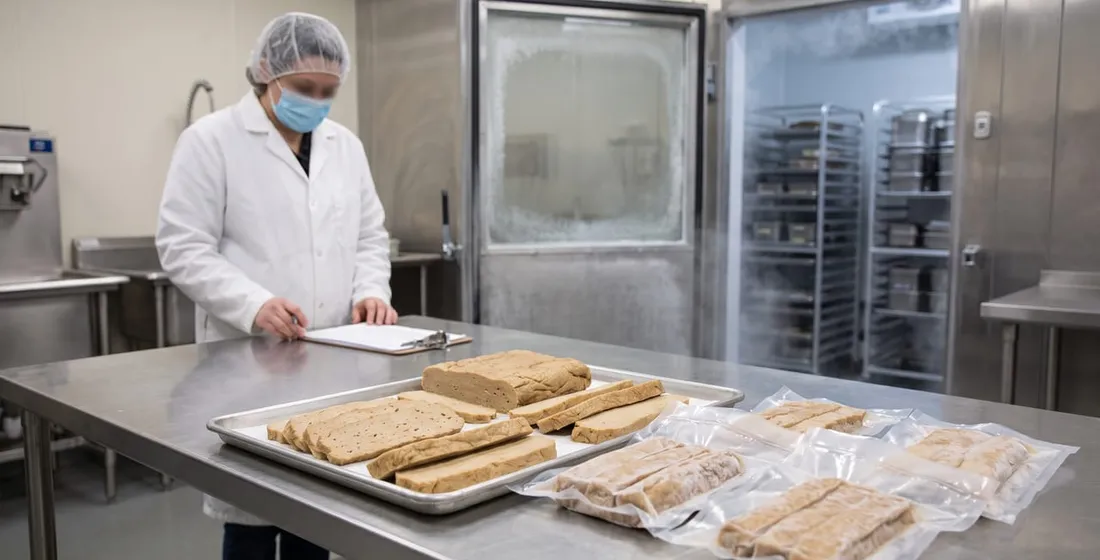
Across the R&D briefs the Matale team logged for frozen plant-based SKUs in the second half of 2025, five formulation rounds were the median before a seitan-format recipe locked for commercial batching, one more than the two-to-four range typical of a shelf-stable spread or sauce. The extra round almost always went to freeze-thaw texture, not flavour. The team settled on a target core moisture band of 58% to 62% and a blast-freeze protocol that brings sliced product to minus 18 degrees Celsius within 90 minutes of cutting, the window that keeps the fibrous structure from turning grainy on thaw.
A slice pulled straight from the blast freezer within that window holds its bite on rethaw. A batch left on an ambient tray for even 20 minutes before freezing turns noticeably softer.
For a brand owner budgeting the R&D phase, that median translates to roughly 8 to 12 weeks from first sample to a frozen batch ready for retail testing, against the 6 to 10 week range Silk Foods Ceylon quotes for R&D-first contract manufacturing generally. The gap is the cold-chain testing round, and skipping it is the single most common reason a home-tested seitan recipe fails on re-thaw at the retail end. The full R&D-to-first-batch sequence follows the same brief-to-launch path SFC uses across other plant-based and functional-food formats.
Frozen plant-based formats at Silk Foods Ceylon: how seitan compares
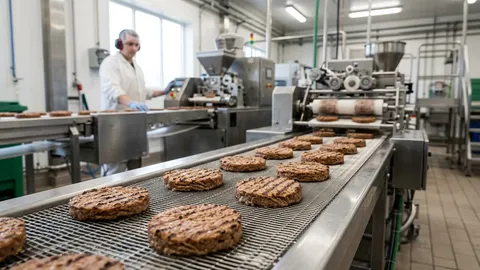
Seitan is one of several frozen plant-based formats moving through the cellular-manufacturing line at Matale, and buyers weighing a first SKU often want the format comparison side by side. The table below lines up first-run MOQ, capacity, freeze format, and typical R&D lead across four formats produced at the facility.
| Format | First-run MOQ | Capacity | Freeze format | Typical R&D lead |
| Vegan seitan meat (sliced or strips) | 5,000 to 10,000 units per SKU | Shares line capacity with the patty and nugget runs | Blast-frozen, vacuum-sealed pouch | 8 to 12 weeks (formulation plus freeze-thaw round) |
| Vegan burger patty | 5,000 to 10,000 units per SKU | 15,000 patties per day | Blast-frozen, tray or pouch | 6 to 10 weeks |
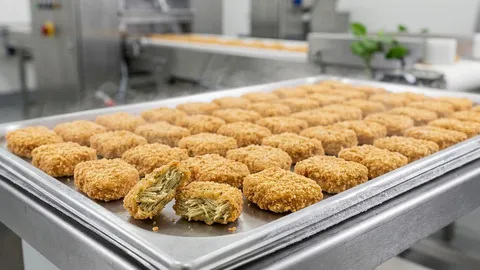
| Vegan nuggets | 5,000 to 10,000 units per SKU | 30,000 nuggets per day | Blast-frozen, battered or breaded | 6 to 10 weeks |
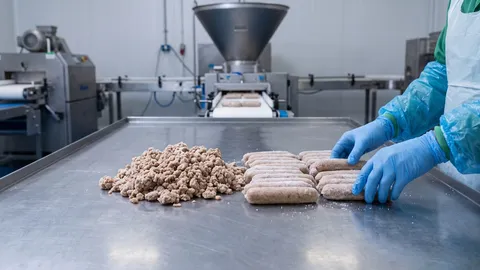
| Vegan sausage or chicken alternative | 5,000 to 10,000 units per SKU | Shares line capacity with the patty and nugget runs | Blast-frozen, vacuum-sealed | 6 to 10 weeks |
Read the lead-time column as a floor, not a ceiling. Seitan’s extra week or two comes from the freeze-thaw round; the other formats inherit their timeline from standard patty and nugget R&D, which the in-house team already has locked specs for, including the contract manufacturing route for plant-based patty launches. A buyer running seitan alongside an existing patty or nugget SKU can often plan shared reefer storage across a multi-SKU launch rather than budgeting separate cold storage for each format.
What does cold-chain planning require for a frozen seitan SKU in Sri Lanka?
Cold-chain planning for a frozen seitan SKU covers three linked questions: whether the product survives the freeze without losing texture, whether the storage and transport chain holds minus 18 degrees Celsius end to end, and whether the label carries the storage instruction the Food Act requires. Sri Lanka’s cold storage capacity is expanding, which changes the buyer-side planning math.
Sri Lanka’s cold storage warehouse market is projected to grow at a compound annual rate of roughly 10.2% between 2025 and 2031, driven partly by export-oriented processed-food investment and rising retail expectations for frozen and chilled formats (6Wresearch, 2025). For a brand owner used to ambient-shelf SKUs, that growth signals more third-party reefer capacity coming online, but it does not remove the buyer’s own responsibility for the chain between the SFC dispatch dock and the retail freezer.
At the Matale facility, a frozen seitan SKU moves from blast freezer to reefer storage to a temperature-controlled dispatch vehicle, with the minus 18 degree Celsius line held through each handoff. The weak point is rarely the manufacturer’s own dock; it is the retail-side freezer chain once the product leaves for a distributor’s warehouse or a supermarket’s frozen aisle. Brand owners planning a first frozen SKU should confirm the retail buyer’s own reefer capacity before committing to a launch date, since a broken cold chain at the retail end shows up as a texture failure a customer blames on the recipe, not the storage.
The reason a frozen seitan SKU’s cold-chain buffer matters more than a frozen patty’s is structural. Seitan’s grain runs in fibrous strands, and a slow freeze lets ice crystals form along those strands, which shows up as a mushy re-thaw texture in a way a denser ground-and-formed patty does not exhibit as visibly. The generic risk sits with capacity, not certification: many smaller local co-packers running frozen SKUs share general frozen storage with other product lines rather than a dedicated blast-freeze step, which is fine for a product that freezes slowly without texture consequences but not for a wheat-gluten product that needs to hit minus 18 degrees Celsius within roughly 90 minutes of cutting. The difference rarely shows up on a quote; it shows up on the first re-thaw test.
Buyer's checklist: before briefing a frozen seitan R&D project Confirm whether the target retail channel has dedicated frozen-aisle reefer capacity or relies on ambient chill only Bring an existing stovetop or home-kitchen recipe, even an imperfect one, rather than a concept alone Budget 8 to 12 weeks for R&D before a first commercial batch, longer than the 6 to 10 week range quoted for shelf-stable SKUs Decide the pack format early (sliced, strips, or block), since it changes the blast-freeze protocol Confirm the wheat allergen declaration sits on the label artwork before SLSI submission Have a target shelf-life and thaw instruction ready for the retail pack |
Certifications and label rules for a frozen wheat-gluten SKU
A frozen seitan SKU sold in Sri Lanka clears three layers before it reaches a retail freezer: the manufacturer’s food-safety audit, SLSI clearance on the finished pack, and the Food Act’s labelling requirements, including the wheat allergen line and a storage-temperature instruction. Each layer is a separate submission, and skipping the sequence is the most common reason a launch date slips. The certification stack a Sri Lankan retail launch needs covers the same ground for most other formats.
Certification snapshot: Silk Foods Ceylon, Matale BRCGS-audited FSSC 22000 V6 (covers the plant-based and frozen processing scope) SLSI clearance on every retail SKU Sri Lanka Food Act 1980 compliance, including the wheat allergen declaration and storage instruction, built into the engagement |
SLSI clearance for a packaged-food SKU with a stable formulation typically takes 4 to 8 weeks, and Silk Foods Ceylon builds a 6 to 10 week buffer between manufacturer-side QA sign-off and a target shelf date into its planning. For a frozen SKU, add the freeze-thaw R&D round ahead of that buffer, since SLSI submission normally happens once the formulation and pack format are both locked. The step-by-step SLSI submission path applies here in the same order regardless of format.
Frequently asked questions
Is seitan the same as tofu or tempeh?
No. Seitan is cooked vital wheat gluten with a firm, fibrous, meat-like texture, defined under Codex Alimentarius CXS 163-1987 (Rev. 1-2001). Tofu is coagulated soy milk with a soft, smooth texture, and tempeh is fermented whole soybean with a visible bean structure. The three are not interchangeable in formulation, freezing, or allergen labelling.
Does Silk Foods Ceylon develop a new frozen seitan recipe for a local plant-based brand?
Yes. R&D / NPD (Co-Development on the SFC brochure) is the service for a brand without a locked recipe. The in-house team typically runs 2 to 4 formulation iterations, plus a freeze-thaw round for frozen SKUs, before the recipe locks for contract manufacturing on the Matale line.
How long does R&D take before a frozen seitan SKU reaches a first commercial batch?
Budget 8 to 12 weeks from first sample to a frozen batch ready for retail testing, longer than the 6 to 10 week range typical of shelf-stable R&D, because a seitan formulation needs a dedicated freeze-thaw testing round on top of hydration and seasoning trials.
What label and cold-chain rules apply to a frozen seitan SKU in Sri Lanka?
The Food (Labelling and Advertising) Regulations 2022 require wheat to appear on the allergen line, alongside a storage-temperature instruction. SLSI clearance follows, typically 4 to 8 weeks for a stable formulation, and the cold chain must hold minus 18 degrees Celsius from the dispatch dock through to the retail freezer.
How Silk Foods Ceylon can help
For local FMCG brands developing a frozen plant-based seitan SKU, Silk Foods Ceylon (SFC) runs R&D/NPD and contract manufacturing on the same cellular-manufacturing line in Matale, so a formulation that locks in R&D moves into production without re-auditing the manufacturer. R&D engagements for a frozen format typically run 8 to 12 weeks across 2 to 4 formulation rounds plus a freeze-thaw stability round, ahead of first-run MOQs of 5,000 to 10,000 units per SKU. The Matale facility is BRCGS- and FSSC 22000 V6-audited, with SLSI submission support and reefer storage built into the standard engagement.
To brief a project, email b2b@esilkroute.com.lk or call +94 76 441 0389 / +94 76 918 5744.
Related reading: private-label vegan cheese and cashew cheese spreads, why the Matale facility is built around cellular manufacturing, R&D from brief to first commercial batch, and reformulating a home-kitchen recipe for batch consistency.
Sources
- Ministry of Health, Sri Lanka / USDA FAS GAIN report (2025), “Sri Lanka Extends Implementation of the Food Labeling and Advertising Regulations-2022 by Additional Six Months”, https://apps.fas.usda.gov/newgainapi/api/Report/DownloadReportByFileName?fileName=Sri+Lanka+Extends+Implementation+of+the+Food+Labeling+and+Advertising+Regulations-2022+by+Additional+Six+Months_Colombo_Sri+Lanka_CE2025-0003.pdf (retrieved 2026-07-20).
- Sri Lanka Standards Institution (2024), “Items Covered Under Import Inspection Scheme”, https://slsi.lk/wp-content/uploads/2024/04/QA-ITEMS-COVERED-UNDER-IMPORT-INSPECTION-SCHEME.pdf (retrieved 2026-07-20).
- Sri Lanka Export Development Board (2026), “Sri Lanka’s Export Performance Exceeded US$17.2 Billion in 2025”, https://www.srilankabusiness.com/news/sri-lankas-export-performance-exceeded-us-17.2-billion-in-2025.html (retrieved 2026-07-20).
- FAO/WHO Codex Alimentarius, “Codex Standard for Wheat Protein Products Including Wheat Gluten, CXS 163-1987 (Rev. 1-2001)”, https://www.fao.org/input/download/standards/323/CXS_163e.pdf (retrieved 2026-07-20).
- 6Wresearch (2025), “Sri Lanka Cold Storage Warehouse Market (2025-2031)”, https://www.6wresearch.com/industry-report/sri-lanka-cold-storage-warehouse-market (retrieved 2026-07-20).
Written by the Silk Foods Ceylon Team. Silk Foods Ceylon (Pvt) Ltd. is a BRCGS- and FSSC 22000 V6-audited contract manufacturer in Matale, Sri Lanka, offering contract manufacturing, private labelling, co-packing, and in-house R&D for local Sri Lankan brand owners, FMCG companies, hotel and restaurant groups, and distributors. To brief a project: b2b@esilkroute.com.lk, +94 76 441 0389, or +94 76 918 5744.