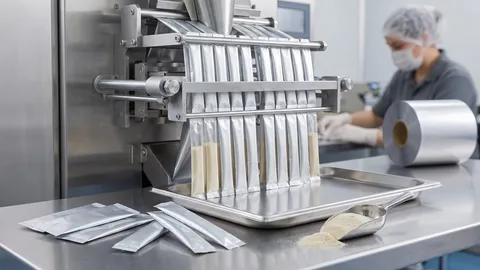
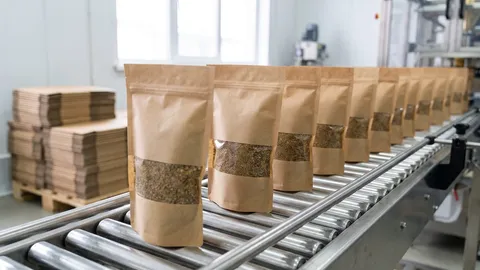
Single-Serve Condiment Sachets for Restaurant Table Service
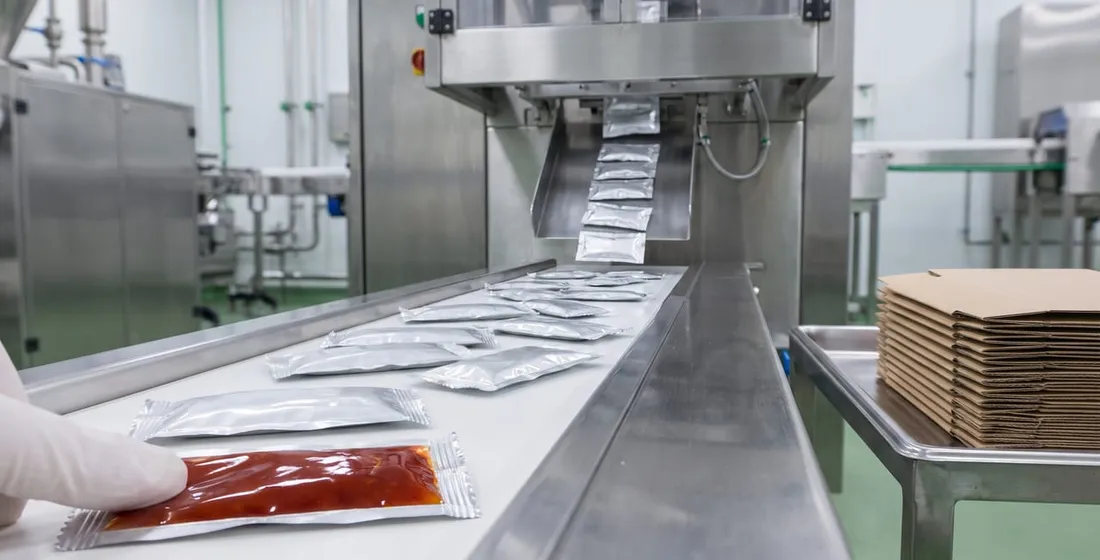
By the Silk Foods Ceylon Editorial Team
HORECA snapshot
- Sri Lanka logged 1,693,679 tourist arrivals in January to September 2026, with September down 0.26 percent on a year earlier (SLTDA figures, reported by Trading Economics, October 2026). Tourist volume is flat, so waste is the lever, not growth.
- On the EU-style tolerance table, a 10 g sachet may fall 0.9 g short, and no single sachet may fall below 8.2 g.
- At one leaker per 1,000 sachets, about 63 percent of 1,000-count cases hold at least one.
- Silk Foods Ceylon (SFC) lists a form fill packing machine and a band sealer. A wet-sachet minimum and lead time are scoped against the brief, not published.
A table-service sachet looks like the smallest decision in a restaurant programme. It is also the one the guest holds, tears and sometimes wears. Sri Lanka recorded 1,693,679 tourist arrivals in the first nine months of 2026, and September came in 0.26 percent below September 2025, according to figures from the Sri Lanka Tourism Development Authority reported by Trading Economics on 15 October 2026. After the record 2.36 million of 2025, the volume a food-service group plans around is no longer rising by itself.
That changes what a condiment programme is for. When covers grow, a few grams of over-fill per sachet disappear into the growth. When covers are flat, the same grams are a line item. This post works through the three numbers that decide a sachet: the fill weight, the seal, and the case count per outlet per week.
It is about wet condiments: chilli sauce, tomato sauce, mayonnaise-style dressings. The dry version of this problem, seasoning packed as powder, is a different machine problem and is covered in seasoning sachets and portion packs for hotel kitchens.
Why does a wet sachet behave differently from a dry one?
A wet sachet is filled with a liquid or paste that can splash into the seal area, and a seal formed through product is a weaker seal. Rovema, a packaging machine maker, notes that liquid contaminating the seal zone can stop a full seal forming, and that strength then depends on pressure, temperature and dwell time.
Powder falls straight down the tube and stays there. Sauce has viscosity, surface tension and a habit of climbing the film, so the seal, not the fill, is where a wet programme is won or lost. Machines that handle it wipe the seal area before the jaws close: Rovema describes squeeze rollers that clear the product from the seal zone after filling, remove air to cut headspace and also help meter the fill, with a pump driven at variable frequency.
The buyer need not specify rollers, but should ask the packer how the seal is protected from product. The answer is either a mechanism or a hope.
| Dry seasoning sachet | Wet condiment sachet | |
|---|---|---|
| What reaches the seal | Occasional dust | Splash, smear, serum |
| Main failure | Short fill, moisture pickup | Leaker, weak seal, stained case |
| Fill control | Auger or volumetric cup | Pump and squeeze roller metering |
| What the guest sees | A pinch short | A stain on the cuff |
| Check that matters most | Fill weight | Seal integrity under load |
What fill weight can a 10 g sachet actually carry?
A 10 g sachet is allowed to be light by 9 percent of nominal on the tolerance table used by most prepackage regimes, which is 0.9 g, and the average of the batch may not fall below 10 g. Because the average has to hold, the filler is set above nominal, and that over-fill is paid for in sauce.
The Austrian federal metrology office publishes the tolerable negative error table: 9 percent of nominal quantity for packs from 5 g to 50 g, 4.5 g for 50 g to 100 g. It states three rules. The average content must not be less than the nominal quantity. Only about 2.5 percent of packs may exceed the tolerable error. No pack may sit below twice that error. This table is a benchmark used here for specification, not a statement of Sri Lankan law, and the net contents declaration itself follows the 2026 labelling rules, set out in the sauce first-run post.
| Nominal fill | Tolerable shortfall (9%) | Lowest single sachet | Planning case count | Typical table use |
|---|---|---|---|---|
| 8 g | 0.72 g | 6.56 g | 1,000 per case, 8 kg net | Side of a plate, kids’ menu |
| 10 g | 0.90 g | 8.20 g | 1,000 per case, 10 kg net | Burger, fries, rice and curry side |
| 15 g | 1.35 g | 12.30 g | 500 per case, 7.5 kg net | Shared basket |
| 20 g | 1.80 g | 16.40 g | 500 per case, 10 kg net | Takeaway and delivery bag |
| 30 g | 2.70 g | 24.60 g | 250 per case, 7.5 kg net | Dipping portion |
Case counts are planning figures to be matched to the carton the kitchen already handles. Net weight excludes laminate and carton.
The cost of the over-fill is easy to size. Take the group in the next section, at about 524,000 sachets a year. A set point 0.3 g above nominal is 157 kg of sauce a year that the group paid for and no guest received. The useful figure comes off the filler’s own checkweigher log, which a packer should be able to show.
How does one leaker become a ruined case?
Case damage is a probability problem. If each sachet has an independent chance p of leaking, a case of 1,000 has a 1 minus (1 minus p) to the power of 1,000 chance of holding at least one leaker. At 1 in 1,000 that is 63.2 percent. At 1 in 10,000 it is 9.5 percent. At 1 in 100,000 it is 1.0 percent.
A single leaker in a corrugated case stains the other 999 sachets, the inner bag, the carton print and the receiving store’s shelf. Nobody recalls a case for it. They discard it.
| Leak rate per sachet | Cases with at least one leaker (1,000 per case) | Expected leakers a week, 10 cases |
|---|---|---|
| 1 in 1,000 | 63.2% | 10 |
| 1 in 10,000 | 9.5% | 1 |
| 1 in 100,000 | 1.0% | 0.1 |
Testing is two different questions. ASTM F88 measures the force to separate a test strip cut from a seal, reported as peak force, and Instron points out that it does not measure the peel strength of a packaged product. ASTM F1140 pressurises a whole closed package until it fails (burst) or holds it at pressure for a set time (creep), and the standard itself says these tests do not necessarily correlate with seal strength. A good packer reports both, plus a visual and press check on every shift. Rovema’s own quick check is simple: lay the sachet flat and press the centre with a finger, and the product should barely be felt.
The seal parameters (temperature, pressure, dwell) are validated per film and per sauce at the first-article check. A sauce that is thicker, oilier or more acidic than the trial sample changes the answer, so a change of recipe is a change of seal validation.
What does one outlet actually order a week?
A mid-size restaurant serving 300 covers a day, where 40 percent of covers take two 10 g sachets, uses about 240 sachets a day and 1,680 a week. That is 1.7 cases of 1,000. A six-outlet group is about 10,080 sachets a week, 524,000 a year, or 5.2 tonnes of sauce.
These are planning assumptions. Replace them with the outlet’s own till counts: the 40 percent and the two sachets move the answer most.
| Item | Planning figure | What it means |
|---|---|---|
| Sachets per outlet per week | 1,680 | 1.7 cases of 1,000 at 10 g |
| Six-outlet group per week | 10,080 | About 10 cases, 100 kg of sauce |
| Group per year | About 524,000 | About 5.2 tonnes |
| Over-fill at +0.3 g | About 157 kg a year | Cost of the set point |
| Expected leakers a week at 1 in 10,000 | 1 | One ruined case roughly every 10 weeks |
The sizing question that surprises most buyers is the printed laminate. In SFC’s working plan, printed film for a first private-label pack runs 8 to 13 working weeks, against a filling block of one to three days, as set out in artwork and print lead time for private label. The calendar is set by the film. Sizing the order by the weekly figure above, rather than by one convenient case, is what keeps the second print run from being an emergency.
The format ladder for other packs sits in minimum order quantities by format.
Where the sauce comes from decides the service
A restaurant group that already has a sauce it trusts is a co-packing buyer: the buyer supplies the finished sauce, and the packer fills, seals, codes and cases it. A group that wants SFC to make the sauce first is a contract manufacturing buyer, and the sauce runs the kettle, filter, homogenizer and filling route described in the sauce first-run post, at a documented 1,250-bottle first run for a 200 ml pourable format.
Walk the Matale hall on a day a sauce is running and the order of the equipment explains the order of the problems. The steam jacketed kettle and the pipe-type duplex filter come first, then the homogenizer, then the liquid filling machine, with the packing block at the end. Every one of those steps is upstream of the seal, so a sauce that arrives at the sachet with a different particle size or temperature than the trial arrives with a different seal risk.
A sachet run needs the sauce spec frozen before the film is printed, because a recipe change afterwards is a re-validation, not an edit.
The sachet runs on SFC’s packing block, which lists a form fill packing machine and a band sealer. The brochure does not rate a wet-sachet lane, so SFC publishes no sachet speed, no wet-sachet minimum and no wet-sachet lead time. Those are scoped against a brief. The documented anchors are narrower: buyer-supplied bulk liquid runs under co-packing, and a typical co-packing block is one day, with one to two weeks from finished goods arriving.
Where SFC walks away
Some briefs are better declined than quoted. A group that wants a sachet filled from a sauce with no written spec, or that has not decided the fill weight, is not ready to book a block. A programme that needs a wet-sachet speed number on day one will not get one from this page, because none is published. A single-outlet trial of a few thousand sachets is better served by a sample route than a production block, since set-up costs the same whatever the run size.
For the wider hospitality procurement view, see the HORECA private-label buyer’s guide. For bulk liquid into glass rather than sachet, see co-packing imported olive oil into retail glass, and for the powder format, sachet and stick-pack co-packing for powdered drinks.
Frequently asked questions
Does Silk Foods Ceylon fill condiment sachets for restaurant groups?
Silk Foods Ceylon co-packs buyer-supplied finished goods on a packing block that lists a form fill packing machine and a band sealer. A wet-sachet minimum, speed and lead time are not published and are scoped against the brief. A typical co-packing block is one day, with one to two weeks from goods arriving.
What fill weight should a restaurant sachet use?
Most table programmes sit between 8 g and 15 g. On the 9 percent tolerance table, a 10 g sachet may fall 0.9 g short, and the batch average may not fall below 10 g, so the filler runs slightly above nominal. The right weight is the one the kitchen currently decants, measured on its own scale.
How is sachet seal integrity tested?
Two tests answer two questions. ASTM F88 measures the peak force to separate a strip cut from a seal. ASTM F1140 pressurises a whole closed package to burst or creep. The F1140 standard notes the results do not necessarily correlate with seal strength. A packer should report both, plus a press check each shift.
How many sachets does one restaurant outlet need?
On planning assumptions of 300 covers a day, 40 percent taking two 10 g sachets, one outlet uses about 1,680 sachets a week, or 1.7 cases of 1,000. A six-outlet group uses about 524,000 a year, roughly 5.2 tonnes of sauce. Replace the assumptions with till counts before ordering.
How Silk Foods Ceylon can help
For restaurant and hotel groups standardising table-service condiments across outlets, Silk Foods Ceylon (SFC) runs co-packing at its 10,000 sq ft cellular-manufacturing facility in Matale, where the buyer supplies finished sauce and the SFC team fills, seals, codes and cases it. A typical block is one day, with one to two weeks from goods arriving, while wet-sachet minimums and speeds are scoped against a written sauce spec and a chosen fill weight. Where the sauce itself has to be made, contract manufacturing runs the kettle-to-filler route from a 1,250-bottle first run for pourable formats. The site is BRCGS- and FSSC 22000 V6-audited, with SLSI submission support where a pack crosses into retail.
To brief a sachet programme, email brands@esilkroute.com.lk or call +94 76 441 0389 / +94 76 918 5744.
Sources
Trading Economics, Sri Lanka Tourist Arrivals Extend Fall in September, 15 October 2026, reporting Sri Lanka Tourism Development Authority data. tradingeconomics.com. Retrieved 18 October 2026.
Bundesamt fuer Eich- und Vermessungswesen (BEV), Prepackages, legal metrology guidance on tolerable negative error. bev.gv.at. Retrieved 18 October 2026.
Rovema North America, 3 keys to success with flexible liquid packaging on a VFFS. rovema-na.com. Retrieved 18 October 2026.
ASTM International, F88 Standard Test Method for Seal Strength of Flexible Barrier Materials. store.astm.org. Retrieved 18 October 2026.
Instron, ASTM F88 Seal Strength of Flexible Barrier Materials. instron.com. Retrieved 18 October 2026.
Intertek, Internal Pressurization Failure Resistance of Unrestrained Packages, ASTM F1140. intertek.com. Retrieved 18 October 2026.
Written by the Silk Foods Ceylon Team. Silk Foods Ceylon (Pvt) Ltd. is a BRCGS- and FSSC 22000 V6-audited contract manufacturer in Matale, Sri Lanka, offering contract manufacturing, private labelling, co-packing, and in-house R&D for local Sri Lankan brand owners, FMCG companies, hotel and restaurant groups, and distributors. To brief a project: brands@esilkroute.com.lk, +94 76 441 0389, or +94 76 918 5744.